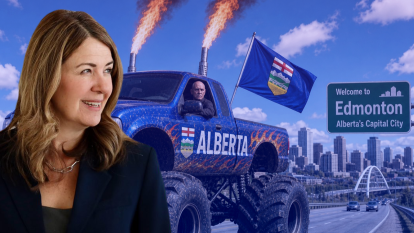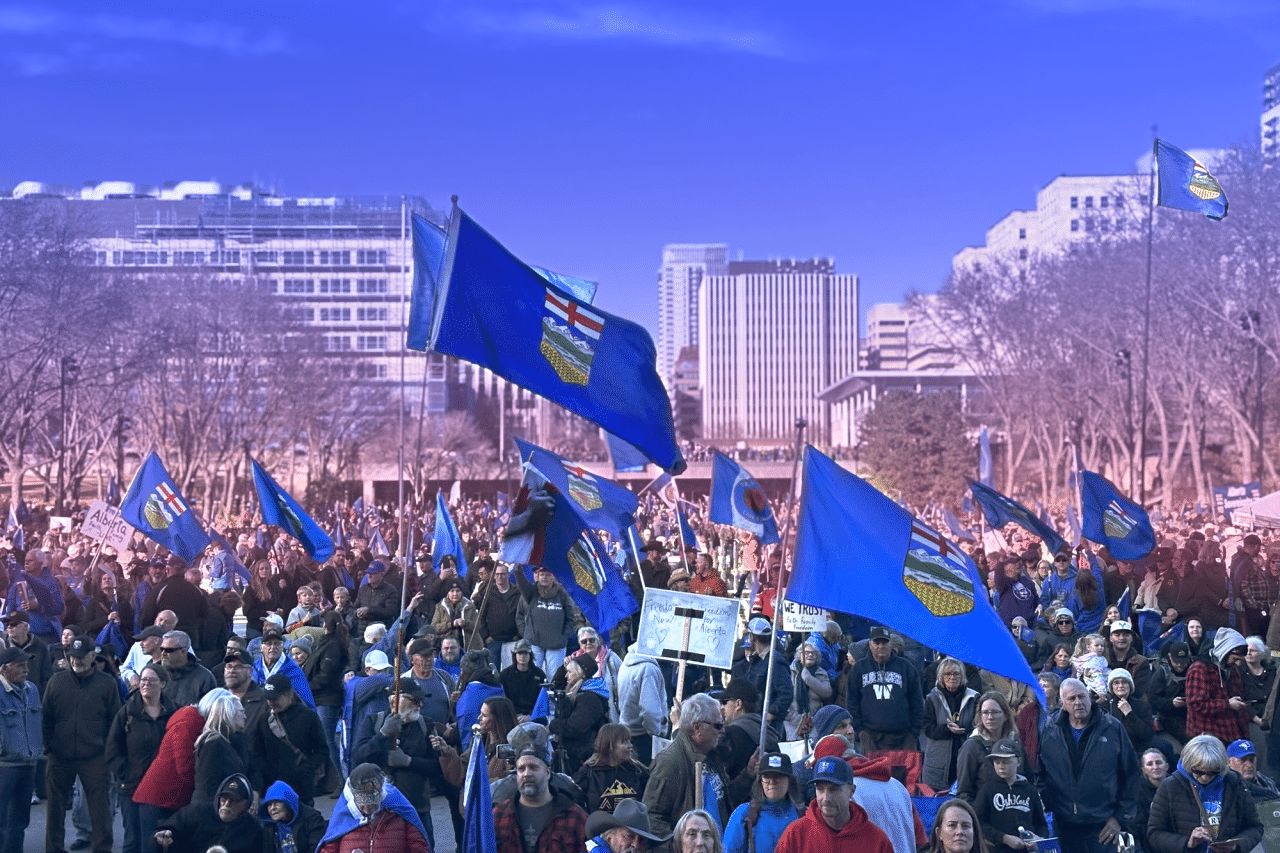
In recent weeks I’ve heard two types of dismissive comments from leftists about the Alberta separatism referendum. Some people joke that Alberta should separate from Canada since both are colonial formations. Others, more disparagingly, say that Canada would be better off without Alberta.
Such jokes underplay the seriousness of the dangers posed by the Alberta referendum and the rise of the far-right.
Recent history shows us how the far-right makes use of referendums to move their ideas from the peanut gallery to the main stage. After a 2016 vote led the U.K. to withdraw from the E.U. in 2020, Brexit laid the groundwork for the growth of the far-right in Europe. As right-wing politicians campaigned for Brexit, ideas that were once marginal—like racist Great Replacement conspiracy theories—became much more widely accepted and debated.
The “leave” vote for Brexit was shaped by multiple forces: frustration with public services that had been whittled away by neoliberal austerity; nostalgia for a colonial Britain, to be reestablished by retreating from a globalizing and undemocratic E.U.; racism and xenophobia; and the decomposition of multi-ethnic working-class movements and solidarities.
Still today, the U.K. far-right is maintaining its script of blaming immigrants for social and economic grievances; there are regular protests outside refugee accommodation centers and large mobilizations of hate are commonplace, such as Tommy Robinson’s Unite the Kingdom rally opposing immigration this summer.

While the Alberta separatist movement has a different tenor than Brexit—most obviously, leaving a country is different than leaving a union—the undercurrents are frighteningly similar.
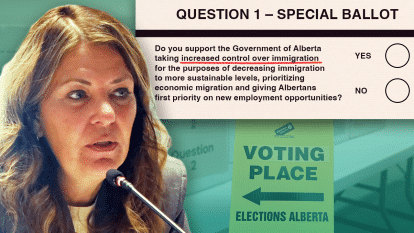
The Alberta referendum has five out of its ten questions focused on immigration. The questions are aimed at decreasing immigration and slashing public health care and education for many migrants. A recent poll showed 67 per cent of Albertans reported believing there was “too much immigration” to Canada.
Anti-migrant racism is a core engine for the separatism movement. Like in any far-right movement, a politics of fear is mobilized to reproduce restrictionist ideas of who belongs and who does not.
Anti-migrant racism serves two key purposes: to solidify ethnonationalism based on colonial and white supremacist hierarchies, and as a political strategy through which to divide the working class and attack the liberal wing of the political elite.
People in Alberta are facing a cost of living crisis, understaffed schools, a family doctor shortage, and hospitals so overcrowded that patients are dying in the ER waiting room. The referendum puts the blame for this on migrants, as well as the federal government’s supposedly-permissive immigration policy.
Ordinary Albertans are suddenly cast as victims: simultaneously besieged by migrants and threatened by a looming federal government. As Alberto Toscano remarks “Once migration is cast as a ‘problem,’ it always rebounds to the benefit of the far right, which need not deliver ‘solutions’ as long as it diverts social malaise away from structures and toward scapegoats.”
While migrants may be the biggest scapegoats in the referendum, the secret winner is the fossil fuel industry. In a new report, Bronwyn Bragg of the Parkland Institute argues that the separatism movement is fundamentally about increasing political and economic power for the oil and gas industry: creating a constitutional crisis is a tool for increasing Alberta’s bargaining power with Ottawa.
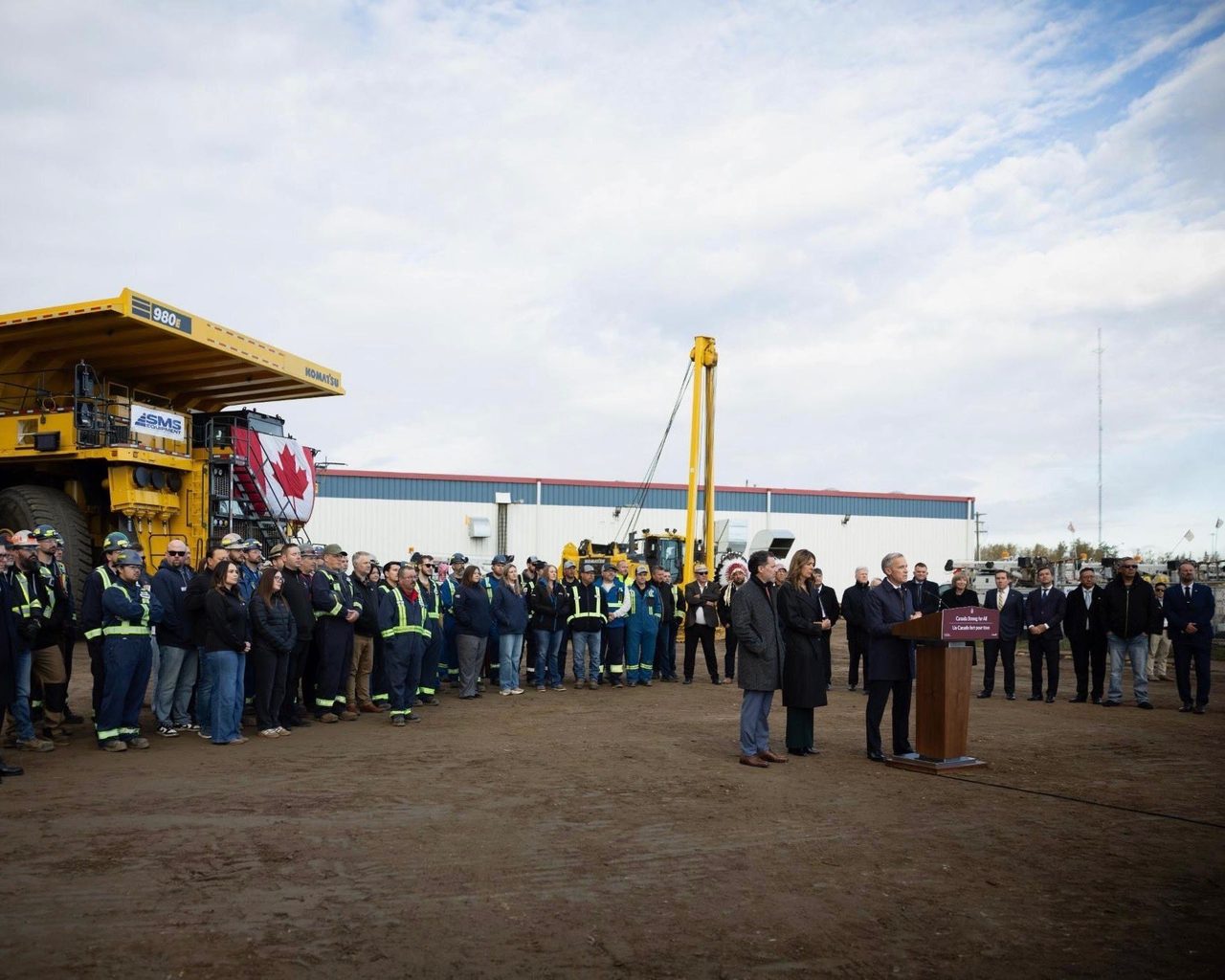
It has already worked. Under pressure from Premier Danielle Smith, Prime Minister Mark Carney dropped the oil and gas emissions cap and clean electricity rules, and has linked up with Alberta to build a proposed West Coast pipeline. This is a kind of protectionism that continues to benefit capitalism and the existing political order, despite purporting to be a shot against the status quo elite.
I remember how few people took Brexit seriously in the lead-up—chalking it up to a fringe movement and making light of it. Let us not make that mistake again. Instead of smug stereotypes or dismissals, we need to be clear: Albertans who care about their neighbours, their public services, and their climate must vote “no” on October 19. And we should all pay attention to what is happening on the Prairies, as it will embolden other far-right movements across these lands.
The biggest challenge of the referendum is that even a “no” outcome maintains the capitalist, colonial, anti-migrant, and hyper-nationalist status quo. In fact, a right-wing turn is likely, regardless of the referendum outcome.
All 48 First Nations in Alberta are opposed to the referendum since it violates their treaty rights, with nations such as Athabasca Chipewyan First Nation leading political and legal challenges to the referendum. While pushing back against the separatism movement, many of these are the very same First Nations also battling Canada’s intensifying pipeline expansions and stating they will not approve further tar sands expansions.
Meanwhile, migrant detentions and deportations are only escalating around the country—with over 400 deportations every single week. Despite Smith’s anti-federalist posturing, the Alberta and federal governments are now moving in lockstep when it comes to cracking down on migrants. For instance, the federal CBSA conducted an immigration raid on international students at a protest in Calgary this summer.
Even though Prime Minister Carney rode into power claiming to fight U.S. President Donald Trump, he is aggressively building up a massive anti-deportation machine: hiring 1,000 new border guards, increasing deportations by 25 per cent over the next year, slashing refugee spots and international student permits, and legislating the highly contested Bill C-12 infringing on migrant and refugee rights. The two governments have identified the same strategy—shifting the blame onto migrants—and are competing for who can do it the fastest.
When the referendum is over, these frontline landback struggles and anti-deportation struggles will continue, and so must our solidarities.
This piece is adapted from an earlier social media post by the author.

The Breach’s investigations don’t just inform our readers—they force the powerful to react.
An exposé on blood plasma privatization led to national headlines. Our revelations about the government’s cozy connections to Big Pharma sparked a parliamentary probe. A report on high-tech price-fixing by mega landlords resulted in a criminal investigation.
From activists to elected officials, people are using The Breach’s journalism to push for transformative change.
– Dru Oja Jay, Board President, The Breach
Alberta | Why immigration is on the ballot for the Alberta referendum
Indigenous Rights | Alberta separatists are in denial about the treaty rights of First Nations