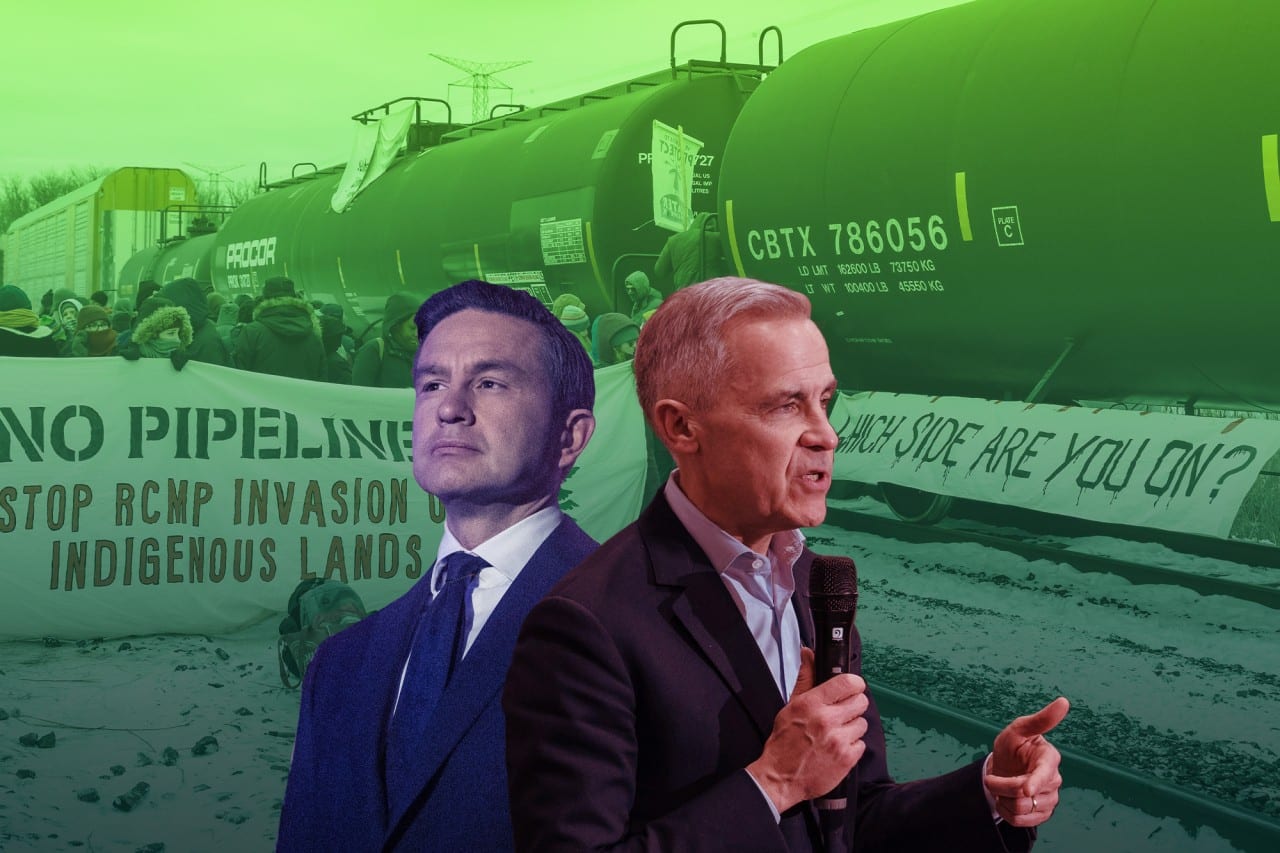
With the 2025 federal election underway, most national coverage has focused on U.S. tariffs, economic recovery, national security, and Canada’s role in the global landscape. What has received far less attention on the campaign trail is how each party’s platform promises will impact Indigenous peoples.
Despite much-improved political rhetoric about reconciliation with Indigenous peoples over the past decade, and a far more progressive agenda on some fronts, it is still not a central feature of federal election discourse. Indigenous issues had been reduced to vague references of “partnership” and “inclusion” in aggressive national energy plans, until the release of each party’s platform, just days before the election. Buried deep in each party platform are some serious red flags.
This absence should concern all Canadians. The rights held by Indigenous peoples and their governments are protected in Canada’s constitution. Our rights act as the canary in the coal mine of how well—or not—the federal government values and respects the so-called rule of law.
If the next government can so easily ignore Indigenous rights, then the many rights and freedoms enjoyed by all Canadians are also at risk. First Nations predate Canada and are recognized in domestic and international law as having inherent rights to govern over and benefit from our traditional lands and resources. These are not aspirational concepts. They are binding legal obligations on the Crown.
Canadians certainly wouldn’t want their Charter right to protection from cruel and unusual punishment or arbitrary arrest to be considered optional, only to be respected when economically convenient.
What’s at stake in this election is whether the constitutional rights of both Indigenous peoples and Canadians will be upheld, narrowed, or ignored altogether.
While we have all watched the disintegration of constitutional rights in the United States as President Donald Trump has governed through Executive Order, ignoring the U.S. Constitution and the courts, we in Canada are not immune from a similar fate. We stand on the precipice of that very possibility.
The outcome of this election will determine whether Indigenous rights remain a legal and political priority or are systematically breached under the weight of deregulation, speedy resource extraction, and fiscal austerity. The major federal parties, particularly the Liberals and Conservatives, offer vastly different paths on Indigenous rights.
While neither is without flaws, one threatens to undermine the basic legal framework for Indigenous rights in this country. This will be a test of how much Canadians value their own constitutionally protected rights.
A detailed analysis of each platform and what it signals about the parties’ governing priorities is critical to understanding the risks ahead.
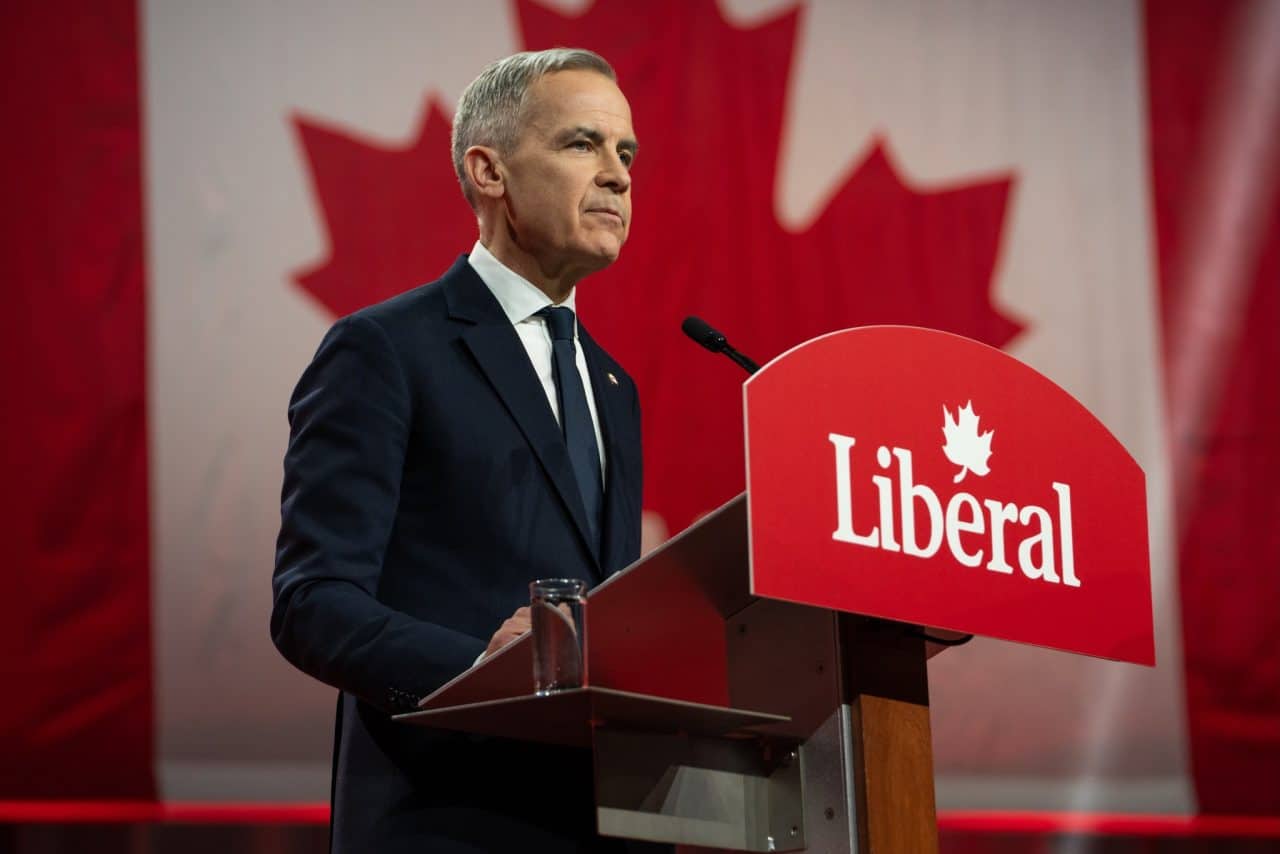
The Liberal platform: The good and the bad…
The Liberal Party’s 2025 platform continues many of the policies introduced over the past decade under Justin Trudeau’s leadership. Since 2015, the Trudeau government has made numerous public commitments to reconciliation, including adopting the United Nations Declaration on the Rights of Indigenous Peoples, which implements UNDRIP into Canadian law.
They also launched the National Inquiry into Missing and Murdered Indigenous Women and Girls (MMIWG), made some progress on the Truth and Reconciliation Calls to Action, removed some of the sex discrimination in the Indian Act, settled long-standing child welfare compensation litigation, and made incremental investments in Indigenous housing, infrastructure, and education. They also significantly increased the funding for social programs like water, education, and healthcare.
Despite these accomplishments, implementation has been slow and legislative amendments piecemeal, and, in many cases, incomplete. For example, while Bill C-15 implemented UNDRIP in 2021, the federal government only recently tabled an implementation action plan—and it has drawn significant criticism from Indigenous leaders, legal experts, advocates, and land defenders for lacking timelines, enforcement mechanisms, and a clear commitment to legal reform.
Similarly, while the Liberals committed $2.2 billion to addressing the MMIWG crisis in 2021, the Calls for Justice from the National Inquiry remain largely unimplemented, ensuring the crisis continues largely unabated.
The 2025 platform reflects this pattern of rhetorical support without either legal guarantees or solid timeframes. While it proposes significant investments, including a $10-billion Indigenous Loan Guarantee Program, a dedicated Indigenous Climate Readiness Fund, and expansions to distinctions-based housing and health funding, these promises do little to address MMIWG, the ongoing foster care crisis, significant poverty rates in First Nations or ever-increasing rates of over-incarceration. Billions of dollars in loans means little to any of the First Nations who live in poverty and could never pay back those loans.
Little mention is made of our inherent right to be self-determining or respect for our Aboriginal, treaty, and land rights, unless one assumes that their stated commitment to UNDRIP includes respect for those rightsIt’s a sign of how far western democracies have fallen to wonder if governments will abide by their own constitutions.
… and the ugly
And while there are positive aspects to it, the Liberal platform also introduces serious risks.
Chief among these is the proposed “One Window” federal infrastructure approval model for major energy or extractive-type projects. This approach, pitched as a streamlined way to reduce duplication of environmental reviews and accelerate project approvals, would allow major projects to proceed through a consolidated process with a two-year timeline.
Theoretically, this is meant to facilitate clean energy and climate-resilience infrastructure. However, it could severely undermine the constitutionally protected Indigenous rights to consultation, accommodation, and consent for each and every project before it starts. The very concept of fast-tracking infrastructure on Indigenous lands also contradicts the legal principle of free, prior, and informed consent (FPIC) contained in UNDRIP. Indigenous peoples have the right to say yes, yes with conditions, or no to projects that could negatively affect their lands, resources, and peoples. Two years is an aggressive timeline that may only be feasible if Indigenous governments are engaged from the beginning.
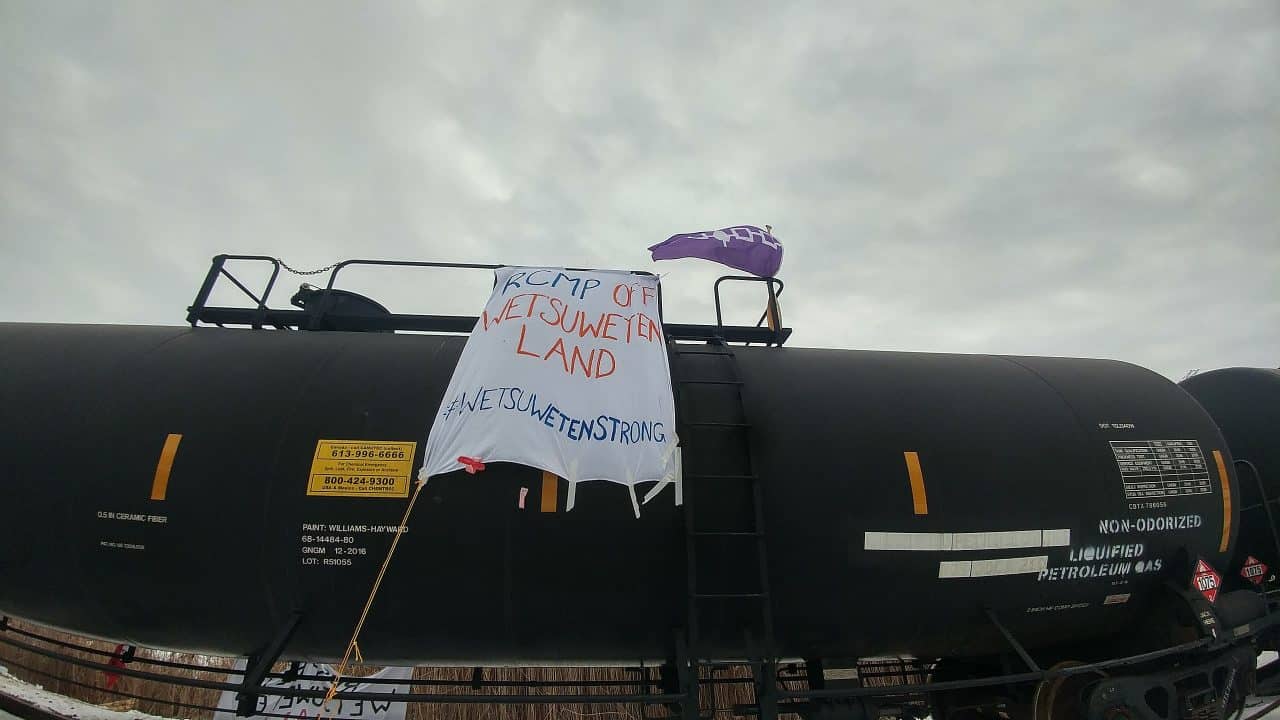
The experience of the Wet’suwet’en in British Columbia is instructive. The Coastal GasLink (CGL) pipeline was approved over the objections of Wet’suwet’en hereditary chiefs and many clan members, despite the fact that their legal authority had been recognized in the Delgamuukw decision. Provincial and federal governments proceeded with permits based on signed agreements between CGL and First Nation Chiefs and Councils elected under the Indian Act system—the system imposed on First Nations by the federal government. This was seen as a way of circumventing the legal requirement to get consent according to the traditional laws of the Wet’suwet’en under their traditional governing system.They continued with the project despite the call by the United Nations to halt the project until it had their consent.
The Liberal government’s proposed timelines could entrench a superficial consultation model that runs roughshod over our Indigenous rights.
Moreover, the platform’s language continues to frame Indigenous governments as partners in economic development rather than as governments with the legal right and jurisdictional authority to decide where, when, and if a project proceeds. There is no commitment to co-decision-making or to recognizing Indigenous laws as legally binding alongside federal and provincial laws.
In this way, the platform remains consistent with past Liberal approaches: supportive of dialogue and willing to fund programs but reluctant to shift power or recognize jurisdiction.
This is not to say that no major projects would proceed if Indigenous jurisdiction were respected. Indigenous governments are not inherently opposed to energy or infrastructure projects. The issues are whether Indigenous governments are engaged at the concept stage, whether environmental and human risks can be mitigated, and if there is a fair revenue-sharing process.
The platform also fails to identify any specific legislative amendments, timelines and associated funding envelopes that would further the implementation of the rights recognized in UNDRIP. This is despite the fact that alignment of Canadian laws with UNDRIP is the core requirement of C-15.
There is also no mention of a promise to repeal the remaining race- and sex-based discrimination in the Indian Act or end racial discrimination in core areas like foster care, healthcare, and education, and no timeline to enact legislation related to land back for First Nations, or a larger move toward self-government.
With all that said, the Liberal platform far surpasses the Conservative platform on every Indigenous policy issue. There is simply no contest.
Conservatives aim to turn nations into ‘stakeholders’
The 2025 Conservative platform represents a significant departure from rights-based reconciliation. It signals a return to Harper-era policies trampling Indigenous rights and democratic principles and deregulating extractive and energy industries.
While party leader Pierre Poilievre uses the language of “economic reconciliation” and speaks about “removing red tape” to unlock Indigenous potential, the policies proposed in the platform are more closely aligned with advancing extractive industries and corporate profits than with respecting Indigenous rights.
To see how Indigenous rights might fare under Poilievre, we need only look to the decade-long attack on Indigenous rights under former Conservative Prime Minister Stephen Harper. The difference this time would be the scope and extent to which the regime under Poilievre would be so much worse.
The platform includes a proposal for an optional “First Nations Resource Charge” (FNRC) for First Nations to work with the First Nation Tax Commission (FNTC) to “simplify” negotiations with resource companies regarding extraction projects to be built on Indigenous lands.
The Conservatives claim this will not impact existing Impact Benefit Agreements, nor will the FNRC breach treaty rights or the duty to consult. It goes on to say that this is how First Nations will pay for schools and clean water—the presumption being that the federal government will stop funding these essential services.
If it comes at the expense of federal funding for basic human needs, one has to wonder to what extent the FNRC is truly “optional.” There is also an underlying presumption that all projects will move ahead with or without our consent, the only choice being whether you have a share of the profits through IBAs or FNRC agreements. The legal requirement for FPIC is not even mentioned.
There is no accompanying legal framework to ensure that First Nations have decision-making power over whether projects proceed in the first place, regardless of whether they choose to affiliate with the FNTC or be part of the FNRC. In effect, the proposal treats Indigenous peoples as minor “stakeholders” rather than sovereign, rights-holding governments with the right to say yes or no to projects on their lands. Only days ago, Poilievre reiterated his doubts about UNDRIP and FPIC to Indigenous leaders, laying the political groundwork for future breaches of our rights.
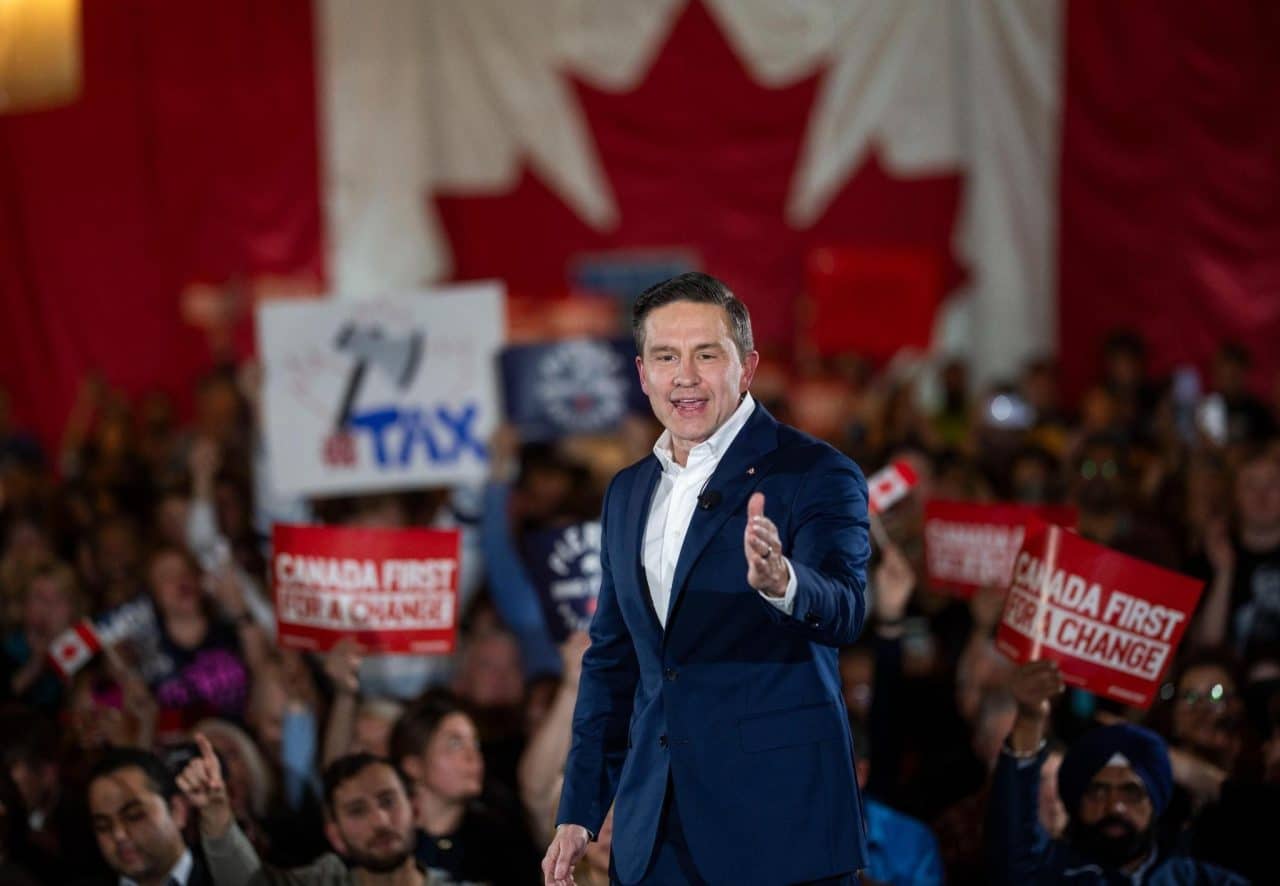
This is part of a broader trend throughout the platform. The Conservatives promise to repeal the Impact Assessment Act (Bill C-69), which mandates federal environmental reviews and Indigenous consultation for major projects. They also intend to eliminate clean fuel standards and to accelerate development in the Arctic and the Ring of Fire.
These policies directly impact Inuit and First Nation peoples, lands, and waters, but are framed entirely through the lens of “unlocking” resource potential. Resource “unlocking” is intended to benefit large, transnational corporations and governments, not Indigenous peoples or Canadians. Recent investigations show that much of the money made from fossil fuels is funneled outside of Canada, yet we pay the price for environmental clean up.
Absent from the platform is any mention of UNDRIP, the TRC Calls to Action or the Calls for Justice from the National Inquiry into MMIWG. There is no commitment to ending the over-incarceration of Indigenous peoples, no plan to address systemic racism in policing, and no recognition of the fact that extractive industries are linked to increased rates of violence against Indigenous women.
Instead, the platform focuses almost exclusively on economic development, policing, and streamlining regulatory processes—all of which have historically come at the expense of Indigenous rights.
This vision is not new.
It is a direct continuation of the Harper era. During Stephen Harper’s tenure, the Conservative government refused to launch a national inquiry into MMIWG, dismantled environmental protections through omnibus bills, and significantly reduced funding to Indigenous advocacy organizations.
It was under Harper that the RCMP and CSIS expanded surveillance of land defenders, while his cabinet minister Bernard Valcourt stood up in Parliament and called First Nations a threat to national security.
The oppressive Conservative regime under Harper resulted in the most significant protest movement in Canada’s history—Idle No More—a historic coming-together of Canadians and Indigenous peoples to protest against the breach of Indigenous rights, social injustices, and ongoing violations of Charter rights and freedoms.
Poilievre was a member of Harper’s cabinet and played a vocal role in advancing that government’s policies and ideology. On the day the federal government issued its apology for the harms caused by the Indian residential school system, Poilievre publicly questioned whether compensation was “value for money” and said Indigenous peoples needed a stronger work ethic. While he later apologized, he has not meaningfully shifted his stance in the years since.
His current platform, while rebranded with populist, inflammatory, and divisive language, follows the same policy trajectory: minimize regulatory oversight and facilitate private-sector development in Indigenous territories without guaranteed legal recognition of Indigenous governing jurisdictions or the right to free, prior, and informed consent.
The absence of institutional counterweights makes the 2025 platform even more dangerous. By repealing C-69, removing environmental oversight, and weakening legal obligations to Indigenous peoples, a Poilievre government would make it harder, not easier, for Indigenous governments to hold the government accountable through the courts or federal review processes.
The net effect would be a consolidation of power in the executive branch and the private sector, with Indigenous governments relegated to negotiating after the fact for compensation rather than engaging in advance about jurisdiction and land use.
That is not to say that this can’t happen under the Liberal government, like it did with Trudeau’s government breaching First Nation rights by buying the Trans Mountain Pipeline and approving its expansion without First Nation consent. But there is a clear distinction in how the Conservatives frame Indigenous peoples: not as Nations, but as market participants.
While the platform references working with Indigenous entrepreneurs and creating a Canadian Indigenous Opportunities Corporation, it does so without recognizing Indigenous governments as legal authorities. This approach aligns with broader Conservative rhetoric that reduces reconciliation to “getting things built,” rather than respecting treaties, inherent rights, or legal pluralism.
The Conservative platform is not merely a deviation from reconciliation: it’s a full regression. It offers no legal commitment to Indigenous rights, fails to address the many ongoing injustices like MMIWG, proposes to dismantle critical regulatory protections, and frames Indigenous participation in Canadian society through a narrow economic lens. This is a stark warning for anyone familiar with the Harper government’s track record.
Under a Poilievre government, Canada not only risks slowing reconciliation but undoing it altogether.
Indigenous rights benefit all Canadians
Too often, Indigenous rights are framed in political discourse as a niche issue, relevant only to First Nations, Inuit, and Métis. This framing is inaccurate, and it obscures the broader implications of Indigenous governance, land stewardship, and legal jurisdiction for the health, safety, and sustainability of Canadian society as a whole.
Indigenous rights are not a barrier to development. They are critical to social justice, environmental protection, public accountability, and climate resilience for all Canadians. When Indigenous governments are respected as legal authorities and their consent is required before projects proceed, the result is safer communities, greater legal certainty, economic stability, and better long-term outcomes.
One of the most concrete examples of this is the establishment of Indigenous Protected and Conserved Areas (IPCAs). These are lands and waters governed by First Nations according to their own laws and stewardship practices. Studies show that IPCAs are more effective at preserving biodiversity than conventional parks, and many also serve as critical carbon sinks.
The federal government has already committed to protecting 30 per cent of Canada’s lands and waters by 2030, a target that cannot be achieved without Indigenous-led conservation. While the Liberal platform promotes Indigenous-led conservation, the Conservative platform may well wipe out most environmental protections.
In British Columbia and Alberta, Indigenous fire stewardship has helped mitigate the scale and intensity of wildfires. These practices, developed over thousands of years, are now being reintroduced as part of broader climate adaptation strategies. Where implemented, they have reduced environmental damage and protected human lives, property, and critical infrastructure.
Respecting Indigenous rights is not a zero-sum game. The legal recognition of Indigenous governance systems, laws, land use practices, and jurisdictional authority creates better policy outcomes, enhances public safety, strengthens environmental protection, and builds more accountable institutions. These are national benefits, not special interests.
Too often what is touted as being in the “national interest” is oil and gas, but there can be no greater “national interest” than protecting all of our fundamental rights and freedoms.
Canada is right now grappling with overlapping crises of climate change, public health, housing insecurity, pushback against human rights, online misinformation, and far-right extremism. Indigenous rights and governance offer proven models for a more just future that benefits everyone.
This is why party platforms matter. It is not enough for candidates to acknowledge past harm or express support for reconciliation. What matters is whether they will take concrete, legally enforceable action to uphold Indigenous rights.
This means respecting free, prior, and informed consent. And it means aligning Canada’s laws, policies, and resource governance systems with the rights affirmed in section 35 of the Constitution and in international law.
Voters should approach this election understanding that reconciliation is not a rhetorical exercise. It is a legal and political process that requires clear commitments, legislative reform, and accountability mechanisms. The choice in this election is not simply about which leader can best go toe to toe with Trump or which party promises the most infrastructure.
It is about whether Canada will continue moving toward a framework that respects Indigenous rights and the rights and freedoms of all Canadians or whether it will retreat under the banner of deregulation and aggressive extraction.
There is no neutral ground in this decision. The 2025 election will determine which of these paths Canada chooses.

When I went to journalism school 10 years ago, my parents thought that they would eventually read my articles in The Montreal Gazette. Today, that newspaper is a husk of its former self. But I get to explain that I’m working towards critical, independent, and sustainable journalism.
Want to be a part of the future of journalism? Support our work with a monthly contribution. Sign up here.
– Amanda Siino, Development Director, The Breach



_05.jpg)