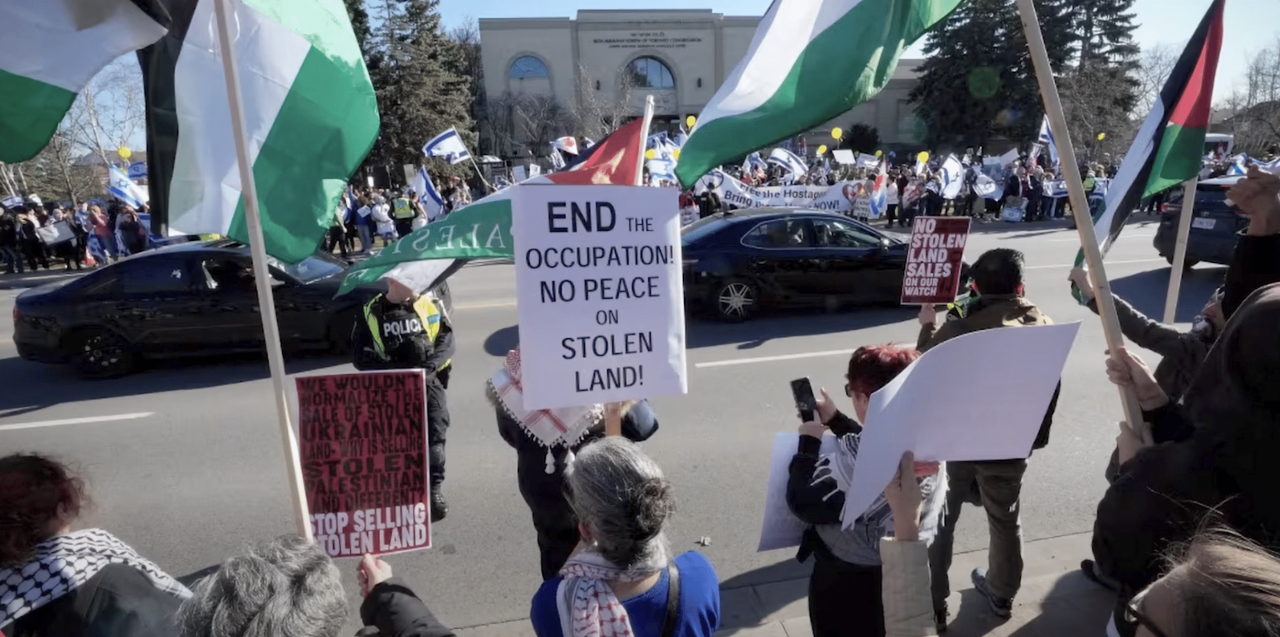
In the winter of 2024, dozens of demonstrators gathered outside a synagogue in Thornhill, where a travelling Israeli real estate exhibition was showcasing stolen land in the occupied West Bank for purchase.
Their signs read “No stolen land sales on our watch” and “Palestine is not for sale.”
Across the street, counter-demonstrators waved Israeli flags and demanded the return of hostages taken captive by Hamas during its attacks on October 7, 2023.
Despite a heavy police presence separating the groups, a man later drove his car up to the Palestine solidarity contingent and witnesses say fired a nail gun near them (he was later arrested and charged).
Despite the clear threat to those protesting the real estate exhibition, whom police described as peaceful, pro-Israel advocates soon shifted the public narrative to a frightening spectre of threats against Jewish people at their places of worship.
And under a new law now being debated in Toronto, such a protest could be deemed unlawful.
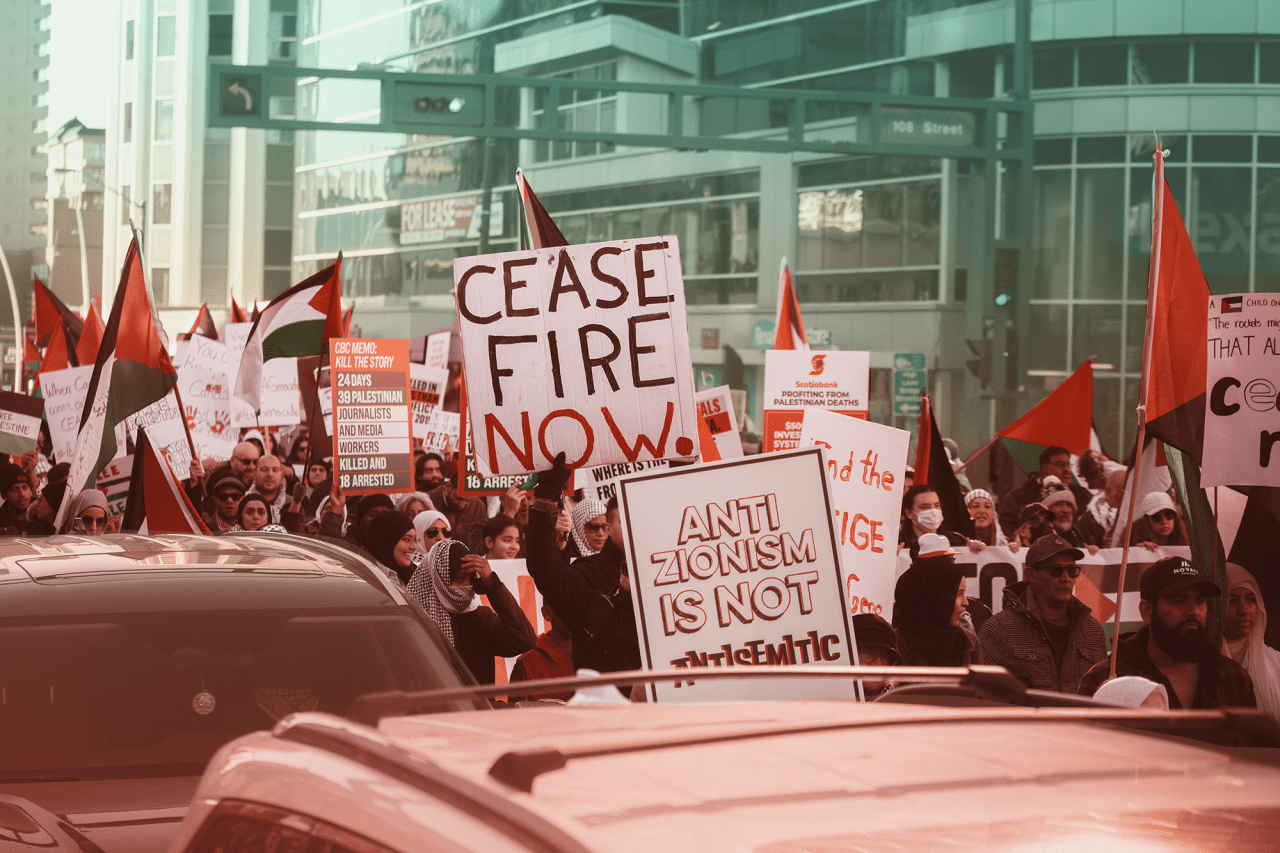
So-called “bubble zone” laws limiting demonstrations near certain public spaces are an escalating response to public expressions of solidarity with Palestinian people.
And they’re popping up all across Canada.
Supporters of these zones in Toronto include an intersection of Jewish groups, political organizations and elected officials who deflect criticism of Israel’s ongoing occupation and military destruction of the Gaza Strip. They routinely characterize Palestine solidarity demonstrations as targeting “places of worship and other religious or culturally affiliated spaces,” which they claim are “intended to intimidate the Jewish community.”
The argument seems to be that Palestine solidarity demonstrations are catalysts of hateful behaviour, and must be curbed to prevent Jewish people and supporters of Israel from being harmed and victimized.
While fear of violence and harassment is usually the stated reason for such laws, they have another use: silencing opposing political views, stifling dissent, and criminalizing expression that is supposed to be protected and encouraged under Canada’s Charter of Rights and Freedoms.
Bubble zones aren’t novel—they have a long history. Groups from across the political spectrum have used them to try to limit public demonstrations related to abortion, COVID-19 restrictions, Indigenous land defence, and queer liberation. Now they’re being trained on the Palestine solidarity movement—the latest tactic in a growing wave of criminalization of the movement over the past year and a half.
Bubble zones allow politicians to claim they’re standing up for the rights and safety of minority groups. But in practice, these laws diminish the value of public space, and temporarily pacify some communities while permanently eroding the freedoms and expressions of others.
Critics of bubble zones point to the many existing laws against violence, harassment, and threats, and argue that this new tool is about discouraging expression rather than ensuring safety. They say the right to free expression must be protected, including expressions that some people find upsetting or offensive.
Bubble zones popping up everywhere
The proposed Toronto bylaw for a 20 metre bubble zone around designated places of worship, schools, and childcare centres, is not a blanket regulation, but instead offers bubble zones upon request and for a limited time period.
An institution would have to apply for a six-month designation, claim that previous demonstrations had prevented people from accessing their space, and argue that it is likely to happen again in the future.
The Toronto proposal seeks to not only ensure access to the designated spaces, but also to prevent what it calls an “act of disapproval” toward anyone trying to enter. The mere act of telling someone they shouldn’t enter such a space would also violate the bylaw, and could result in a fine.
The proposal still allows for “peaceful gatherings, protests or demonstrations,” but discretion will be left up to bylaw officers or, more likely, the Toronto police, who have responded to Palestine solidarity actions with assaults, arrests and bogus charges, property destruction, and a public campaign to delegitimize dissent and increase their budget. (The author of this piece is facing charges for his participation in a peaceful Palestine solidarity demonstration in January 2024, though none of the charges have been proven in court.)
Toronto council estimates a cost of nearly $2 million to implement and enforce the proposal, and police say they’ve already spent more than $19 million on demonstrations and “proactive engagement” related to Gaza and Israel.
In recent months, the Ontario municipalities of Brampton, Vaughan, and Oakville have passed bubble zone bylaws, while Hamilton and Ottawa continue to study them. In many cases, the bylaws seem to be a direct response to the hundreds of local Palestine solidarity demonstrations held across Canada since October 2023.
The majority of these demonstrations have played out in public streets, squares, and parks, but a few have taken place near or in front of local synagogues. For example, in July 2024 several people wearing t-shirts with the words “Jews Say No To Genocide” were barred from attending a public event at Pride of Israel synagogue in northwest Toronto.
The event, dubbed “An Evening of Solidarity Against Hate,” was organized a month after acts of vandalism at two North York synagogues, including Pride of Israel. After police and private security refused entry to the t-shirt-wearing attendees, some of them sat down on the synagogue steps in protest.
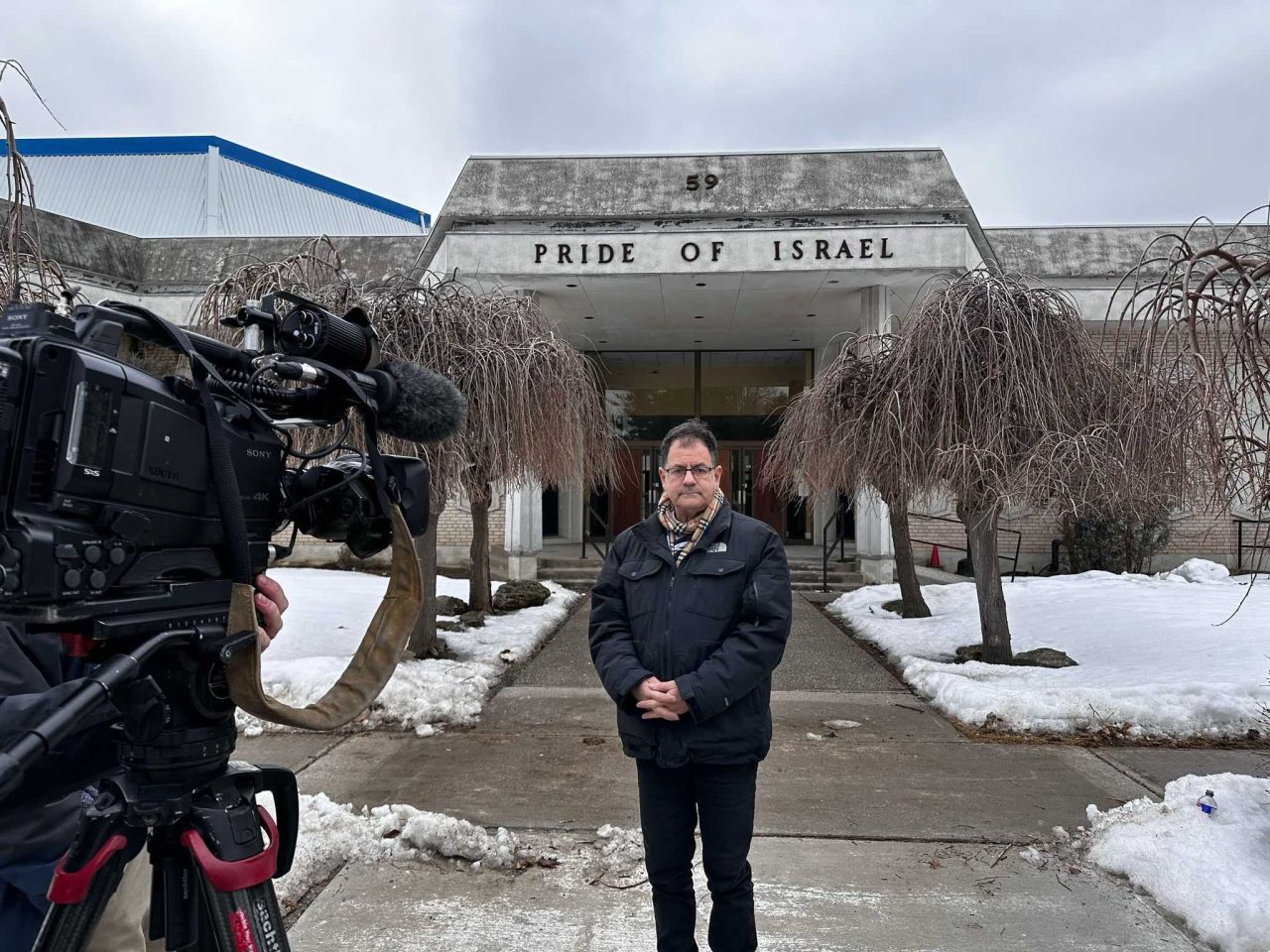
Ultimately, police and security officials physically removed the Palestine solidarity activists and deposited them on the adjacent sidewalk. No one was arrested or charged with a crime. One of those excluded was Marlee Wasser, who regularly attended services at Pride of Israel as a child. She later wrote that “the very real and understandable fears of Toronto’s Jewish community have been weaponized in service of those working to limit the freedom of expression of Canadians who support collective liberation for all people everywhere, including in Israel/Palestine.”
Events like these have served as a pretext for local politicians, Jewish groups, and pro-Israel advocates to demand greater legal restrictions of free expression. These advocates tend to blur the lines between acts of violence, like the throwing of rocks through a synagogue window, and acts of political dissent, like protesting the sale of land that is illegally occupied under international law. The blending of these very different acts could result in bubble zone bylaws that essentially treat expressions of Palestine solidarity as threats of violence.
Organizations like B’nai Brith Canada, the Centre for Israel and Jewish Affairs (CIJA), and the Alliance of Canadians Combatting Antisemitism have lobbied local city councils for bubble zones. In some cases, these groups push for sweeping restrictions that seem more focused on political discomfort than safety. As Oakville city council considered, and ultimately passed, its bubble zone law, Richard Robertson of B’nai Brith Canada argued that the proposal to keep certain demonstrations 50 metres away from a place of worship would not sufficiently protect people going to a synagogue.
According to Robertson, this distance “would not ensure that they would not encounter protests as they attempted to access their synagogue on foot,” and would “unduly subject them to the psychological harm of encountering nuisance protests targeting their synagogue.” He instead pitched a 100-metre zone and said that instead of restricting demonstrations only during the hours of religious services, the zones ought to be in effect at all times.
Advocates who say bubble zones aren’t restrictive enough may be unhappy with Toronto’s proposal, which only covers the so -called “primary purpose” of a space. So for example, synagogues that use their spaces for political events or land sales would not be covered under the Toronto bylaw.
Local councils can’t change the Criminal Code—which already forbids the disruption or obstruction of religious ceremony—but they seem dangerously open to the regulation of discomfort, fear, and political disagreement.
The roots of bubble zones
The origin of modern bubble zone laws in Canada dates back to the 1980s and 1990s, when anti-abortion agitators were bombing and sabotaging abortion clinics, assassinating doctors, and trying to deter pregnant people from accessing health services.
Between 1994 and 1997, three doctors who provided abortion services were targeted by a sniper—all three survived, and the main suspect behind the attempted murders was charged and convicted of killing an abortion doctor in the United States.
After the attempted murder of Dr. Garson Romalis in 1994, British Columbia introduced the Access to Abortion Services Act. The legislation prohibited protests outside abortion clinics, as well as doctors’ offices and homes. Several other provinces have passed similar laws.
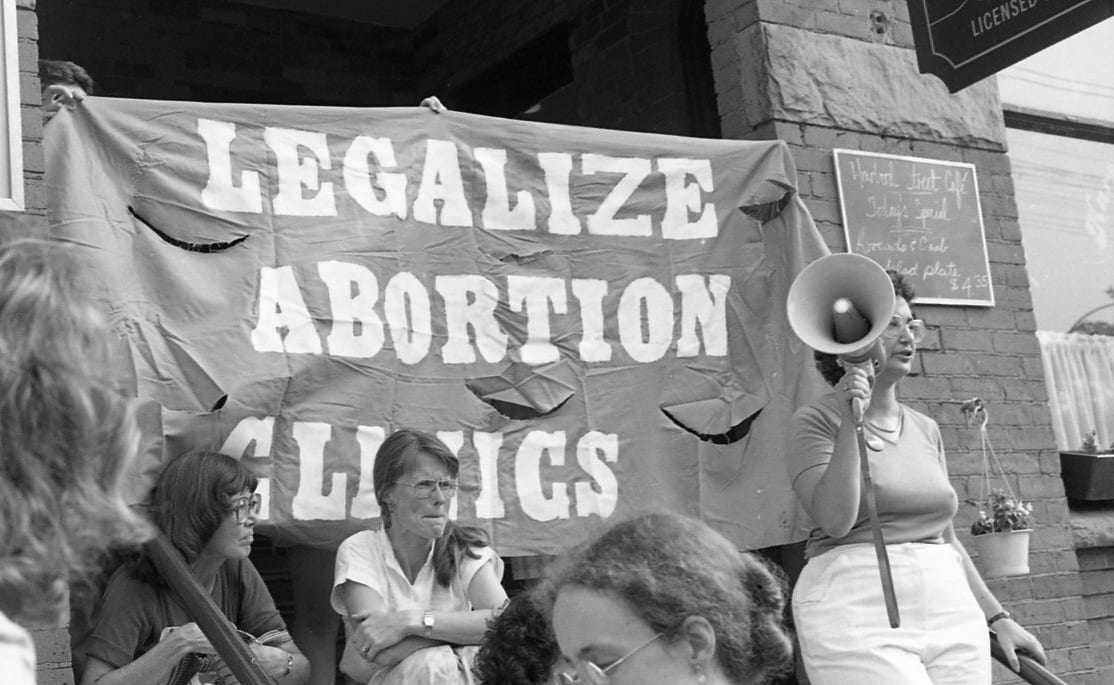
When anti-abortion activists challenged the law, the BC Court of Appeal upheld it. While the court agreed that the law violated protesters’ rights, it ruled that the restrictions were justified because of the need to facilitate access to health care services.
This distinction is key: on principle, courts in Canada are reluctant to limit free expression unless another right or freedom is being compromised. Given that newer bubble zones have generally not been tested in the courts, it’s unclear whether their stated benefits outweigh the seemingly clear violations of expressions they impose.
Governments have used other tools to limit public demonstrations and thwart the land claims of Indigenous peoples. In 1995, the government of Ontario infamously used a court injunction to confront members of the Kettle and Stony Point First Nation, who were occupying Ipperwash Provincial Park. The parkland had been appropriated from the Nation by the federal government during World War II. The confrontation led to Ontario Provincial Police acting sergeant Ken Deane fatally shooting unarmed Kettle and Stony Point member Dudley George.
In 2010, as foreign leaders came to Toronto for the G20 summit, Ontario premier Dalton McGuinty re-enacted the Public Works Protection Act, a 1939 law that gave police the power to detain people within a certain distance of the G20 security perimeter. After reviewing the application of the law, Ontario Ombudsman André Marin said it was “likely unconstitutional” and “should never have been enacted.”
At the time, police in Toronto also attempted to implement a so-called “designated protest area.” This arbitrary zone had no basis in law, but police ultimately attacked, assaulted, and arrested demonstrators who gathered in the makeshift space near Queen’s Park. More than 1,200 people were arrested and detained without charges during the G20, making it one of the largest mass arrests in modern Canadian history.
In the past five years, bubble zone proposals and laws have become popular within provincial and local governments. In 2021, in response to demonstrations against COVID-19 public health regulations, Quebec prohibited protests within 50 metres of schools, daycares, hospitals, and other healthcare facilities.
After protests in Calgary that targeted the LGBTQ+ community, including trans people accessing facilities that align with their gender, the local city council passed a 2023 bylaw banning some kinds of demonstrations within 100 metres of public libraries and recreational centres.
Christine Van Geyn of the Canadian Constitution Foundation, a group currently challenging the Calgary bylaw, has noted that “unlike abortion clinics, community centers and libraries can be and are used to host political debates during elections.” Van Geyn concludes that “the concept of banning a protest around a political debate is fundamentally undemocratic.”
Federal Liberals join the charge
Former Liberal MP Marco Mendicino—now Prime Minister Carney’s Chief-of-Staff—took the bubble zone concept to an absurd but predictable conclusion last year when he mused about creating buffer zones of 50 to 100 metres from politicians’ constituency offices and enforcing the new laws with jail sentences.
Mendicino’s proposal came in the midst of nationwide demonstrations at Liberal MPs’ offices against the Liberal government’s complicity with Israel’s genocidal campaign in Gaza. While some Canadians oppose Palestine solidarity protests, they also lack confidence in politicians, and likely see them as unworthy of such protections. To squash pro-Palestine dissent through new legislation, federal Liberals need to centre groups with more public sympathy than themselves, and they’re already moving in that direction.
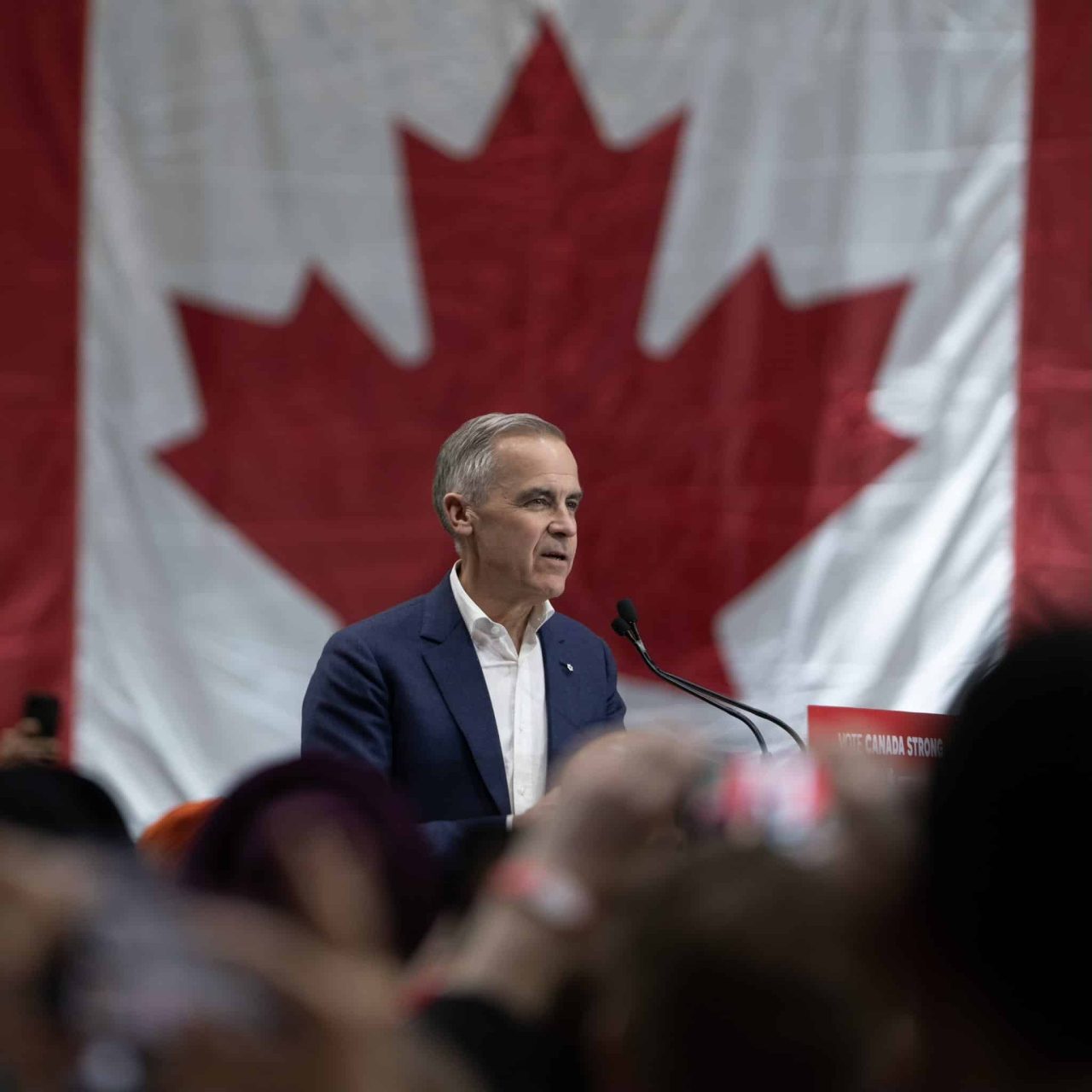
During the recent federal election campaign, Liberal leader Mark Carney hopped onto the bubble zone bandwagon and promised that if elected, his government would “make it a criminal offense a criminal offense to intentionally and willfully obstruct access to any place of worship, to any school any community centre, and we will make it a criminal offense to intimidate or threaten those attending services at these locations.”
Carney prefaced his remarks by citing the acts of vandalism at Sinai synagogue in North York and a decision by its leadership “to set up active shooter drills to prepare for the worst.” It’s doubtful that Carney believes bubble zones would stop someone from shooting up a synagogue, but the spectre of such violence is a useful political justification.
Although Carney also noted that there have been “far too many violent Islamophobic attacks on mosques and other places of worship and community centers,” anti-Muslim sentiment is usually an afterthought in the bubble zone conversation—if it gets mentioned at all.
Stacking the deck against Palestine solidarity—and other marginalized causes
Opponents of the Toronto bylaw are emphasizing this unequal focus of state power and the already-disproportionate policing of those who lack social and political power.
At a teach-in session on the bubble zone proposal this week in Toronto, panelists highlighted the existing racial and class biases of state power and police discretion. Irina Ceric of the Law Union of Ontario said the request-based Toronto proposal “privatizes public order policing.”
“It gives already privileged voices, who have the resources and know-how to summon or marshal the power of the state, even more power and an even louder voice,” she said.
Brad Evoy of the Disability Justice Network of Ontario noted that the presence of a child-care facility near the provincial legislature at Queen’s Park could restrict demonstrations there. “It’s Indigenous, Black, racialized, disabled communities that are often most acutely affected by issues across our community, and it’s our voices that are targeted by these kinds of bylaws,” Evoy said.
Dalia Awwad, a Palestinian organizer who has been supporting those arrested during Palestine solidarity actions, challenged police and media narratives about the movement. Awwad said that while recurring demonstrations last year on Avenue Road bridge over Highway 401 in North York were framed as antisemitic for being close to a neighbourhood with a large Jewish population, many of the demonstrators were themselves Jewish people from the local community.
Awwad added that while the bylaw would increase police powers, “the state has had no problem criminalizing people without this bylaw.”
University of Toronto professor and policing scholar Robyn Maynard suggested actions protesting anti-Black racism at schools in recent years would be subject to the bylaw. “Protesting institutional racism requires that we have access to protesting racist institutions, and we really see how these bylaws go exactly against this capacity,” said Maynard.
Her point cannot be overstated: students could be barred from demonstrating outside their own schools, and congregants pushed away from their places of worship. The prevalence of schools, community centres, and places of worship along the main streets where people march in protests could be closed off—and Toronto police have already been engaging in this behaviour without the bylaw.
While supporters of the bylaw may see its limited and discretionary nature as safeguards of free expression, critics cite discretion as the tool the state could use to target specific communities and causes.
For example, the Toronto proposal makes it unlawful to “perform or attempt to perform an act of disapproval concerning a person’s attendance at, use of, or attempts to attend or use Social Infrastructure.” This is a clear invitation for police to surveil and document demonstrations under the guise of bylaw enforcement.
Similarly, the bylaw forbids anyone to “persistently request that a person refrain from accessing Social Infrastructure.”
The public, if it understands the bylaw at all, might be convinced it’s safer to stay home than to organize an action where expression is so narrowly policed.
That outcome might be fine—even ideal—for those whose feelings and comforts are being legally enshrined, but it would be yet another blow to free expression and the regulation of public space in Canada.
The Breach’s investigations don’t just inform our readers—they force the powerful to react.
An exposé on blood plasma privatization led to national headlines. Our revelations about the government’s cozy connections to Big Pharma sparked a parliamentary probe. A report on high-tech price-fixing by mega landlords resulted in a criminal investigation.
From activists to elected officials, people are using The Breach’s journalism to push for transformative change.
– Dru Oja Jay, Board President, The Breach
Palestine Solidarity | As Jewish faculty, we stand against Trump’s purge of pro-Palestinian scholars
Palestine | CBC has whitewashed Israel’s crimes in Gaza. I saw it firsthand
Heather Reisman | In stunning pre-dawn raids, Toronto police ‘terrorize’ Palestine activists
2 comments
Comments are closed.
Hello,
The Palestine protesters have been aggressive and disrespectful. We had a graduation ceremony at Queen’s university in Kingston on Friday. All students and family members had one of the most exciting and long waited celebratory moments after years of schooling. Once we came out of the building we had a convocation, the Palestine protesters were waiting for us with their megaphones and flags. Our celebrations and excitements were immediately disturbed by disrespectful decisions of these protesters who lack morals and considerations for others. They were so loud that we couldn’t talk and everyone tried to ignore them and go on their special days that they were disturbed.
The bubble zone is needed for more areas if these disrespectful and inconsiderate protests continue.
Canada needs to bring back morals and basic respects for others.
This issue is further complicated by the fact that right wing protests often violate the perimeters of peaceful protest…and get away with it for long periods of time.