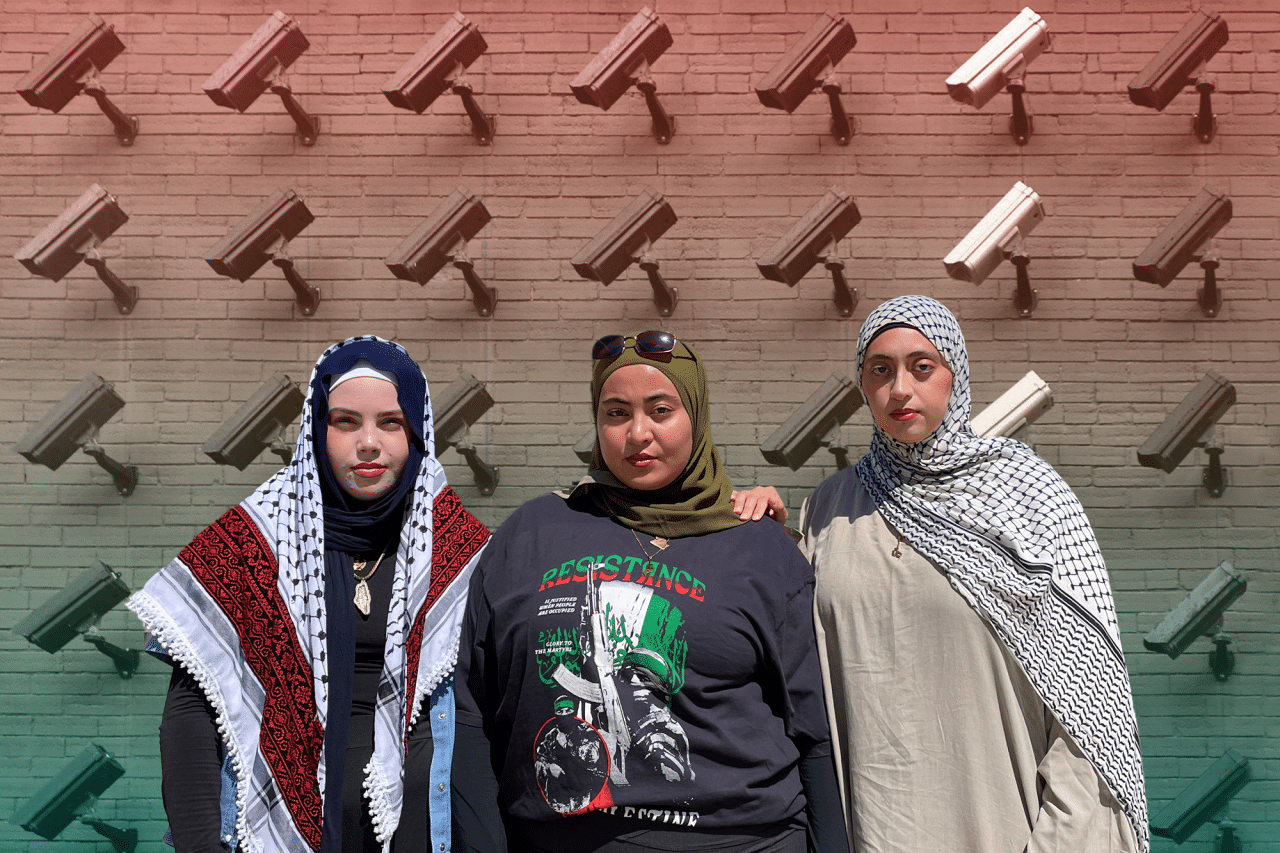
In 2024, top officials at the University of Alberta were deliberating about how to deal with a student encampment, one of dozens popping up around the country in response to Israel’s genocide in Gaza.
After locking down campus buildings, they shared an update with a network of other universities planning similar responses—on one condition: keep this “absolutely secret.”
It was clear why: in Alberta, the secretly-coordinated effort, which would culminate in militarized raids at multiple universities, would involve not just police but also an official from Danielle Smith’s UCP government.
An investigation by The Breach reveals how the Universities of Calgary and Alberta and many others across the country worked in tandem to suppress the activism of their students.
Documents acquired through access-to-information requests—often obtained amid delays, obstruction, and even the destruction of records by university officials—provide the most comprehensive portrait of the universities’ activities to date.
University emergency managers operated two parallel covert emergency management networks—one national, and one in Alberta. In the Alberta network, educational institutions collaborated with provincial government officials and police.
Through these networks, university emergency managers shared information to surveil and suppress Charter-protected political activity on their campuses.
Records reveal that an official from Alberta’s UCP government attended a secret emergency meeting of the network just one week before the scenes of police violence at the U of Calgary and U of Alberta.
He was not merely a passive observer, but a participant who personally asked how post-secondary institutions would keep his Ministry of Advanced Education informed going forward, establishing that channel for communications even before a single encampment had formed.
“All Albertans should be deeply concerned about the far-right provincial government’s interventions in the management and dealings of a university,” said Michael Litwack, a U of A professor who participated in the encampment at that university.
The University of Alberta insisted its communication update be kept “absolutely secret,” a practice that pervaded the networks.
When The Breach submitted over a dozen access-to-information requests for records of their activities, the universities systematically destroyed, withheld, and misrepresented the evidence of their secret coordination.
They released documents only after extensive appeals and legal challenges. Formal reviews through Alberta’s Office of the Information and Privacy Commissioner in some cases took months to resolve. Even then, Alberta universities often produced only heavily redacted records.
Over the course of more than a year, two Breach reporters cross-referenced what one institution said against what it told another public body, and what one reporter received against what another did not.
That approach exposed contradictions the universities hadn’t accounted for.
The encampment ‘emergency’
“Hi Bob,” began an April 18, 2024 email from University of Toronto (U of T) Assistant Director of High Risk, Crisis and Emergency Preparedness, Michael LeSage, to his counterpart Bob Maber at the University of Calgary. “I’m writing to…invite you to an orientation of a common online SharePoint forum: the Canadian Post-Secondary Emergency Manager Network.”
The Network’s purpose, LeSage explained, was to organize “emergency preparedness efforts” among emergency managers across the country.
Hours earlier, Columbia University had prepared to call in the continent’s first police response to anti-genocide campus demonstrations. New York City police officers arrested 108 protesters. In the days and weeks that followed, dozens more campus solidarity protests mobilized across the United States and Canada.
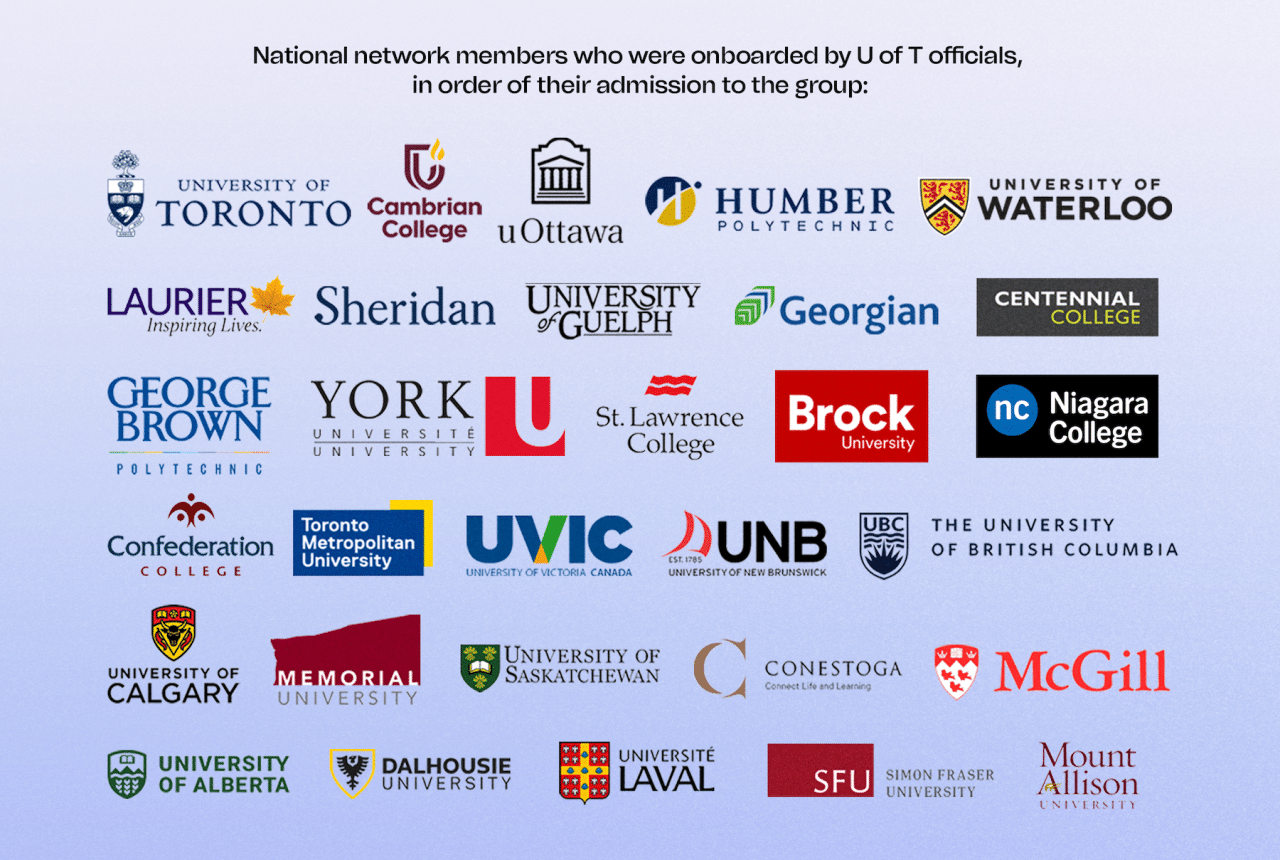
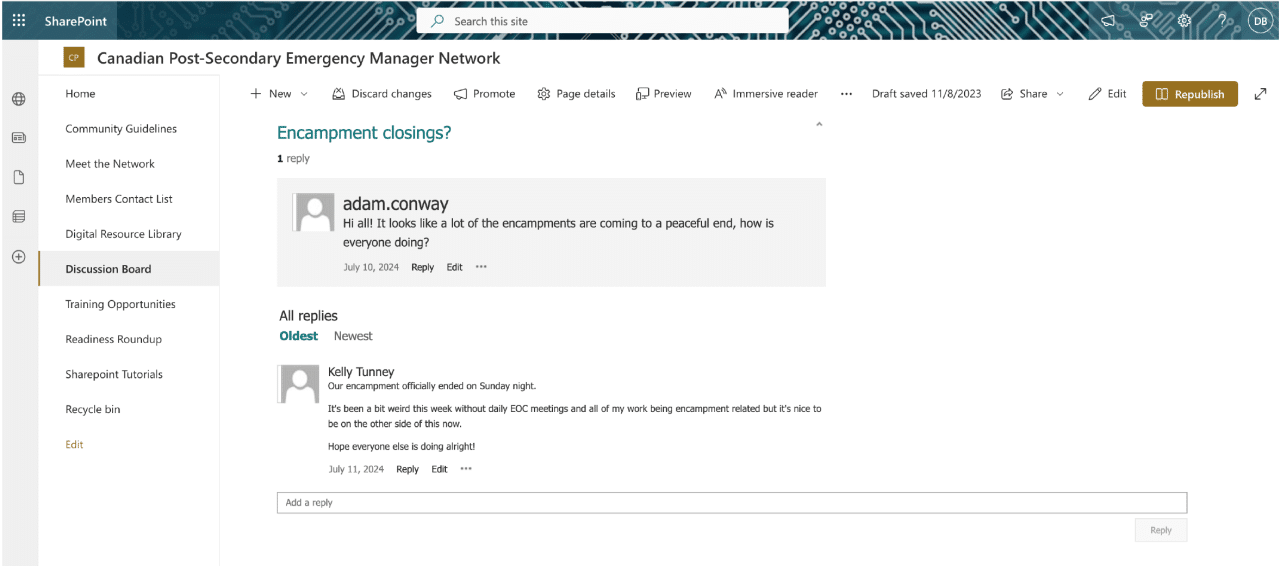
A string of access-to-information requests to U of T revealed that its national SharePoint network was created on November 1, 2023. The SharePoint hub had a discussion board, community guidelines, a members’ contact list, a resource library, an encampment “readiness roundup,” and training opportunities, with members from 30 Canadian universities and colleges.
In April 2024, as the first Canadian encampments formed, it underwent a “net-widening,” with U of T officials like LeSage onboarding new members.
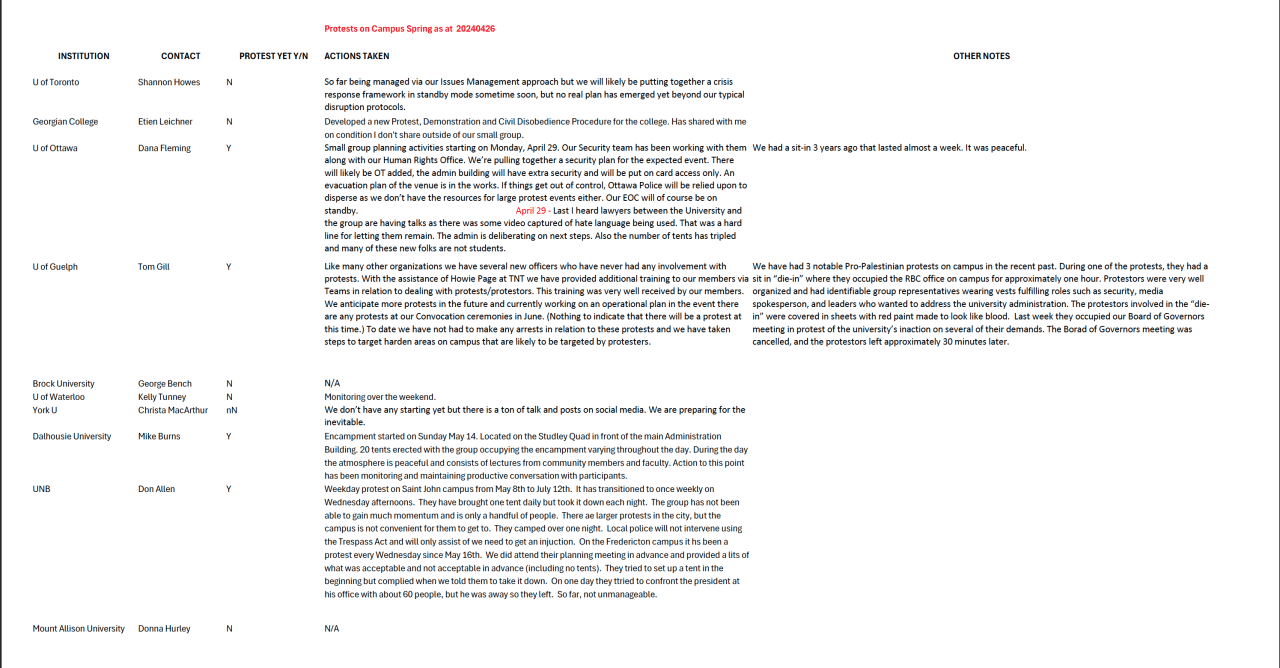
At the end of that month, Kathy Branton, manager of Business Continuity and Emergency Management at Humber College in Toronto, posted a spreadsheet to the network’s shared channel with real-time updates she had received from emergency management contacts at institutions across the country.
The spreadsheet listed updates from 11 institutions, each reporting on student demonstration activity and actions on their campuses.
McGill also coordinated a parallel network dedicated to “Business Continuity” that included some of the same members. That group’s activities remain unclear, but McGill told The Breach that its network is not related to the 2024 encampments, and that the two networks are “distinct entities and do not operate in conjunction with one another.”
The Humber College spreadsheet captured the network’s penchant for secrecy and exaggerated responses.
Georgian College shared a newly-developed protest response procedure on the condition it not be distributed outside the network.
The University of Guelph reported taking steps to “target harden” campus areas likely to be used by demonstrators. Responding to questions from The Breach, the University of Guelph further revealed that a security camera had been set up to monitor the encampment and that the university temporarily increased its security personnel during the encampment, “but scaled those resources back once they were found to be unnecessary.”
The University of New Brunswick reported asking police to remove protesters for trespassing, but police refused without a court injunction.
The University of Ottawa said it was ramping up security with guards expected to work overtime, Ottawa police on standby, access to the administration building restricted, a new evacuation plan being put in place, and the emergency operations centre on alert—all for an encampment that had yet to materialize.
Meanwhile, “helpful links” were being circulated in the SharePoint site that included “Online Harassment of Academics” and a YouTube video titled “Navigate Israel-Hamas War Prote––,” the end being cut off in the released record.
The case of the disappearing records
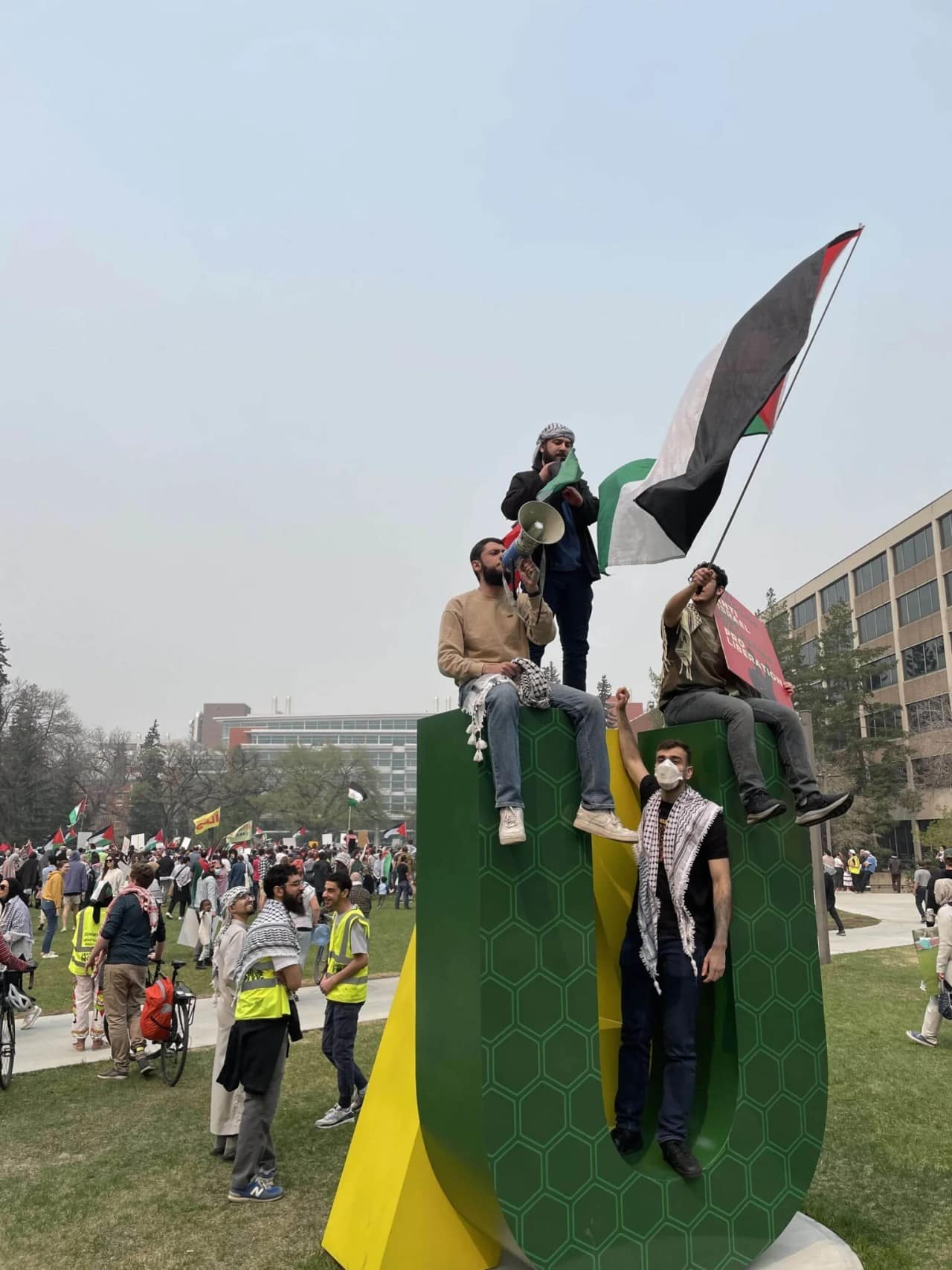
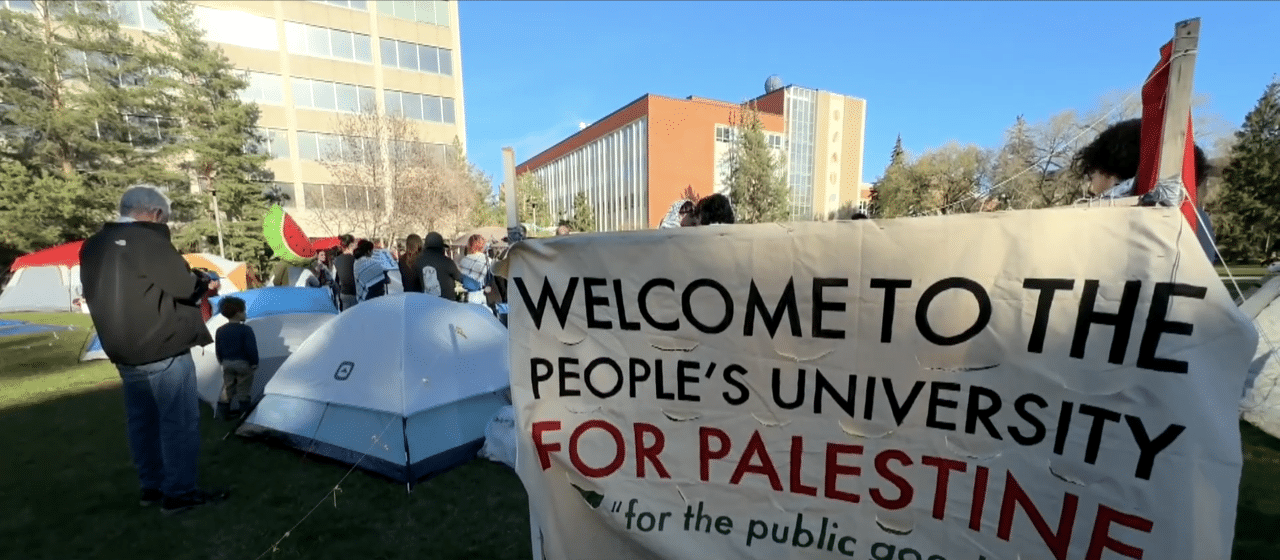
Through the spring and summer of 2024, two dozen Palestine solidarity encampments were established at Canadian universities. Some were met with considerable police violence.
But in response to access-to-information requests seeking all records—including deleted files—spanning the network’s lifespan, U of T produced only three records: the message from late April summarizing protest activity at the institutions up to that moment, and two messages from mid-July expressing relief after the U of T and UWaterloo encampments ended.
According to these records from U of T, not a single conversation occurred among emergency managers in the intervening months.
When pressed on the existence of the records, U of T responded: “If any Teams chats previously existed … they are no longer available due to the university’s 30-day deletion protocol for Microsoft Teams chats.” U of T records show that this policy was introduced on May 29, 2024.
However, the network operated through SharePoint, not Microsoft Teams.
SharePoint content is not subject to a 30-day deletion protocol; it is governed by separate retention rules and is intended to be a “more permanent location” for important information. (The U of T’s records retention schedule is currently “under review” and not posted publicly.) U of T’s response did not address channel posts, files, or SharePoint integrated content.
In response to questions from The Breach, U of T insisted that no further records existed in the SharePoint site concerning university encampments, and that the Canadian Post-Secondary Emergency Managers Network had undergone “years of preparation before launch and onboarding of members.”
The University of New Brunswick (UNB) also exhibited a curious inability to find records from the network.
The Breach requested UNB provide a list of staff who had joined the U of T national network and for records associated with the network. UNB responded that its retired Director of Security, Don Allen, was unable to find any such records and denied any involvement with the network.
But separate records obtained from the U of T showed Allen contributed to the SharePoint site. One of the records released was an email from the network’s U of T coordinators scheduling Allen’s onboarding to the network.
Denying the existence of records would be a pattern that repeated from the national network to the Alberta group.
Keep this ‘absolutely secret’
The national and Alberta networks operated independently, but their memberships overlapped. To document the Alberta Teams group, The Breach filed two access-to-information requests with MacEwan University, one with the University of Alberta, and one with the University of Calgary.
MacEwan hosted and administered the provincial channel, and documents show its Emergency Management office led discussions and meetings. Like the national network, the Alberta group was much more than a group chat.
The channel aggregated real-time intelligence from social media monitoring, police risk assessments, and cross-institutional briefings, and fed it directly to senior university executives.
Minutes after MacEwan University’s emergency manager Janet Dean received a tip from her counterpart at U of A, she alerted the provost and vice president of finance and administration of an Instagram account making demands of the university with respect to its relationship with Israel.
The Alberta network also operated under an agreement of secrecy.
As Dean prepared to brief MacEwan’s senior executives on the network’s encampment planning, Conway wrote to ask her to remove a sentence (redacted in the released records) from the update and replace it with a simple instruction: keep the update “absolutely secret.”
The stealth extended to the network’s police partners.
Edmonton Police conducted risk assessments and provided intelligence briefings to the network before any encampments began. According to Dean’s notes from a network meeting, which she circulated by email, when Athabasca University’s representative asked whether specific targets had been identified, Conway replied that “Edmonton Police has done most of the risk [redacted].” Calgary Police, for its part, established a mobile command post minutes after the U of C encampment formed.
Conway’s University Protective Services was also using facial recognition technology to identify encampment participants, as revealed in a review of the encampment response.
Over at MacEwan, the provost responded to the incoming encampment reports with concern about potential disruption of the new Triffo School of Business building, named for former chair and CEO of Stantec—a company that partnered with the Israeli Defence Forces to build “infrastructure” in Gaza and the occupied West Bank.
He confided to Dean and others in an otherwise redacted early-morning email.
“Let’s hope for a quiet day for the groundbreaking,” he wrote.
The Alberta government joins the planning
One week before police would storm the campuses of the universities of Calgary and Alberta, a pivotal planning meeting of the Alberta network took place on May 3, 2024. The meeting invite stated explicitly: “This session will not be recorded.”
But details of that meeting were logged in notes circulated by email, and obtained by The Breach through access-to-information requests.
In attendance was Taylor Daum, identified in the notes as the Alberta Ministry of Advanced Education’s Director of Capital Planning, FOIP and Emergency Management.
According to the notes, Daum asked during the meeting what post-secondary institutions expected in terms of encampment activity and how the ministry would be kept informed.
The notes also indicated that the University of Alberta had “already reached out to the Minister level,” establishing a reporting channel between universities and the province before a single encampment had formed in the province.
In the fallout of the police violence at the U of C encampment, Alberta Premier Danielle Smith appeared to walk a tightrope between showing support for U of C’s severe response and distancing her government from decision-making.
At that time, Smith said publicly that the province was simply “on standby” while “universities have to take a lead.”
But, a week prior, Daum had already participated in a meeting of the Alberta network—a fact that contradicts Smith’s public stance.
Months later, an independent judge’s review of the U of A encampment response would raise suspicions about the government’s involvement when it noted a different May 3, 2024 meeting between Smith’s cabinet ministers and university executives, all of whom were concerned about the possibility of encampments.
But the meeting between Daum and the Alberta university security managers’ network, which happened on the same day, was missed in the review. This is the first time details of that meeting have been revealed.
A report by Lily Polenchuk and Jeremy Appel shed light on Daum’s role during and after the encampments, guiding the government’s public messaging as well as its degree of involvement with universities’ own encampment responses. Daum also told government officials that the encampments were “less about emergency management” and “more about public relations and issues management.”
Polenchuk and Appel’s report also revealed that the Alberta government edited its public talking points in the days after the U of C and U of A encampments were set up, removing a reference to the government’s commitment to free speech on campus.
Their report details how Smith’s government was selective in its support of free speech on campus.
The Breach’s revelations about Daum’s May 3 meeting, along with Polenchuk and Appel’s reporting, deepen suspicions raised in the judge’s review by placing the Alberta government in secretive contact with the people making real-time decisions on the encampments—decisions that resulted in violence toward students and community members.
In a statement, Alberta Advanced Education did not address The Breach’s specific questions about Daum’s role and the timing of his involvement.
“Like our universities, our province speaks out of two sides of its mouth,” said Michael Litwack, the U of A professor who was involved in the encampment. “Freedom of expression only applies to those who support the provincial government’s ideological interests.”
Deny, delay, delete
The Breach’s two reporters filed separate access requests with MacEwan University for the Alberta Teams records. MacEwan told the first reporter that no Teams chat records existed; the second received 29 pages of email correspondence.
MacEwan’s contradiction deepened when The Breach made a parallel request to the University of Alberta. According to U of A’s disclosure, MacEwan advised U of A on which records to release from the network—records MacEwan simultaneously claimed did not exist.
When asked how MacEwan could advise another public institution on documents that did not exist, their story changed: they said the records had been deleted on June 17, 2025 by “the Owner of the Group,” presumably Janet Dean.
The university acknowledged that metadata remained in its Microsoft 365 system but said retrieving it would be too burdensome—an argument upheld in a ruling from the Office of the Information and Privacy Commissioner (OIPC).
Under MacEwan’s own rules, emergency management records should be “retain[ed] while active.” The situation was active by definition: students continued demonstrating on campus through late 2025 and into 2026.
Destroying any record also requires signed authorization from the department head, the privacy office, and—in some cases—the university archivist, as well as a destruction certificate that must be kept permanently.
MacEwan has not yet provided The Breach with the authorization form or destruction certificate for the deletion of the Alberta network. MacEwan’s privacy office said it became aware that the chat records were deleted only after both reporters had requested them—more than two months later.
The Breach asked MacEwan University questions by email, including about the destruction of messages that appeared to contradict MacEwan’s own processes, the nature of police briefings ahead of encampment clearings, and whether the university was aware of the connection between its business school’s namesake and the Israeli army.
MacEwan’s response did not address The Breach’s questions.
The University of Calgary took a more direct approach. As reported by Drug Data Decoded, heavily redacted Calgary police records revealed that the U of C’s campus security director and emergency management senior director met and corresponded with police throughout the U of C encampment.
When The Breach asked U of C for the same records, it said it found “no responsive records.” When pressed about the discrepancy, the university’s Access and Privacy Office replied that the institution is not required to retain records it “determines do not require long term preservation,” and refused to search further.
The U of C’s records retention policy requires that documents related to “minor and major security incidents” be retained for 25 years. The U of C did not respond to questions from The Breach concerning its records retention policy or its involvement with the two security networks.
In August 2024, The Breach requested security camera footage from the day police violently cleared the U of C encampment. The university declined to provide the footage. OIPC reviews of the records’ destruction and the withheld security camera footage are ongoing.
Among the universities, many institutions sidestepped, weaponized, or ignored the access-to-information process.
James Turk, director of the Centre for Free Expression at Toronto Metropolitan University, expected some level of coordination between universities on how they handled and communicated about the protests. “But they should coordinate in ways to facilitate what their policies call for,” he told The Breach, “which is students, faculty, and staff being able to have the right to express themselves.”
“That should be encouraged by the university rather than being suppressed,” he said.
For Turk, the universities’ denial and withholding of information in response to requests are revealing. “That tells me there were serious efforts to try to prevent or defeat these [requests],” he said.
The threat: students
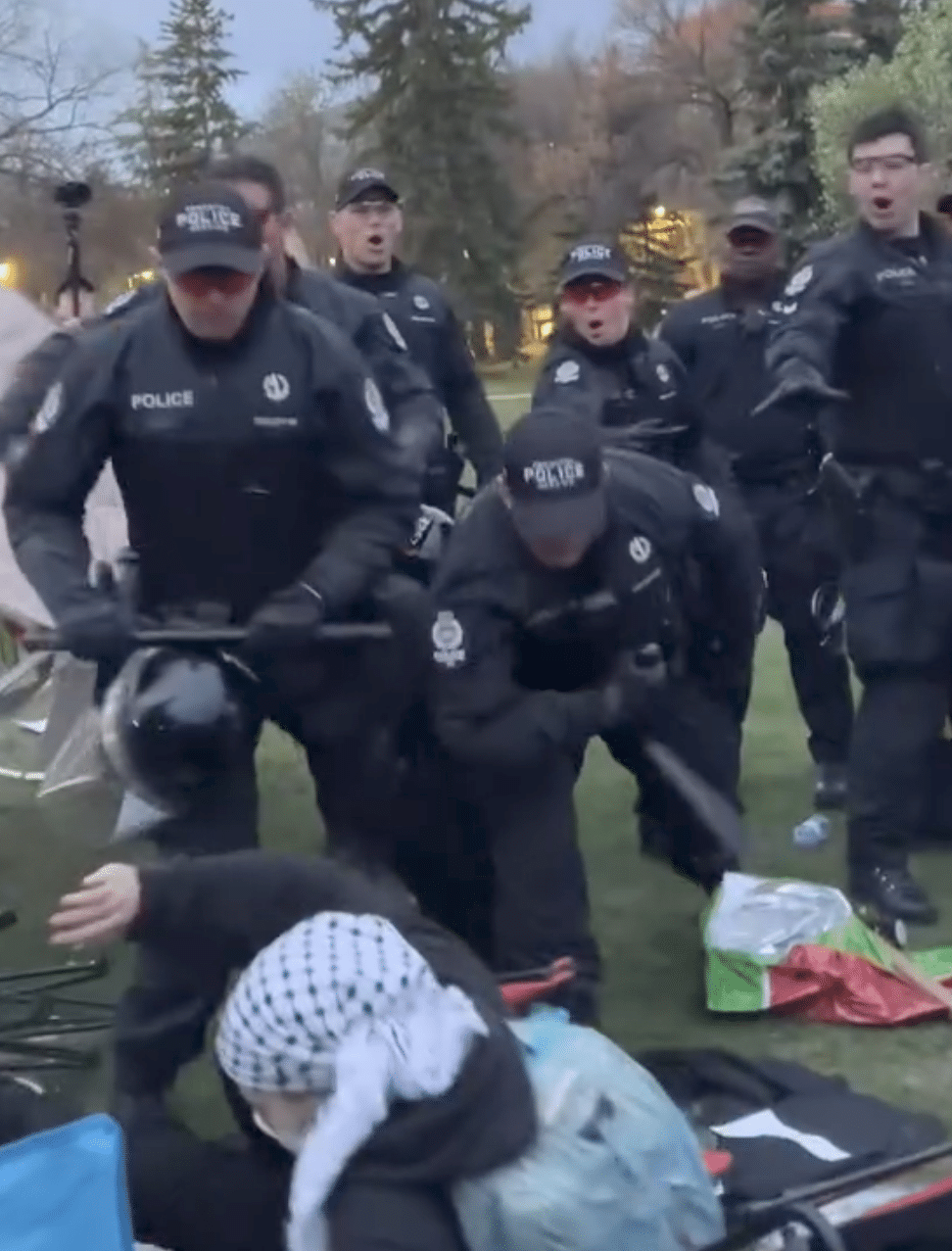
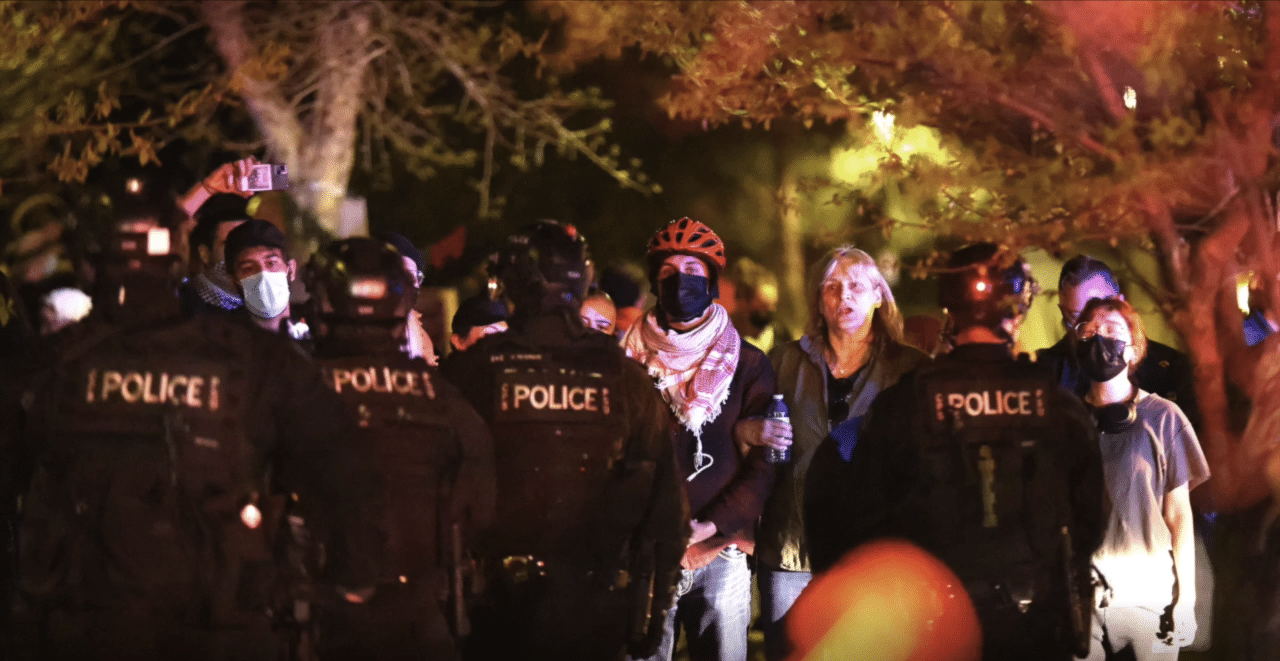
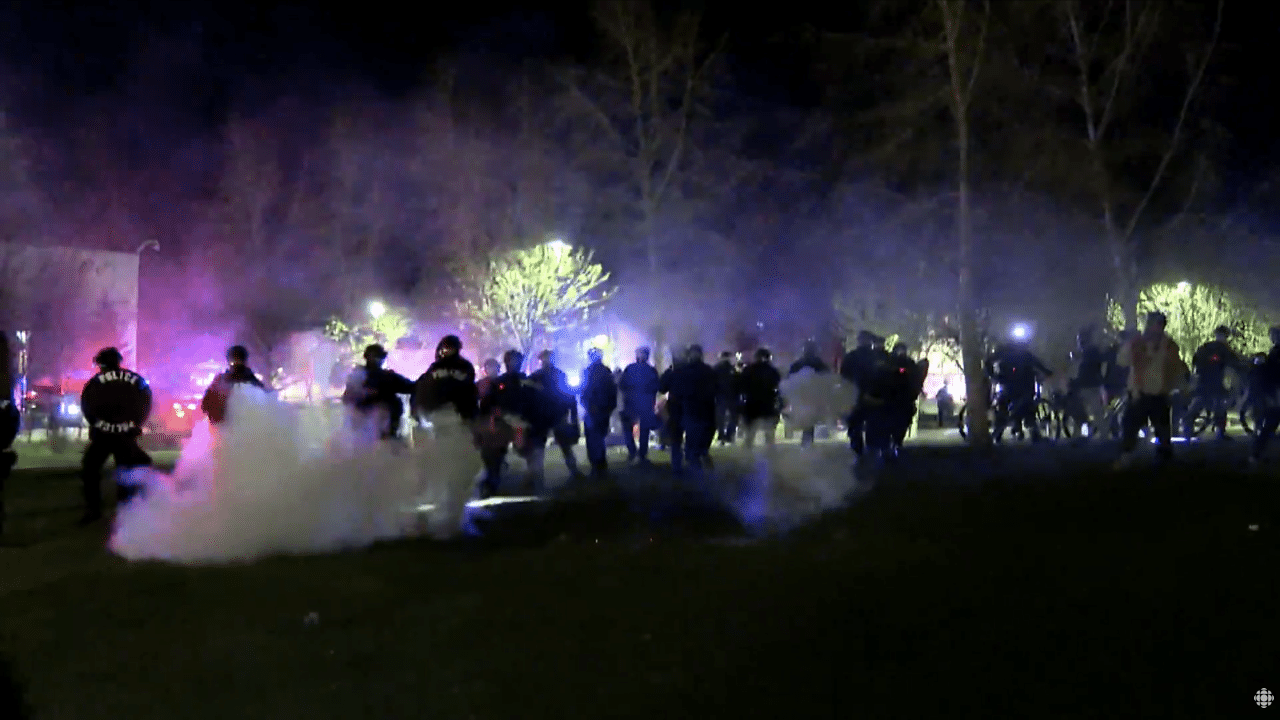
Nearly a hundred militarized Calgary police officers used flashbangs, batons, and riot shields to remove dozens of students and community members assembled at the U of C campus. The encampment didn’t survive a single night.
Thirty hours later, Edmonton police followed suit, carrying out a violent pre-dawn raid of the U of A’s encampment, set up the same day as U of C’s.
Demonstrators were left with serious injuries—ranging from concussions to pepper-spray burns.
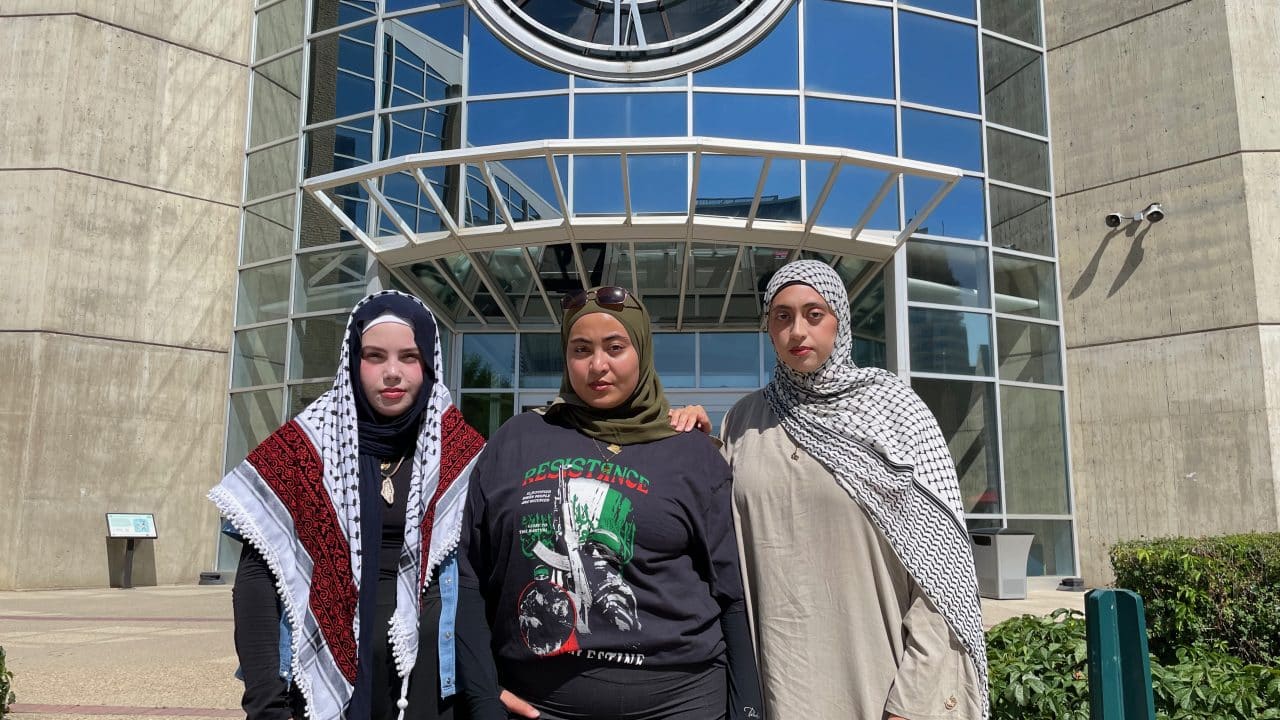
MacEwan suspended its anti-genocide student group, the Palestinian Student Alliance. Three former PSA executives, Nour Salhi, Eve Aboualy, and Abraar Alsilwadi, were investigated for misconduct, found guilty of causing a disruption, and barred from all non-mandatory university activities. MacEwan delayed notifying them until days before graduation, and banned Aboualy from her convocation.
In response to the revelation of the university network and other coordination, Salhi told The Breach, “We’ve always had the sense that there’s been conspiring going on behind the scenes, whether among MacEwan leadership or even outside of that with MacEwan leadership and external forces. So there is a sense of validation in feeling like it’s not paranoia, it’s actual truth.”
Yet Salhi expressed bewilderment at MacEwan’s central role. “This little university in Edmonton—not even the largest university—is one of the leaders in the charge against pro-Palestinian activists.”
Sara Carpenter, a professor in the Faculty of Education at the University of Alberta and a member of the Faculty for Palestine, said there was a double standard in the crackdowns on Palestinian solidarity.
“I have seen students occupy buildings over programs being closed, and they don’t meet this kind of resistance. They are not cleared out by riot cops,” Carpenter said.
“I have never seen universities respond to any issue the way they respond to Palestinian activism.”
Calgary police, Edmonton police, and nine universities mentioned in the national and Alberta networks did not reply to The Breach’s requests for comment.
In search of accountability
Two years after their May 9, 2024 injuries at the U of C encampment, nine demonstrators filed a civil lawsuit against the City of Calgary, Calgary Police Service, and U of C. (Story author Euan Thomson is among the plaintiffs.)
They allege violations of their Charter rights and an excessive use of force. The lawsuit names the university as a defendant for directing the police response and seeks more than $331,000 in damages. None of the allegations have been tested in court.
Three other plaintiffs have filed a parallel lawsuit against U of A. One of them is Litwack, the U of A professor who was at the encampment when the Edmonton police cleared it.
Since the 2024 violence on university campuses, no institution has faced public consequences for ordering forceful removals, violating Charter rights, or taking disciplinary action against students and community demonstrators. Despite loud calls from inside and outside the universities, no leadership figures have resigned.
One of just three released communications from the Canadian Post-Secondary Emergency Manager Network is from the U of A’s Adam Conway. He cheerfully messaged the group on July 10, 2024: “Hi all! It looks like a lot of the encampments are coming to a peaceful end, how is everyone doing?”
Just one reply was released in the records, from the University of Waterloo’s Kelly Tunney: “It’s been a bit weird this week without daily EOC [emergency operations centre] meetings and all of my work being encampment related, but it’s nice to be on the other side of this now.” (In reply to questions from The Breach, Waterloo confirmed Tunney’s participation in the network.)
Conway likely understood the coordination of the two networks would not survive scrutiny when he instructed the Alberta network to keep it “absolutely secret.”
The two years of obstruction that followed proved him right.
If you have any information for this story, please contact the authors in confidence.
Update (July 31, 2026, 9:55 a.m. ET):
Author Euan Thomson’s involvement as a plaintiff in the lawsuit against the University of Calgary and Calgary Police Service was accidentally omitted. The article has been updated to clarify his role.
Update (August 5, 2026, 5:15 p.m. ET):
Following an emailed response from the University of Toronto, The Breach is issuing an update to this article.
The article describes a pattern of universities delaying the release of records, releasing heavily-redacted documents, and withholding documents that were known to exist. This is true of many universities mentioned in the article. However, U of T responded to requests for information within the FIPPA-specified timeframe, with smaller redactions.
This article reports that “When pressed on the existence of the records, U of T responded: ‘If any Teams chats previously existed … they are no longer available due to the university’s 30-day deletion protocol for Microsoft Teams chats.’” In its emailed response to this article, U of T said that its national network “did not utilize Teams chat for information-sharing.” This claim is unverifiable by The Breach because of U of T’s deletion protocol. However, part of a photo caption in this article saying that messages from the national network’s discussion board were “presumably deleted” has been removed.
This article reported on two messages from the national network “expressing relief after the U of T encampment ended,” sent by emergency managers from the University of Alberta and University of Waterloo. These messages were sent not just after the U of T encampment ended, but also after the UWaterloo encampment ended.
The article reported that universities operated “two parallel covert emergency management networks—one national, and one in Alberta—comprising educational institutions, provincial government officials, and police.” Only the Alberta network’s meetings included information conveyed by police and provincial officials.
The article has been updated with these corrections.
The Breach’s investigations don’t just inform our readers—they force the powerful to react.
An exposé on blood plasma privatization led to national headlines. Our revelations about the government’s cozy connections to Big Pharma sparked a parliamentary probe. A report on high-tech price-fixing by mega landlords resulted in a criminal investigation.
From activists to elected officials, people are using The Breach’s journalism to push for transformative change.
– Dru Oja Jay, Board President, The Breach
Police | A notorious RCMP unit shaped B.C. universities’ reaction to Palestine encampments
Palestine Solidarity | As Jewish faculty, we stand against Trump’s purge of pro-Palestinian scholars
Palestine | Canadian students camping for Gaza aren’t antisemitic—they’re building brave new alliances for justice
You start this article stating that students are protesting Israel’s genocide. Since there is NO GENOCIDE happening, they are protesting a fallacy and disrupting universities. These protests are more anti-Israel than Pro- Palestine. These same hypocrites have never protested ACTUAL genocides in Sudan or Congo or the imprisonment of Ugyur Muslims in China. In short, these protests are only about hating Jews and the one Jewish nation on the planet. And to what purpose? Will screaming from the River to the Sea at a school accomplish anything? Not since October 8th, 2023 did any of these protests produce results.
Sorry Bob, but “hating Jews…” is not what’s driving this, but only how you explain to yourself something you can’t believe is true. But ethnic cleansing & genocide is the truth.
Exhibit A is Israeli citizens, government leaders who repeatedly and clearly are calling for genocide, describing their lust for ethnic murder, and cheering on the killing of innocent children, women and men, teachers, journalists, medical workers.
Even Former Prime Minister of Israel, Ehud Olmert states:
‘I say in the most explicit manner, this is ethnic cleansing and crime against humanity perpetrated and supported and financed and coordinated by the high authorities of the government’.
So what you can’t believe just happens to be true, so you should question your beliefs. And as a supporter, you know in your heart you want them all dead and gone, and if you have any friends and family in Israel, they will confirm it for you in their own words.
Oh look more propaganda. All you Zios are capable of is misdirection and self-victimization. Taking the side of genociders certainly is an interesting take.
Following in the footsteps of Israel in making claims without evidence, bravo bob.
Israel is an Apartheid state. You are defending modern day Nazis.
– Bob Sorger, genocide denier
100 percent. Universities are for educating ones self not protesting. If you want to legally protest do it off campus.
Wherever have you been Bob…….or even more to the point, who is paying you?
Everyone knows about the genocide in Gaza….its not only been live streamed, some of us have read posts by Israeli soldiers bragging about the destruction of property and life. And yes, there are other atrocities happening around the world…but none has reached the extreme or the visibility of what is going on in Gaza….as well as the West Bank.
And none of those other crimes against humanity justify the hard work of our public universities to shut down legitimate dissent.
You startd your response stating that there is no Genocide happening. Your entire comment only makes sense if we agree with your assertion, which goes against the published findings of dozens of International Aid Agencies.
Since there ABSOLUTELY IS A GENOCIDE happening, these students are protesting an actual Genocide. These protests are more pro-Palestine than anti-Zionists, and aren’t against the Israeli people.
In short, you are only about hating Palestinians and seeking to do to them what Angry Little Flatulent one-testicled Austrian Man did to the Jews in Germany.
And to what purpose? Will screaming denials of a clearly recorded Genocide accomplish anything? Not since October 8th, 2023 did any of your lies produce results. We see the evil YOU do, you bootlicker of Zionists.
Actual Jews are ashamed of what you’ve done to their religion.
By the way, should there be a wholly Muslim Nation that regularly represses non Muslims? Should there be a wholly Christian Nation that regularly represses non Christians?
Then why should there be a Jewish nation that regularly represses non Zionists?
You deny the genocide. You are a bastard.
I understand from multiple sources that 73,000 Palestinians have been killed. Your position that there were none is absolutely not credible and does nothing at all to reduce antisemitism.
💯💯💯💯💯💯
And how many tens of thousands of Palestinians have been murdered in the past few years. How many Israeli Settlers stolen Palestinian land in the West Bank?
Dude, no genocide? Why the genocide denial? And as many Jewish individuals and groups also denounce the OBVIOUS genocide going on, your accusation of Jewish hatred and anti-semitism rings false. I for one am glad that there are enough folk willing to speak out against the atrocities that too many so blindly support.
Canadians are not responsible for the behavior of foreign governments acting on their own soil. Do not bring your fight to disrupt the country that is providing refuge and education for you. Have the guts to go home and take the fight where it belongs.
This is a shocking and disturbing account of the violent suppression of students protesting the mass murder of Palestinians. What a disgrace. The world can no longer look away when Shitrael drops 100,000 tons of bombs on an area five miles wide and 20 miles long, where people are locked in and cannot escape even if they wanted to. This psycho regime has killed medical workers, aid workers, woman, children, the elderly and disabled and journalists documenting the carnage. They have destroyed homes, hospitals, clinics, schools, mosques, universities, agriculture, water and sewer systems, etc. 95% of buildings in Gaza have been destroyed or damaged. They have kidnapped thousands of Palestinians and hold them in torture prisons. They continue to starve, brutalize and kill them. Now they are terrorizing and killing Palestinians in the West Bank. Call it whatever you want. Mass murder, ethnic cleansing but I call it genocide which means the intentional action to destroy, in whole or in part, a national, ethnic, racial, or group. It is recognized as a severe international crime.
Not a genocide? You must not follow the UNs definition of genocide. Israel has fulfilled EVERY qualifier for their actions to be labeled “GENOCIDE” Labelling Israel’s actions as GENOCIDAL is NOT antisemitism, but truth. Israel’s treatment of Palestinians is on par with Germany’s Nazis.
Excellent article! Israels nasty tendrils have reached into our already corrupt educational institutions. These university employees are disgusting, as are the police in this matter. Wild that our country capitulates to a terrorist armpit nation across the globe that acts against our interests.
The United Nations Human Rights Council disagrees with you.
https://www.ohchr.org/en/press-releases/2025/09/israel-has-committed-genocide-gaza-strip-un-commission-finds
Please shut the fuck up, Bob.
All one needs to understand the complete perfidy of the west, is to get up to speed with the good work all our institutions, including our public institutions, have done to silence any opposition to a genocide playing out in living colour…..
Canadians may shake their head at how Zionism has taken control of America, but here too, just perhaps a bit more subtly, the Zionists are in control.
Tune into the ad on CBC “Cars for Kids”, where a band of minors shills for a supposed charity that we read recently sends money to Israel. We assumed it would be pulled. No such luck.
Even on our National Broadcaster, the charitable work for Greater Israel continues.
That our public universities are now capable of mounting country wide, secret chats to determine how to silence any protest of the genocide in Gaza doesn’t surprise me.
That even the Breach censors some of my comments…….does.
Most of this just sounds like reasonable planning on the part of the universities. When there are groups threatening to disrupt campus activities it would be irresponsible for administrators not to plan for that.
It also demonstrates a surprising willingness between the universities to share resources and training opportunities which, for something like emergency preparedness, is actually very productive.
The secrecy surrounding aspects of their emergency planning also makes sense given the potential issues they were planning for. None of this happened in a vacuum. There were students occupying university buildings and taking hostages in other places. Based on the information they had all of their actions made sense and were reasonable.
The fact that the government was offering support also makes sense. The provincial governments oversee universities.
The whole article basically reads like someone who supported the student protests being angry that universities didn’t completely roll over and do everything the students wanted immediately. Even though the universities did mostly just roll over. But that wasn’t enough for the author so they are grasping at straws to find a conspiracy that doesn’t exist.
I’m shocked at the way Canadian universities breached students rights to free speech, free association! University education that I received promoted advocacy, standing for the oppressed! I see now that challenging the Israeli genocide is the exception to what is allowed/encouraged, an unstated exception in the Bill of rights, and in “academic freedom”!
Why is it that the supposed genocide in Gaza is worthy of protest but Palestinians calling for the genocide of Jews is acceptable? As Mr Sorger rightly pointed out these are not protests over genocide in general, just anti-Jewish and anti-Israel activists to which the Breach can be added.