“I was laid off from my job at the factory and I don’t know if I’ll be able to pay rent.” Calls like this are flooding into the tenant union I organize with, echoing a growing sense that there’s nowhere left to turn for help.
Long before the re-election of Donald Trump as President of the United States, tenants across Canada had been struggling to keep a roof over their heads. Now, his tariff war is making the housing crisis even more dire.
The economic uncertainty Trump has unleashed is already leading to layoffs and reduced hours, particularly for workers in trade-dependent industries. This is having immediate repercussions for housing: the stress of not being able to pay rent looms large for more and more people.
The recently announced federal election is going to be about tariffs and the impacts that changes to international trade have on regular people. But if the parties are serious about protecting people from the impacts of this trade war, a national rent freeze must be on the table.
A report by the Canadian Centre for Policy Alternatives from September 2024 highlighted that rent increases across the country are far outpacing wage increases for those earning minimum wage. A minimum-wage worker would need to earn nearly double their salary to be able to afford a one-bedroom apartment in a major Canadian city.
While tenants are struggling to keep their homes, landlords have been increasing their profits.
Discussions on housing in Canada rarely mention landlords’ profits, especially those of corporate landlords or REITs. But just recently, one of Canada’s largest landlords, Killiam, reported their largest increase in net operating income in the past five years.
The time is ripe for the federal government to legislate a national rent freeze and eviction moratorium across the country.
Many will argue that this is an impossible demand: They will say housing is a provincial issue, protest that a freeze would discourage the building of new rental housing, or parrot any of the other classic arguments made by powerful players who benefit from inaction.
But this crisis calls for urgent action. It’s time to throw the excuse of jurisdictional limitations out the window, as we have in the past.
A national rent freeze needs to happen now—and we can take inspiration from Canada’s own wartime playbook.
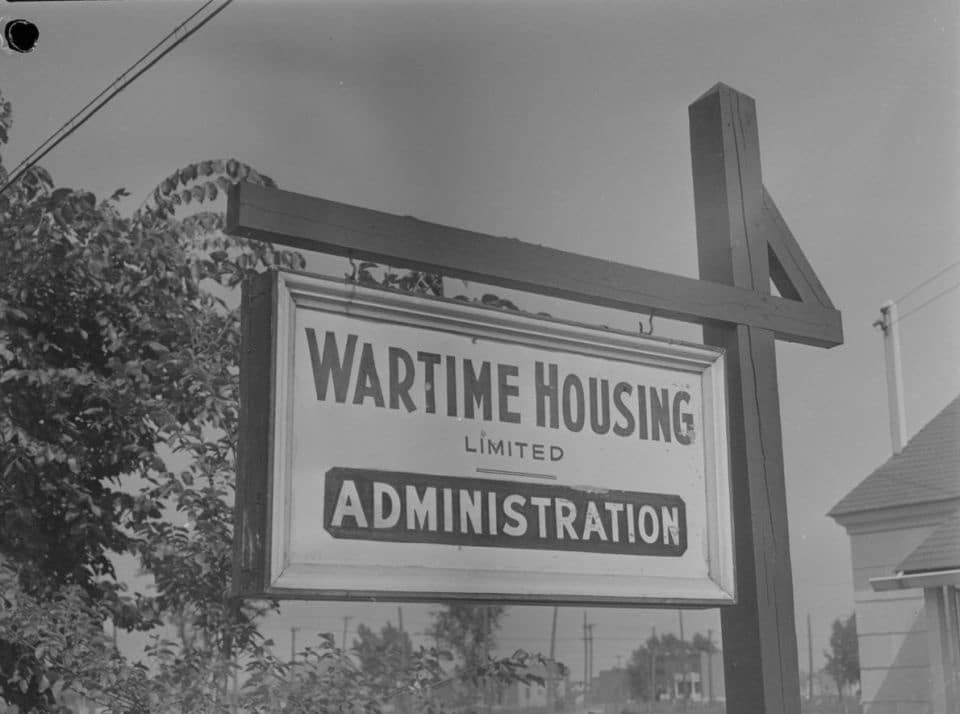
A wartime footing gave rise to tenant protections
During the 1940s, Canada faced a different kind of crisis—one that echoes the economic turmoil we’re seeing today.
As the country entered World War II, the government enacted the War Measures Act, granting it—among other things—extraordinary powers to regulate the economy.
One of those powers was the ability to control rent prices to prevent skyrocketing costs amid wartime inflation.
Following pressure from organized labour and community organizations, the government established the Wartime Prices and Trade Board (WPTB) to manage price controls—including on rent.
While the WPTB first began by pushing for rent controls in specific communities, the severity of the country’s rental crisis led the Board to establish a nation-wide rent freeze in November 1941.
The rent freeze was critical for curbing wartime inflation while providing stability for tenants at a time of crisis. Alongside this rent freeze, a ban on evictions ensured that landlords had a difficult time ousting tenants.
Eventually, the federal government lifted these rent controls, letting markets dictate rent costs. But in the mid-1970s, in response to high inflation, the federal government stepped in again, compelling provinces to enact rent control. This time, provincial governments put in place their own policies that limited rent increases—some of which remain in place today.
The wartime decision to impose a national rent freeze, the ban on evictions, and the rent controls imposed in the 1970s revealed that the government understood what we already know: markets cannot be trusted to set fair rents, and crises demand the federal government to act with resolve. There is no time for piecemeal policies or tortuous province-by-province agreements.
But these policies didn’t come from the goodness of the WPTB’s bureaucratic hearts. Their introduction was made possible through a mobilized tenant and organized labour movement acting together.
In Vancouver in the 1940s, there were large tenant protests against evictions, with labour as a major player. The Vancouver Labour Council was a leading actor in pressuring the WPTB to act on what the council called the “deplorable situation of housing in Vancouver.”
Tenants across the country organized fights against evictions and high rent increases. Together, they built a movement that forced the government’s hand.
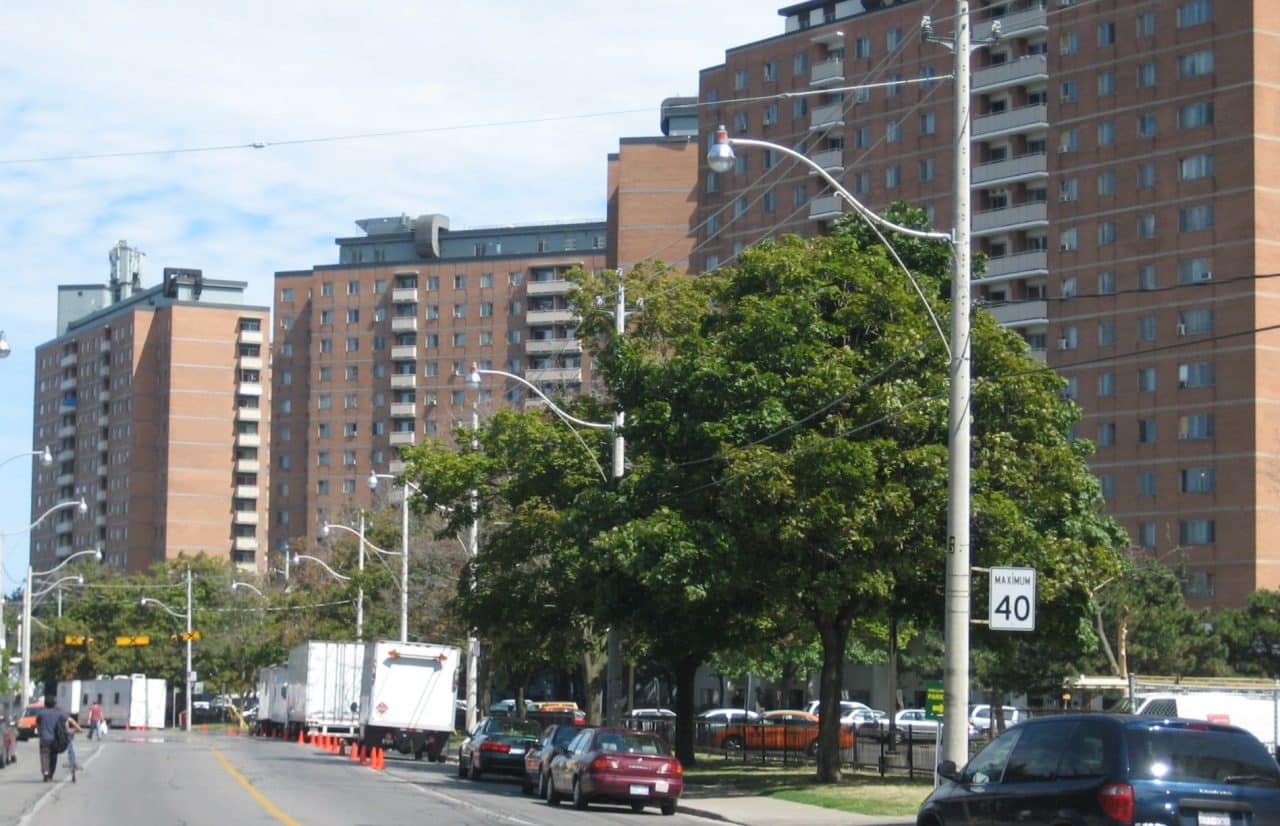
Stability needed to counter tariff chaos
Fast-forward to today, and the arguments made in the 1940s for freezing rent and banning evictions still ring true.
A nation-wide rent freeze would offer immediate relief to tenants who are already feeling the pressure from high rents and economic uncertainty. It would stabilize housing costs and protect tenants from being forced out of their homes due to unaffordable price hikes during an already difficult time.
It would also put the burden of price instability on those who generally dictate those prices—in this case, landlords.
Corporate landlords, those who control thousands of units, are setting the terms of the market. They use tools like artificial intelligence software such as Yieldstar to coordinate hiking prices. Although rent control does exist in many provinces, corporate landlords exploit loopholes—such as frequently requesting “above-guideline rent increases” and using their superior access to legal representation to persuade bureaucrats—to justify ever-growing rents.
Of course, a rent freeze isn’t without its critics. A common supply-side argument is that freezing rents stifles the construction of new rental units because if rents are set in place, the profit incentive for developers is reduced.
But the facts don’t agree. In times of economic turmoil, developers sit on land instead of building—despite generous tax incentives, free land, and other benefits. The private sector won’t step in to create more rental housing, even if you take out rent control entirely.
For proof one need look no further than Ontario, where the Doug Ford government partially rolled back rent control in 2018 under the guise of spurring new construction, which it said would eventually lower rents. Seven years later, rental rates continue to skyrocket, tenants have little recourse, and the allegedly hoped-for construction boom in affordable rental housing has failed to materialize.
But here we can take another page from the wartime playbook: the massive construction of housing by the government. We don’t need to rely on profit-seeking developers to build our housing. The government could do it, like it did during the period around WWII.
Government-built and -run housing side-steps the profit requirement altogether. With that out of the way, the focus can return to building the kind of housing people need, in the places where they need it.
It would also boost local economies and provide guaranteed employment for thousands of construction workers, who at the moment rely on a very unstable residential construction sector.
An eviction ban could also be established to protect people during the instability of the tariff crisis. It would allow people to remain housed at a critical time, with economic volatility and an ever-growing unhoused population in Canada’s cities. It would also disincentivize landlords from trying to displace long-term tenants from their units.
And the best thing is that it has been done before: as recently as during the COVID-19 pandemic, when most provinces enacted eviction bans to keep people housed during a time of crisis.
Tenants have to fight for what they need
During World War II, Canada used extraordinary measures to protect people from the economic fallout of war. Rent controls and eviction moratoria, along with the construction of new housing, were critical to keeping families housed during a time of national crisis.
Today, we face a different set of challenges, but the core issue is the same: truly affordable housing is out of reach for too many tenants, and the federal government has the power—and the responsibility—to act.
The mobilization of tenant and labour organizations was key to getting the federal government to impose a rent freeze during the war. Winning protections for tenants now will again require tenant unions together with the labour movement to mobilize and increase pressure on the federal government to act.
In recent years, we have seen a wave of tenant organizing across Canada, from rent strikes in Toronto to mass resistance to evictions in Vancouver, Montreal, and Ottawa. Most of these fights are directed at corporate landlords that are taking control of our housing and economy.
The labour movement is slowly coming back to debating housing, supporting tenants, and rethinking its role in the fight for housing justice.
The tenant movement is being put to the test of time. National coordination between local organizations would be a stepping stone in connecting the struggles, discussing a common strategy, and getting the federal government to act on a rent freeze and eviction moratorium.
It is no small challenge, but it can be done. It was done before; it can be done again.

“We need media that enlarges the sense of what’s possible.”
Naomi Klein, journalist and author
Want to support hope-fuelled journalism? Become a sustaining member.
Social Movements | To win housing justice, we have to ‘get profits out of the equation’
Housing | Ontario’s rent allowance isn’t a safety net—it’s a poverty trap

Corporate Power | Investors, not immigrants, are fuelling the housing crisis

7 comments
Comments are closed.

I am selling off all my rentals in the Stoney Creek/Hamilton area. The LTB is dysfunctional, and l don’t need this stress as a Landlord. Freezing rent increases will only make more Landlords angry and want to sell off their properties, thus less homes for Tenants.
Rent freezes, this is a war of brought about by liberal incompetence, misfeasance and is easily cured with a new government focused on prosperity for all Canadians with good jobs and salaries. We should be a powerhouse with all our natural resources instead we were led by ideologues and incompetents. Now you want to introduce more punitive measures, think all landlords can afford these rate increases without increasing rents? That’s absurd and would result in foreclosure for some their life savings gone. Stop the insane immigration, stop the policies that created this crisis.
Surely more people would become landlords with more regulations! Are the homes for our growing population going to build themselves?
Hahaha, ya go after landlords because life is expensive. Forget the grocers who raise prices when they feel like it. Forget the utility companies. Forget the Insurance industry. Not to mention employers, who are the last to pay people what they are worth. Let’s go after landlords. Why? Because they are any easy target.
Yes. Go after the greedy landlords who find ways to get rid of their tenants so they can charge more money. Don’t buy a building amd then do unnecessary renovations, then turn the expense over to the tenant, then get rid of the tenant because after paying for your renovations they can no longer afford to live there. Just greedy, nasty greed. No social consiciwmce.
Sounds like more liberal disastrous policies
Maintenance costs, taxes, insurance and mortgages would also need to be freeze and any repairs would have to be cover by the taxpayer if people want to have landlords subsidize dwellings. This article is extremely one sided..