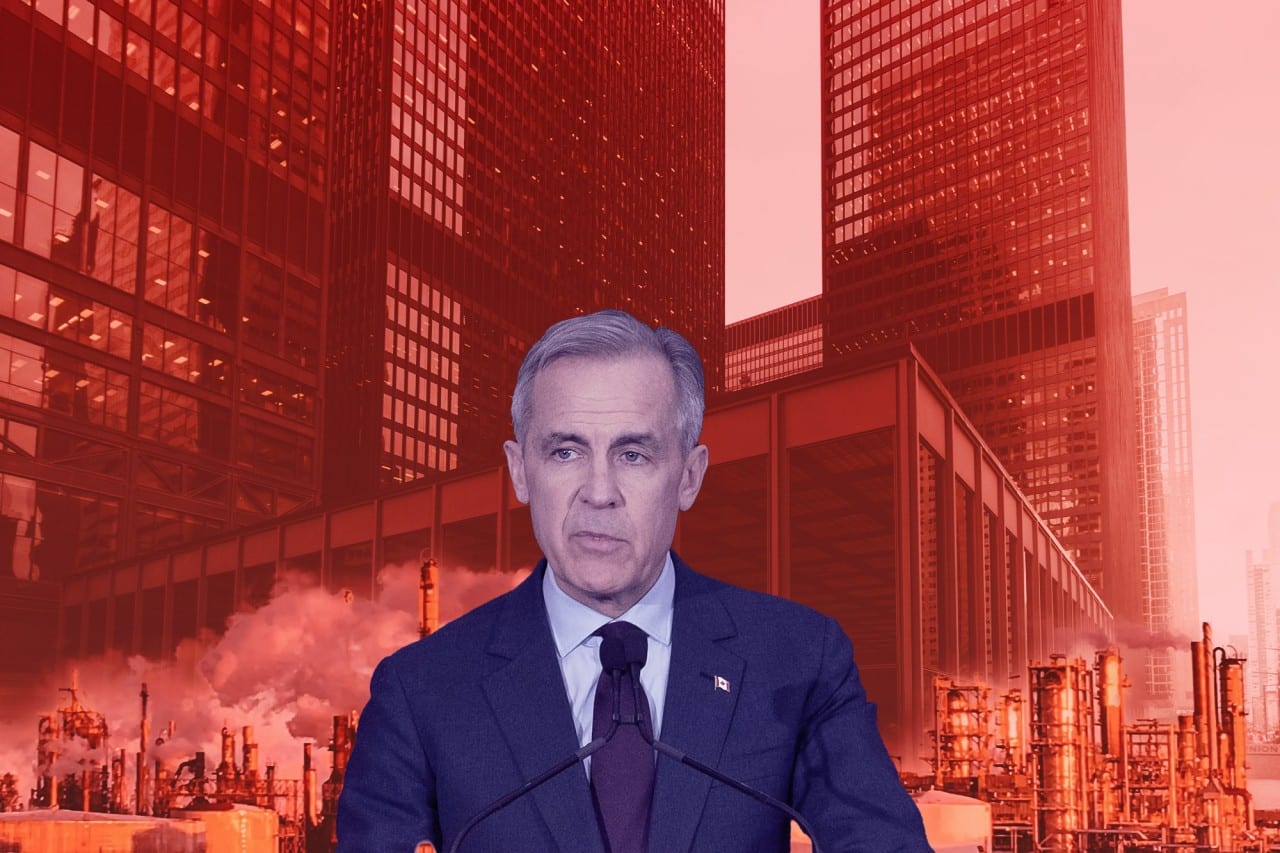
Mark Carney is probably going to be prime minister. At least for a while.
He’s ahead in polling and fundraising for the Liberal leadership race. If he wins it, he gets the big chair. Numbers even suggest he’s tightening the race between his party and the Conservatives, who’ve long been up double digits over the governing side.
Carney could win the leadership and hold Pierre Poilievre’s party to a minority government. If things get wild—with Donald Trump and tariffs, maybe a strong Liberal campaign—it’s conceivable Carney could even hold on to government.
It’s a shift worthy of incredulity.
At first glance, and setting aside substance, it looked like Carney was aesthetically the wrong guy for all kinds of reasons, particularly because he’s an elite banker facing a population that seemed to be seized with populist, anti-establishment anger.
But not only is Carney putting up respectable numbers—at least for now—his program, to the extent it’s been fleshed out, is also thoroughly grounded in a liberal orthodoxy reminiscent of the last decade of the Trudeau government, albeit with some bits shaved off the edges.
A government that “spends less and invests more”
Carney is offering Canada a centrist agenda par excellence—tailored, though, to fit the anti-Trump, nationalist moment. That means deep love for the free market, coupled with a grudging nod or two towards the welfare state.
It means more of the same, comfortably set within the narrow bandwidth of ideological acceptability.
Despite poor messaging, which is to say he’s been saying one thing in Quebec and another in the rest of Canada, Carney has said that his government would “use all of the powers of the federal government, including the emergency powers of the federal government, to accelerate the major projects that we need in order to build this economy and take on the Americans.”
That means pipelines, the erstwhile unpalatable undertaking that’s suddenly become a matter of national security.
Those pipelines would complement an end to the carbon tax, which Carney says he’ll scrap because it’s divisive. Instead, he’d pursue a green incentive program and keep the industrial emitter program.
He’s also talking about a “carbon border adjustment” to ensure that prices are fair across borders. This would mean adjusting costs—that is, levying a tariff—against countries who are laggards on pricing the cost of carbon.
Maybe some of this will be good. But I doubt any of it will be onerous for corporate polluters, which means it will be insufficient.
Last year, the Trudeau government introduced changes to the capital gains tax, which would raise the inclusion rate and capture a bit more passive income earned by the ultra-wealthy.
Carney will repeal that, he says, letting Bay Street keep more of its money. He also says he’ll raise defence spending and hit NATO’s two-per-cent-of-GDP target by 2030.
Thoroughly a banker, a man who claims that former prime minister Stephen Harper asked him to be his finance minister, Carney also says he’d balance operational budget spending—which means program cuts.
He’d run a broader deficit to drive economic growth—that is, shoveling cash into the private sector.
“Canadians deserve a government that works for you,” he wrote on X, “a government that spends less, and invests more.” It’s a message he now repeats ad nauseam.
So, cuts. But not just cuts. A wealth redistribution to private industry.
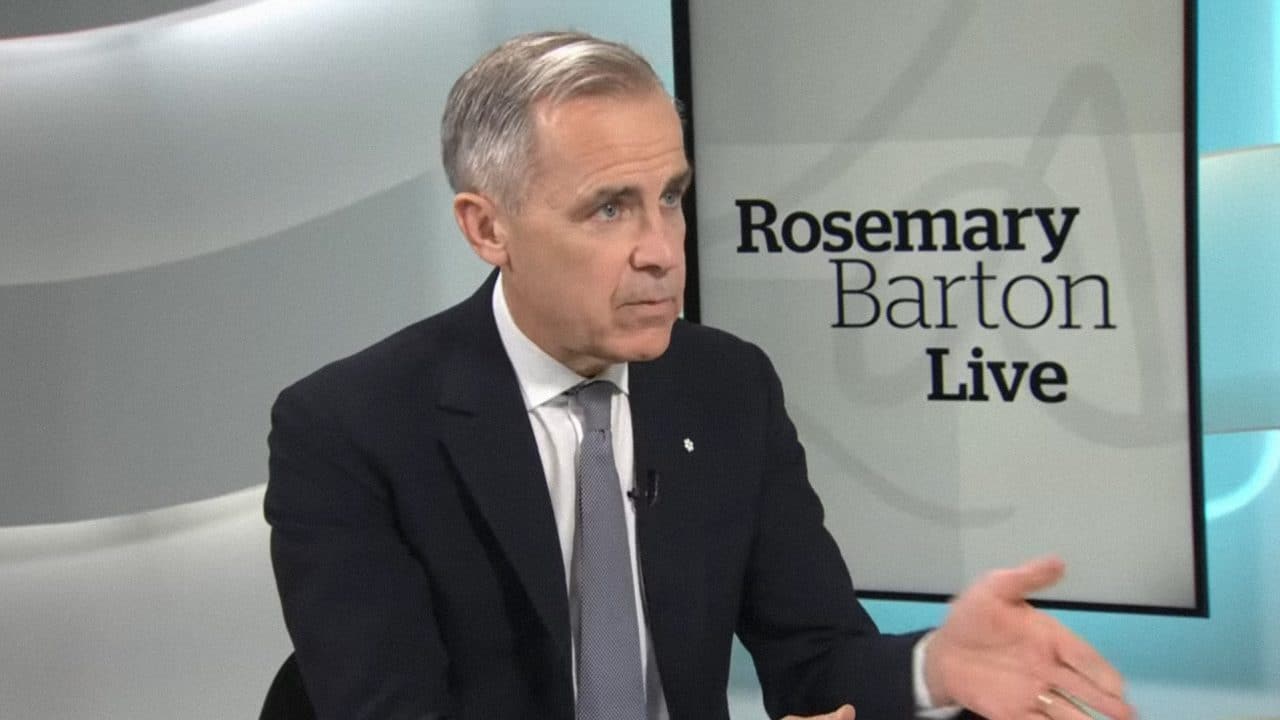
During an interview with CBC News’ Rosemary Barton, Carney said government spending would “catalyze many multiples of private dollars” throughout the economy. That would be, Carney suggests, an incentive to build more housing and stimulate internal and external trade.
A self-described outsider
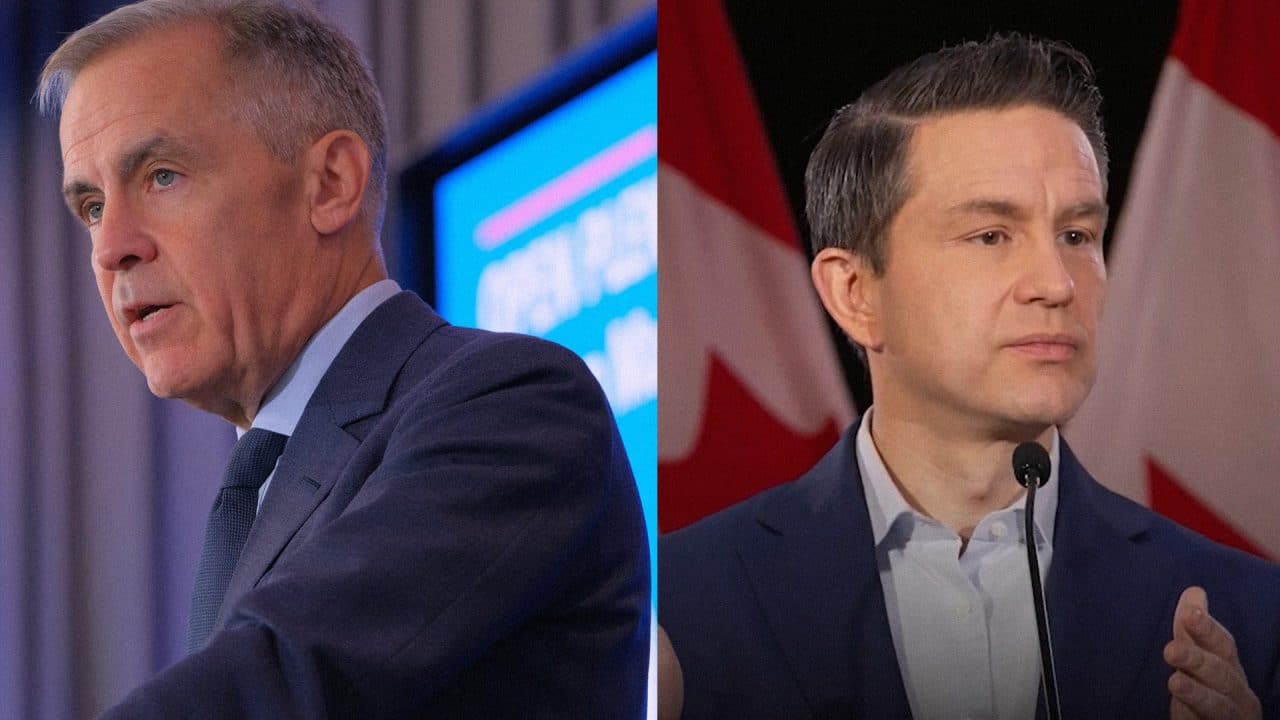
One might be forgiven for wondering what sets Carney apart from Conservative leader Pierre Poilievre, beyond lacking the latter’s pugilistic demeanour and penchant for stoking the culture wars.
One could imagine Carney saying he’d axe the tax and build the homes. The policy landscape in Canada is, effectively, flat, with the major players huddled together in a circle in violent agreement over what ought to be done.
But Carney is, indeed, a different kind of man than Poilievre.
“People will say that I’m an elitist or a globalist,” Carney told former Trump press secretary Anthony Scaramucci and former Tony Blair strategist Alasdair Campbell.
“Well, that’s exactly what we need,” he continued.
The charitable reading of this is that Carney is indeed an expert. As a two-time central bank governor—of Canada and, later, England—he’s someone who can work rooms, negotiate, and navigate the complexities of the global economy.
Carney is no politician. He’s just a simple, homespun central banker.
He’s running as a self-described outsider, a claim so utterly absurd and far-fetched on its face that it almost loops back around towards believability. Surely he must be on to something, he couldn’t possibly be talking such nonsense!
But Carney is trying to harness the popular anxieties of the moment, at once claiming to be cut from a different cloth while also touting his expertise—a CV polished at Goldman Sachs and two central banks, as chair of Brookfield Asset Management, and briefly as an economic advisor to the Trudeau government.
Free market fantasy
What Carney touts as expertise is a course in business as usual. His approach to governing will be grounded in a devotion to the free market as the single greatest hope for an unmoored civilization.
We’ve tried that before. It doesn’t work. But Carney will try it.
In this 2021 book Value(s): Building A Better World For All, Carney tried to persuade us to believe in the free market—not just its merits, but its capacity to self-regulate, to be persuaded to do the right thing, to adopt “enlightened values,” to develop a kinder and gentler capitalism to meet a brutal moment.
This is the same Carney who played a key role in bailing out Canada’s banks during the global financial crisis.
The move ushered in more than a decade of cheap money, which in turn helped fuel a long-term, record-setting growth in the wealth gap while giving rise to financial bubbles and dodgy investments, driving up household debt, and exacerbating the housing crisis.
Companies, Carney wrote in the book, are “the engine of value creation in a modern economy” and “exist to improve our lives, expand our horizons and solve society’s problems, large and small.”
It’s no surprise then that he believes they can be persuaded to be and do good, since it’s ultimately in their own interests as well as the public good to do so.
That’s not true.
Carney—who has refused to proactively disclose his investments and financial interests—either fails to understand or ignores that the private market is structurally antagonistic toward the goods he suggests they produce, and hostile to any change that will undermine the bottom line and the exploitation of workers.
It’s on climate policy that Carney’s faith in the free market appears most detached from reality.
In 2020, Carney was appointed as the UN Special Envoy for Climate Action, tasked with mobilizing private finance to combat climate change, primarily through the Glasgow Financial Alliance for Net-Zero.
The voluntary alliance was doomed from the start—rooted in the belief that the market, and particularly the banks, could solve the climate crisis they led the way in producing.
The undertaking generated plenty of commitments, and then the banks started quitting when it no longer served their purpose. Too costly, too onerous, too…out of step with the rise of Trump and the climate-action backlash. Oh well.
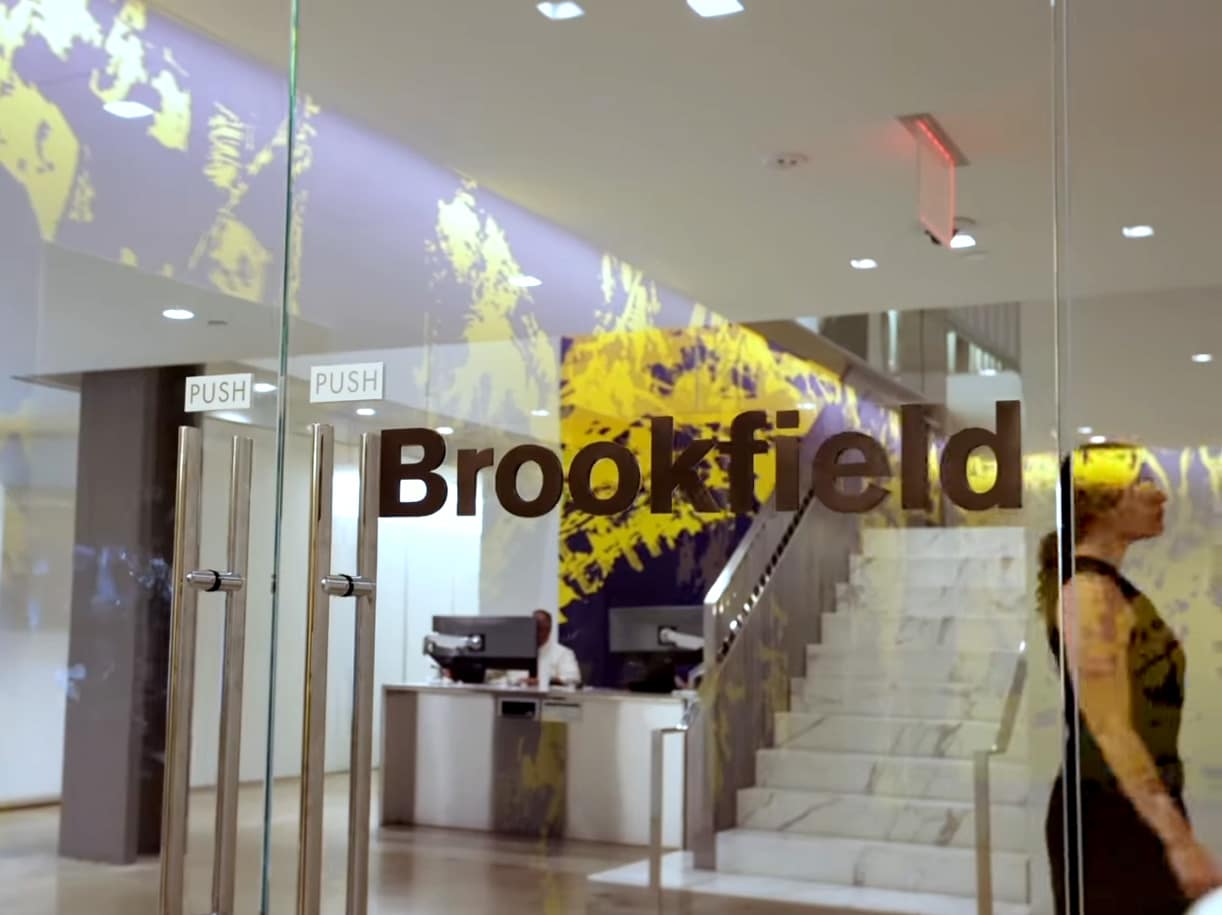
The asset-management firm Carney chaired, Brookfield, is another clear example of the fundamental inconsistency in believing the free market—perhaps led by the gentlest of hands by the state—is the way forward on climate.
The firm is a dirty-energy behemoth, investing billions in fossil fuels.
It has “one of the biggest portfolios of dirty energy in the world,” says climate finance activist Jason Mogus, who worked with the Sunrise Project. “And they continue to expand it.”
Drawing on his experience in the climate trenches, Mogus calls to our attention that Carney is, in fact, part of the problem.
“His approach was always corporate power and investor/wealth centric. The big hope he shared in his popular book was that if we could only have real carbon accounting, investors and industries will do the right thing and stop investing in our own demise.”
In a sense, Carney has already tested his hypothesis from Value(s). It failed.
And in the current climate, with the rise of Trump, the backlash against climate action, and liberals abandoning even their own policies, does anyone expect Carney’s enlightened-self-interest approach to fighting climate change to work?
Or will it be a mere screen, or a cipher, enabling business as usual? In this case, past ought to be treated as prologue.
“Having spent, with many others, the past five years in the centre of many global fossil finance fights,” Mogus says, “Mark Carney has been at best a distraction and at worst a massive greenwashing ploy, and his efforts at shifting big investors towards green have mostly flamed out.”
In short, Carney’s plan simply won’t work.
A consummate Liberal
Adding things up, it starts to look like Carney wants to have it both ways: change without change, decarbonization without cost, politics without struggle or disruption.
All told, Carney is a consummate Liberal.
The secret to his popularity thus far will be best understood in time, after the dust settles. It could be that he is, despite first readings, affable enough. It could be that he “looks like” and “speaks like” a prime minister, that construction of a leader bound up in long-standing prejudices.
It could be that nothing succeeds like success; he gained momentum early and he’s kept it up against a weak opposition in former Cabinet member Chrystia Freeland, who isn’t a gifted retail politician, and Pierre Poilieve, who’s as likeable as a double lung infection.
Whatever it is that works for Carney, his policy program and approach to leadership represents a shift to the right for the Liberals, a commitment to worshipping at the altar of market fundamentalism—and perhaps even a nudge back towards the 1990s austerity and “pragmatism” that led us down the path to so many of the problems we’re facing today.

“We need media that enlarges the sense of what’s possible.”
Naomi Klein, journalist and author
Want to support hope-fuelled journalism? Become a sustaining member.
Neoliberalism | Canada’s best response to Donald Trump’s aggression? Socialism

Migrant Justice | Liberals and Tories perfected the exploitation of migrants for big business

Capitalism | Noam Chomsky on Canadian war criminals and a world after capitalism
17 comments
Comments are closed.

Thanks for this. Interesting informative piece.
This is a really good article, and I have no quibbles with anything laid out.
And despite it all, I’ll be holding my nose and voting for him in the leadership race and voting Liberal in the federal election, because it’s our best bet to keep Poilievre and the CPC out of power. That is, to me, the critical goal of the next election.
If the NDP ever got their act together and presented an actual progressive and leftist option to voters, I’d happily switch, but they are completely lost right now. And that’s a real shame, because there’s real opportunity here.
The NDP needs a full reset. It’ll probably take them getting nearly wiped out in the next election, which looks very likely right now.
The focus for any voters anywhere from the centre to the left of the political spectrum needs to be laser-focused on keeping the CPC out of majority territory.
So you prefer Poilievre?
He can’t even pass a security check, never mind stop bitching long enough to propose a serious plan on anything, with details.
You just lost all your credibility.
Could be a dog but still better than ‘lil pp. Actually I think many would prefer a real dog to ‘lil pp.
Thank you for this report. I’ve recently joined the Liberal party in order to vote for the next party leader, and I really appreciate this kind of factual laying out of candidates’ platforms. Will you be covering Karina Gould’s and Frank Baylis’ platforms as well?
Perhaps but what’s the alternative right now? At least he’s likely to fight the oligarchy/fascism that’s taking shape south of the border. Do you think PP will?
Oh that’s just the start of what’s nasty about this guy. https://medium.com/@sarahgabriellebaron/mark-carney-is-ottawas-worst-nightmare-b71c3c3b9a64
What a shame. I thought he might be different from his background and appearance. But no.
I think Poilievre was only a viable candidate when Trudeau was in office and that most Canadians would be happy to pick anyone other than a mouthy, shallow, partisan. I think Carney will win the general election, Poilievre will eventually leave, and Doug Ford will run for the Conservative leadership and win it.
Journalists such as Mr. Moscrop often criticize the free market but never mention an alternative to the purchase and sale of goods and services in the world.
Thanks for sheding some light on Mark Carney. Why don’t we Canadians have better leaders?
So who then?
If the US is indeed collapsing into the 4th Reich, which all signs point towards, then who is best suited to lead in order to keep Canada from becoming Austria circa 1938…
We should not complicate the issues Canada faces. They are simple. We know them. Most Canadians know there is no perfect in life. We have to make decisions and get the job done. Forget using political labels and discussing the issues ad nauseum. Canada needs a proven leader. I support Mark Carney. A calm, intelligent, successful, practical leader. He has already achieved more in his life than PP will ever achieve in his entire life. No more degrading Canada with slogans.
My wobbly hope is that Mark Carney has been steady in his recognition of the climate emergency, and learned from the failure of the all-carrots GFANZ initiative. It will take some regulatory sticks to nudge the market off this path to self-destruction.
You are a good writer, but you are fear mongering claiming that he might lead us to “1990s austerity” or that he has made decisions that “led us down the path of so many problems we face today..” Your appeal to left-leaning Canadians is fair- Carney is not and is not pretending to be an NDP candidate. But you are not presenting the evidence of his record fairly and importantly you are missing the context- Canadians do not think that is what we need: we need someone that can get us through trade wars, who believes in democracy, and who can make alliances for an increasingly complex and shifting world system in the interest of Canadians. Who is the best to do that now? I hate that my mother sent me this opinion article stating this is why she won’t be voting. Your blog post is irresponsible.
This type of journalism is exactly what we need. Still voting for Carney, Pierre has zero economic and financial background. We would be worse off with someone not knowing what they will be doing at all IMO
Carney is a consummate neoliberal. But then, I can’t recall a Liberal leader who was not a neoliberal..