After more than two years of fear-mongering headlines about Chinese interference in Canadian politics, a public inquiry has said it found no evidence of “traitors” in Parliament.
But for those whose lives and careers were upended by months of sensational and unsubstantiated reporting, the findings offer little solace.
In her final report, Commissioner Marie-Joséee Hogue concluded that no Canadian MPs were working for foreign powers, none owed their seats to assistance from other countries, and no legislation or laws came into effect due to such interference.
The findings stand in sharp contrast to a stream of so-called scoops from Global News and The Globe and Mail that fueled a national frenzy over Chinese interference—alleging a Liberal MP colluded with Beijing to sway elections, China ran a vast political influence network in Canada, compromised investors laundered money for the Chinese Communist Party, and a disgraced ex-RCMP officer spied for China.
But even before Hogue’s report was released, there was mounting evidence that these media stories were built on scraps of information, conjecture, and unfounded musings from disgruntled CSIS analysts.
Nevertheless, the damage done by these unproven claims has been extensive—not only to the credibility of the Trudeau government, but to many individuals who faced destroyed reputations and careers, lost jobs and businesses, and were forced to pay out huge sums in legal bills to defend themselves.
“It’s had a tremendous impact,” Bill Majcher, a former RCMP inspector who was arrested in 2023 and charged with being an agent for China, told The Breach. “My income has been impacted, my reputation…It creates anxiety, with my age, young family, children…I’ve missed almost one third of my youngest daughter’s birthdays. [My two daughters] are without their father.”
Not a journalist’s job to say ‘something is true or false’
In the spring of 2024, journalist Sam Cooper sat in a downtown Ottawa conference room, defending his reporting on allegations of Chinese foreign interference in Canadian politics under examination from a lawyer.
A former Global News reporter, his stories for the network were key to whipping the foreign interference scandal into existence.
“In dealing with confidential sources, do you agree that the journalist must personally ensure the correctness of the facts?” he was asked at one point.
“Yes,” Cooper replied, before adding: “You verify the credibility of allegations. You look at, in my view…context, plausibility of an allegation, and then you get the other side. It’s not…your job to say that…something is true or false. Often, it’s that something is believed or alleged or asserted and then you get the other side.”
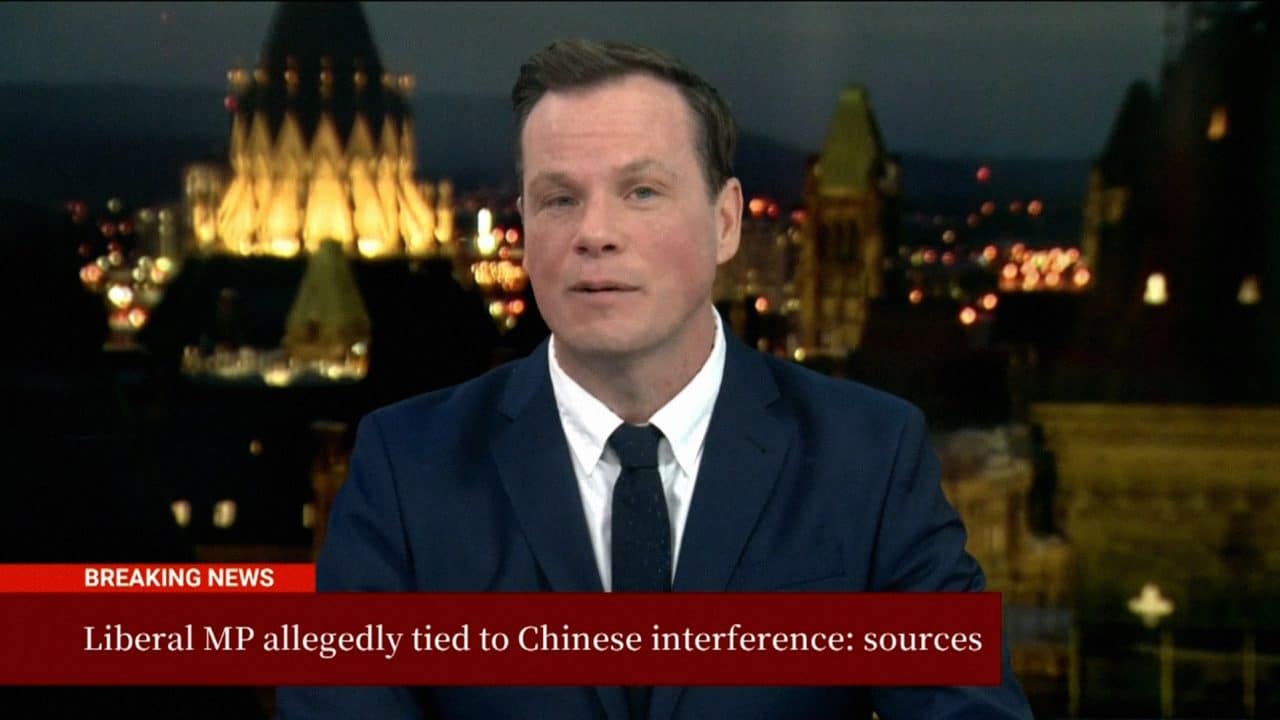
The questions came from lawyer Mark Polley, who represents Han Dong, the MP for Don Valley North in Ontario, in a $15-million defamation lawsuit against Cooper and Global News. Global responded to Dong’s lawsuit by filing a motion in court to have it tossed out under Ontario’s anti-SLAPP law, which protects free expression on matters of public interest. Polley’s examination of Cooper was part of the anti-SLAPP process.
Dong’s libel lawsuit stems from two explosive stories produced by Cooper and broadcast by Global News in the winter of 2023, accusing Dong of being part of a Chinese foreign interference network.
Cooper’s belief that it is justifiable for journalists to publish allegations that might not be true lies at the heart of his controversial reporting.
Starting in fall 2022, Cooper, along with Robert Fife and Steve Chase at The Globe and Mail, produced a stream of alleged scoops based on anonymous sources and leaked documents from the Canadian Security and Intelligence Service (CSIS), Canada’s spy agency, alleging that China interfered in the 2019 and 2021 federal elections and that the Trudeau government turned a blind eye because the meddling benefited the Liberals.
These allegations dominated the news cycle and tormented the Trudeau government for months, finally forcing the Prime Minister to appoint a commission. The inquiry, headed by Justice Marie-Josée Hogue, involved a 16-month investigation into whether foreign governments interfered in the 2019 and 2021 federal elections.
Although she saw a few cases where a foreign state has attempted to curry favour with parliamentarians, Hogue wrote in her final report that “the phenomenon remains marginal and largely ineffective.”
“While the states’ attempts are troubling and there is some concerning conduct by parliamentarians, there is no cause for widespread alarm,” she wrote.
An interim report from the commission last May had also concluded there was no evidence that those federal elections were impacted or compromised by foreign countries like China.
Branded ‘traitor’ without cause
Han Dong was born in China in 1977 and moved to Canada at age 13. He was first elected as an MPP in the Ontario legislature before winning a seat in Parliament as a Liberal in 2019.
In February 2023, Sam Cooper’s first story on Global accused Dong of being a “witting affiliate” of a “Chinese foreign interference network” and one of 11 MPs allegedly assisted by Beijing in 2019.
The story claimed Dong received help from China in his nomination race, including by arranging for Chinese students with fake addresses to be bussed in to vote for him, and that national security officials asked the Liberal government to rescind his nomination. It also alleged that Dong met with agents of China’s foreign interference division in New York.
The following month, Cooper ran an even more damaging story. He alleged that during a February 2021 conversation with China’s Toronto consul general, Dong urged the Chinese diplomat not to release Michael Kovrig and Michael Spavor—the so-called “two Michaels”—as their release might benefit the opposition Tories. Kovrig and Spavor had been detained in China since December 2018 following Canada’s arrest of Huawei’s Chief Financial Officer Meng Wanzhou.
Cooper’s stories on Dong caused an uproar in Ottawa, forcing the MP to resign from the Liberal caucus. Dong now sits as an independent and says he’s received numerous hateful, racist, and violent messages, which refer to him as a traitor and a person unfit to hold elected office. He said some of the messages threatened himself, while others threatened his family.
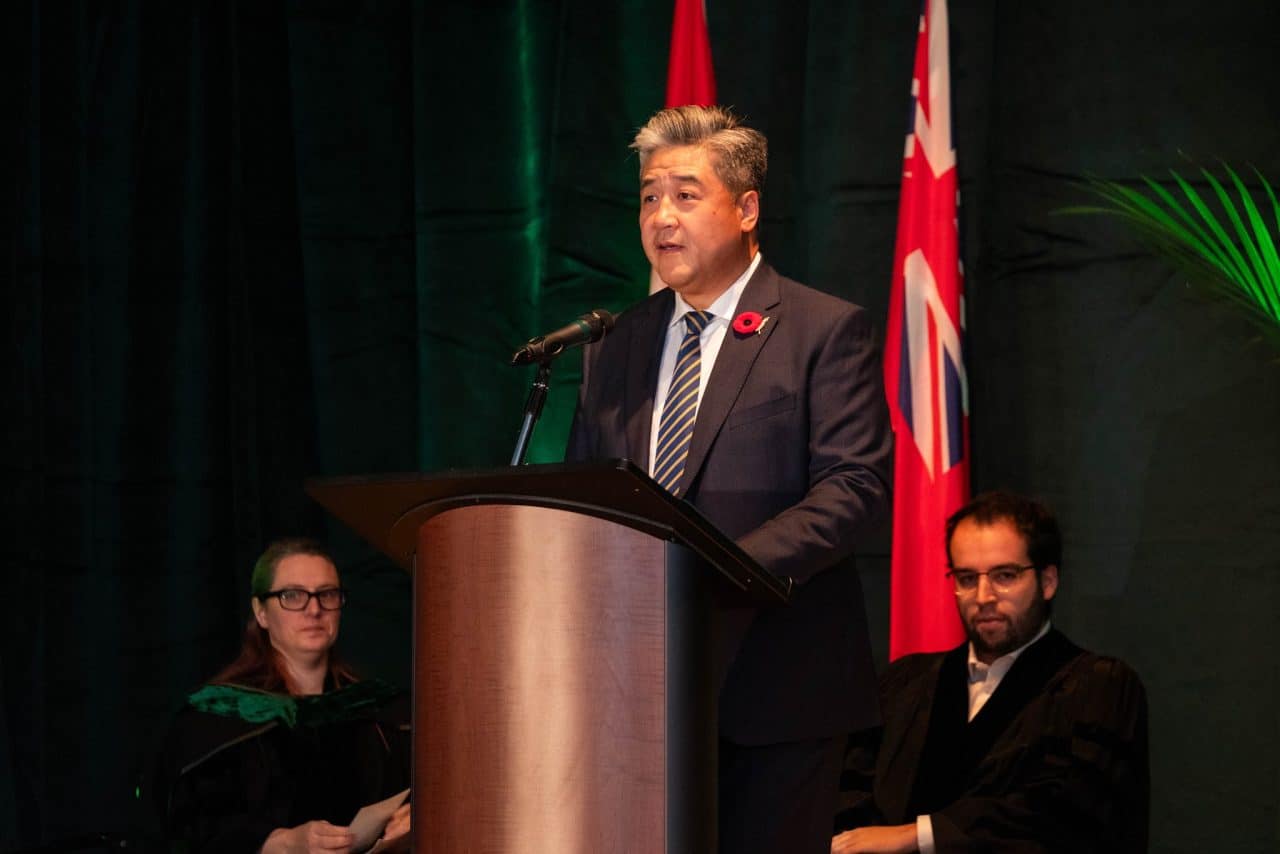
Dong then sued Global News for libel.
So far, no credible evidence to back Cooper’s claims about Dong has come to light.
David Johnston, the special rapporteur on foreign interference that was appointed by Trudeau in spring 2023, looked at the Dong affair and some of the intelligence documents it was based on. He said that while there were some “irregularities” in Dong’s nomination race which might have been tied to the Chinese consulate, there was no evidence the MP was aware of them, and that no recommendation was given to Trudeau to remove Dong as a candidate. Johnson also said that the claim that Dong urged the Chinese to hold the two Michaels was “false”and that there was no evidence 11 MPs received money from China.
CSIS alleges that Dong did receive assistance in his nomination race with 175 to 200 students being bussed in by the Chinese consulate and told to vote for him. During the nomination race, Dong had spoken to Chinese students at a private college and urged them to work for his campaign and vote for him. But he and his campaign manager said they had no involvement with bussing any of these students—if this even occurred.
Now, due to the lawsuit that Dong brought against Global and Cooper, we know more about where Cooper’s information originated. When Dong’s lawyer, Mark Polley, examined the reporter last spring, Cooper said the two stories were based on what he was told by about seven confidential sources—four of whom worked as intelligence officers and some of whom showed the reporter some documents.
Yet Cooper was not allowed to keep any copies of the documents he was shown, and none of the documents mentioned Dong by name or any conversation about the two Michaels between the MP and the Chinese consul general. In fact, Cooper was never shown any transcripts or summary of the conversation between them at all.
“Am I right that you were never able to verify the truth of what was in the two Michaels call from any document?” asked Polley at one point. “You didn’t look at a document. Is that right?”
“That’s correct,” replied Cooper.
“None of those documents refer to Han Dong as a ‘witting affiliate’, did they?” asked Polley at another moment..
“No, the words ‘witting affiliate’ or his name are not in those documents,” admitted Cooper.
When asked if he was simply relaying what CSIS believed about matters, Cooper agreed and admitted he did not investigate whether the allegations were always true.
“Am I right, then, that you didn’t know whether it was actually true that the Chinese consulate clandestinely funded an election interference network in 2019?” asked Polley at another point.
“You’re correct. I haven’t seen any—any judgement on that or a [financial intelligence agency] document to confirm that.”
“You don’t know that the network involved 11 MPs, for example?”
“I don’t know that for a fact,” conceded Cooper.
Cooper also admitted that none of his CSIS sources told him they reported their concerns about Dong to their superiors, or the Deputy Attorney General of Canada, before approaching the reporter.
Moreover, Cooper sent emails to Dong with questions only a handful of hours before Global ran the stories.
In the end, Global’s SLAPP motion failed, both because the judge found the TV network was misapplying the intention of the law and because Cooper could not substantiate his allegations. “It is quite conceivable that [Global’s] truth and justification defence is not valid,” remarked Justice Paul Perell in his ruling.
This was not the only setback for Cooper and Global News.
In March, 2023, Global had ran an article and television story claiming that Vincent Ke, a Tory MPP in Ontario’s legislature, was part of an “election interference network” directed by China’s Toronto consulate. Produced by Cooper and based on anonymous intelligence sources, the story alleged that Ke was “a financial intermediary” in these interference schemes and that he’d received $50,000 from the consulate as part of the operation.
Born in China, Vincent Ke was also a parliamentary assistant to a cabinet minister in the Ford government. Following the allegations, Ke resigned from the Tory caucus and was forced out of his ministerial post. He now sits as an independent.
Ke sued Global News and Cooper for $5.5 million in damage. And, once again, Global launched an anti-SLAPP motion to have the suit thrown out.
When Ke’s lawyers asked for Cooper’s research, they discovered he could produce no named sources, transcripts, evidence, or documents to support his central allegations against the MPP. And while Cooper claimed his CSIS sources showed him some documents, none of them mentioned Ke as being involved in an interference scheme or having received any money from China’s consulate general. CSIS distanced itself from the leaks, too.
In October, a judge dismissed Global’s anti-SLAPP motion, again noting the network was misapplying the law and that Cooper could provide no evidence to back his story. “Global News did not provide proof of the truth of the report that Mr. Ke was a Chinese government operative or collaborator,” said Justice Lee Akazaki in his ruling. “The volume of material filed by the defendants to convince the court of the importance of the story only emphasized the fact that nothing pointed the finger at Mr. Ke.”
In the end, Cooper seems to have based his stories on what some unidentified people told him, some of whom may work for CSIS, and the documents they showed him. But he’s never identified those sources or has copies of transcripts or any documents which actually cited Dong or Ke by name.
‘Not a minimal threshold’ of evidence
Allegations of Canadians conspiring with China are not limited to elected officials. Take what happened to Shenglin Xian, a co-founder of Wealth One Canada Inc., a Toronto-based bank that services Chinese-Canadians and other communities.
In September 2023, reporting from Robert Fife and Steven Chase in The Globe and Mail revealed that Minister of Finance Chrystia Freeland had demanded that Xian and two of his co-founders step down as directors, divest their shares, and sever ties from Wealth One. Freeland had received warnings from CSIS that Wealth One might be susceptible to pressure from the Chinese government, according to reports.
The Globe said the bank and its founders had been under investigation by CSIS and the finance department since 2021. Xian and his two co-founders resigned as directors but did not dump their shares.
Xian says the allegations about him and Wealth One have been devastating. He says he can’t get credit from banks and that his long-term business relationships have been severed. “My reputation is ruined,” Xian said in an interview with CTV. “I don’t have a bank account. I donated to a hospital—they rejected me. I applied for a credit card—they rejected me.”
Born in China, Xian moved to Canada with his wife and daughter in 1990 and soon began selling insurance. Within 10 years, he had become a top broker with London Life Insurance. Realizing many of his Chinese-Canadian clientele could not access credit, he decided to set up a bank to serve that community. Wealth One was incorporated in 2015, and opened its doors the following year. By 2022, it had $507 million in assets.
So why did CSIS believe Wealth One had any dealings with China and foreign interference?
Joel Etienne, a Toronto lawyer who has represented Xian and Wealth One, says the government made no specific allegations, laid no charges against Xian and the other co-founders, and pointed to no instances where they engaged in questionable acts on behalf of China.
“Forget the criminal standards, not even the civil standard, not a minimal threshold standard,” he says of the intelligence that CSIS claims to have. Etienne thinks one reason Xian may have been targeted is merely because he’s donated money to the Liberal Party. “They went after a lot of Chinese-Canadian wealthy folks who, you know, seem to have given to Justin Trudeau.”
Last May, Xian and Wealth One launched a $255-million lawsuit against the federal government, CSIS, and The Globe and Mail, as well as an obscure Vancouver-based private investigation firm called Critical Risk Team.
By then, Wealth One had asked the accounting giant PricewaterhouseCoopers (PwC) and corporate law firm Borden Ladner Gervais LLP (BLG) to evaluate whether China has any influence on the bank or engaged in suspicious transactions, or whether Xian and the other shareholders were likewise compromised. They were given access to most of the bank’s financial documents and internal emails.
In their reports, PwC and BLG said the bank was not designed to launder money. As a virtual bank with no physical branches, it does not engage in cash transactions. The bank was also not equipped with wire transfer capabilities—no international wire transfers were sent or received by Wealth One. The reports also found no indication that Xian or the other major shareholders were influencing the bank’s operations or that they had access to customers’ personal accounts. There was no evidence they had ever requested such information from the bank’s managers, either.
PwC and BLG concluded there was no evidence the bank was being subjected to foreign interference or that Xian was engaged in such activities, and no evidence that anti-money laundering rules were not being followed.
The lawsuit claims CSIS was tipped off about Wealth One by Critical Risk Team, a Vancouver-based “security risk management” company run by former RCMP and intelligence managers. Two of its personnel are Calvin Chrustie, a former superintendent and senior operations officer with the RCMP, and Bob Young, a former CSIS executive manager—both of whom are listed as defendants in Wealth One’s lawsuit.
The suit says that, “by their access to secret and confidential information purportedly pertaining to Mr. Xian,” they released secret information for their own profit and leaked information to The Globe and Mail.
If true, this would not come as a surprise. Chrustie has been one of Sam Cooper’s longtime sources on China’s influence in Canada for many years. And he’s been accused of involvement in another allegation about foreign interference.
From investigator to the investigated
On July 18, 2023, flying in from Hong Kong to visit family in Canada, former RCMP inspector Bill Majcher was arrested at Vancouver’s airport. He was soon released but arrested again the next day. Majcher’s detention came in the middle of the hysteria gripping Ottawa and the media over alleged Chinese foreign interference—and quickly made the front page of The Globe and Mail and a story in The New York Times.
The RCMP said they’d apprehended Majcher because he “used his knowledge and his extensive network of contacts in Canada to obtain intelligence or services to benefit the People’s Republic of China.” They alleged that Majcher intimidated an individual “outside the scope of Canadian law” and that he was asked by China to gather information on a prominent Uyghur activist and to talk to a Chinese national living in the U.S. who is wanted by China. These offences fall under the Security of Information Act.
So, is Majcher an agent working for China?
Majcher has led a colourful life. Born in Cape Breton, he worked as a bond trader before joining the RCMP in 1985. He would go on to spend 13 years as one of the Mounties’ most effective undercover agents, bringing down drug dealers, gangsters, and stock market fraudsters. After the Enron scandal, Majcher was put in charge of a team of investigators in Vancouver to investigate white-collar crime.
But, by 2006, he’d run afoul of his superiors over a political matter and retired from the RCMP. He moved to Hong Kong to work for a merchant bank before eventually setting up a security company, EMIDR. Among other things, EMIDR did asset searches for clients. Majcher was soon being asked by lawyers and banks to help track down money stolen from Chinese companies that had been squirreled away offshore.
In 2014, due to the vast scale of corruption in China, the Chinese government started Project Fox Hunt to repatriate fugitives and recover billions of dollars pilfered from businesses and banks (Western intelligence agencies like CSIS believe Project Fox Hunt was merely a front for China’s intelligence services to harass and spy on critics of the regime living abroad).
One example of a target was Kevin Sun, a hairdresser in China who moved to Vancouver after allegedly helping to steal $455 million from the Industrial and Commercial Bank of China in the late 1990s and early 2000s. In 2015, China obtained a global arrest warrant for Sun. Two years later, Majcher says he was asked by a former RCMP colleague to help make some inquiries in China about the theft Sun was linked to.
Meanwhile, Majcher was also working as a contractor for CSIS to help them out on various covert intelligence gathering operations. He carried out a number of tasks for CSIS, as well as the British intelligence agency MI6, over many years.
In respect to his asset search business, Majcher says he was investigating legitimate cases of theft and followed all local laws in his investigations. He’s also been quite public about his work: he discussed it in an Australian current affairs TV show appearance in 2019 and has given speeches at conferences on the subject.
But things began to change for Majcher when Canadian authorities detained Huawei CFO Meng Wanzhou in Vancouver in 2018. In January, 2019, Majcher was asked by a Chinese consulting firm to fly to Vancouver to conduct information-gathering on the Wanzhou case. Before he left for Canada, Majcher flew to Bangkok and met a CSIS handler and briefed him on the purpose of his trip and who had hired him.
Nevertheless, when he landed at the Vancouver airport he was stopped, questioned, and had his phone taken from him, suggesting that Majcher was placed under surveillance by CSIS—and his phone calls were likely being monitored.
What proof has come to light that Majcher was an agent for China?
Last year, the RCMP unsealed a document drafted in support of its warrants for Majcher. Much of the document relied on Majcher’s own admissions about his work for China, which involved pursuing Chinese citizens accused of corruption and theft, such as in the Kevin Sun case.
The RCMP, however, framed this as part of China’s harassment and espionage campaign—even though, in the Sun case, Sun had refused to cooperate with the RCMP and did not even know who Majcher was. The remainder of the document merely noted that Majcher had been in contact with former RCMP colleagues and law enforcement officials, mostly about job opportunities. There was no mention of him targeting Uyghur activists or any other Chinese nationals—and nothing about interfering in Canada’s electoral system or spying on any Canadian institutions.
Today, the case against Majcher is heading for dismissal.
Majcher’s lawyers have demanded disclosure from the RCMP and CSIS, including documents related to his work on behalf of Canada’s spy service. But the government is refusing to hand over this material, invoking the Canada Evidence Act on national security grounds.
The Crown must proceed with a trial before the first week of February or risk the case timing out. So far, no trial date has been set or a judge appointed. “I believe [the RCMP] know there’s no likelihood of any conviction against Bill,” said Pete Merrifield, an RCMP officer and friend of Majcher’s. “They absolutely want to believe he’s guilty, even though there’s no evidence of him having done anything wrong.”
Majcher had a bout of cancer prior to his arrest in Vancouver and was scheduled to have a body scan to ensure it had not returned. He’s been away from his wife and two young daughters who remain in Hong Kong. “How’s it impacted me?” he said. “It’s separated me from my family. I haven’t had healthcare…It took me nine months to get in to see an oncologist here. I was denied my medicine for almost a week when I was initially in custody.” Furthermore, if his case is dismissed, he might not be able to return to Hong Kong because his work on behalf of CSIS was made public.
‘They don’t deal in evidence’
The RCMP and CSIS didn’t only go after Majcher—they went after his friends and business acquaintances, too.
Take the case of Kim Marsh, a Vancouver-based RCMP commander with a background in undercover operations and organized crimes who left the force in 1998 and went to work in the private sector as an investigator. He and Majcher collaborated on cases after they both left the Mounties, including on the Kevin Sun research.
On June 14, 2023, 15 RCMP officers raided Marsh’s house in Vancouver and seized his business and personal files. They were looking for information on his ties to Majcher. By then, Marsh had been abruptly fired from his job at VIDOCQ, a Montreal-based business intelligence firm, over what Marsh suspects was his connection to Majcher. He has since seen all of his business dry up. After Majcher’s arrest, he was named by the RCMP as a conspirator with Majcher due to the Sun case, but not charged with any crimes.
Then there was Pete Merrifield, an RCMP officer who first bonded with Majcher in 2006 over their shared discontent with the force’s top brass. Ten years later, Merrifield was working for the RCMP’s protective services unit in Toronto, overseeing security for foreign dignitaries—a post that required top-level security clearance.
In May 2019, Majcher had dinner with Merrifield while visiting Toronto. A year later, Merrifield was approached by CSIS and interviewed about Majcher. Then, in 2022, Merrifield discovered that his security clearance had been pulled based on CSIS intelligence. The spy agency also issued an advisory letter identifying Merrifield as a target for investigation. As a result, the RCMP suspended Merrifield and conducted a criminal national security investigation into his relationship with Majcher that went on for 17 months. Merrifield’s security clearance has since been partially restored.
There was also the case of Paul McNamara. He is a former detective with the Vancouver Police Department who first met Majcher in a professional capacity in 2004. After retiring from the police force in 2016, McNamara went to work for VxL Enterprises LLC, an American company that provides security services for U.S. embassies and consulates in many countries. His job, for which he was being paid $180,000 a year, was to oversee the company’s contract in Canada.
McNamara remained in touch with Majcher, and the two had lunch together when Majcher was in Canada in January 2019. “There’s no doubt I was on the radar of CSIS at that time, because there’s no doubt they probably had a surveillance team on Bill when he came here,” maintains McNamara.
In 2021, McNamara’s security clearance with VxL was up for review. Because the company provided protection for U.S. consulates, renewing his clearance required approval from CSIS. When CSIS refused, McNamara was let go by VxL as he could no longer perform his duties. He’s been unable to find work since.
“Unfortunately for me, I’m literally the drive-by victim in the dark alley,” says McNamara. “I mean, I lost $900,000 in wages over the next five years. And that’s the damage that gets done by poor intelligence. And they don’t deal in evidence.”
Last April, Merrifield and McNamara launched a lawsuit against the federal government, seeking $5.5 million in damages for the impact on their lives after CSIS yanked their security clearances due to their ties to Majcher.
The claim says the person responsible for pointing a finger at them is Calvin Chrustie, former RCMP superintendent and one of the personnel at the private investigation firm Critical Risk Team.
“[Chrustie] boasted to acquaintances in law enforcement, including McNamara, that he was well connected in CSIS, that he did tasks for the agency,” says the claim. “[Chrustie] told McNamara (presumably among others, including CSIS) that he thought [Majcher] was too close to the Chinese government and was not to be trusted…[Chrustie] also has an established relationship with journalist Sam Cooper, who was paid by Cooper’s publisher to provide commentary for the second edition of Cooper’s book, Willful Blindness.”
Cooper’s 2021 book focused on Chinese gangsters and Communist Party officials laundering money in BC. Chrustie is a prominent character in the book in his former capacity as an RCMP officer investigating Asian organized crime. This is how he crossed paths with Cooper, who was then working at The Vancouver Sun and The Province as a reporter.
The Breach reached out to Chrustie to ask whether he had alerted CSIS to focus on Majcher and his associates to help support the claim that China is meddling in Canada, and whether his actions regarding Wealth One were driven by the same goal. He did not respond to these or any other questions.
The ‘exclusive’ scoop that wasn’t
In June 2023, Sam Cooper unexpectedly quit Global News and set up his own Substack page called The Bureau, where he continues to write about foreign interference. He has testified numerous times before parliamentary committees and the Hogue commission on the foreign interference matter.
Evidence of the shoddy quality of his research continues to emerge.
This past September, he published an “exclusive” story in the The Bureau headlined “Ex-Mountie Bill Majcher Linked to Meeting with Tse Chi Lop, Chinese Triad Leaders.”
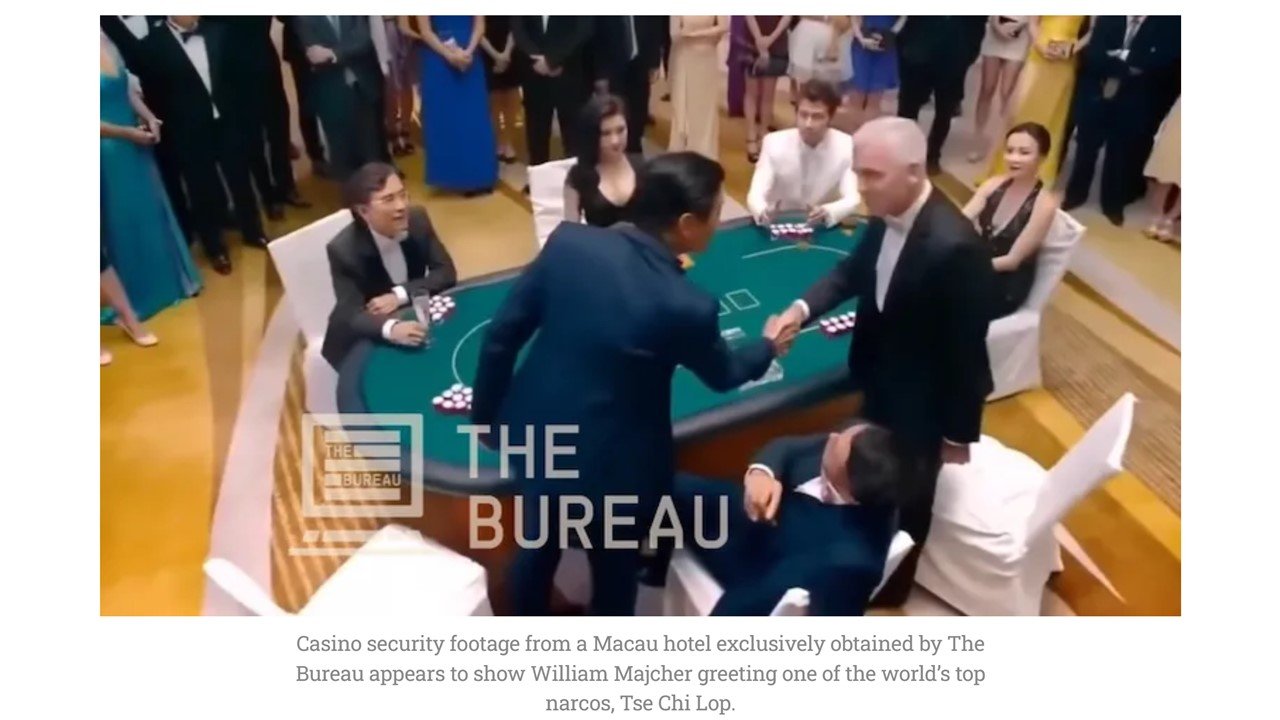
The story included a photo, which it said was taken from security footage in a Macau casino and showed Majcher greeting “one of the world’s top narcos, Tse Chi Lop.” Cooper claimed that in February 2019 Majcher stayed at the hotel in Macau as a guest of “Junket King” Alvin Chau Cheok-wa, who was sentenced to 18 years in prison in 2023 for fraud.
“Remarkably,” Cooper writes, “according to a casino security clip, before a game begins, two Canadian—former RCMP undercover operator William Majcher, now facing trial in Canada for allegedly collecting intelligence to assist China, and Tse Chi Lop, facing trial in Australia for operating opiate and methamphetamine trafficking syndicates—appear to stand and shake hands.”
The story went on at length about the allegations against Majcher, implying he was associating with prominent Asian organized crime figures. “The alleged Macau meeting, involving Tse, Chau—an influential figure in the 14K Triad with prior connections to the Chinese Communist Party—and Majcher, a former RCMP officer now accused of aiding Chinese intelligence, raises intriguing questions about the nexus between Triads and Chinese state operations.”
What was the problem with this story?
For one, Majcher was never in Macau in 2019 shaking hands with Tse Chi Lop or any other Asian criminals.
The photo Cooper based his story on was actually a still from a 2015 action-comedy movie called From Vegas to Macau II. When the movie was being shot in Hong Kong, a friend of Majcher who was working on it suggested Majcher play an extra. The man shaking Majcher’s hand was not one of Asia’s biggest gangsters but one of its biggest movie stars, Chow Yun-Fat—world-famous for his role in the 2000 hit movie Crouching Tiger, Hidden Dragon.
Cooper received the still from someone who claimed it showed Majcher with a gangster—and he didn’t bother to verify if it was true before running his story.
When other journalists spotted the error, Cooper pulled the story from The Bureau. He then posted a post claiming he was being investigated by Chinese agents and that he’d been the target of a “sophisticated and persistent undercover operation since March 2024.”
“This operation appears to have been aimed at identifying my confidential sources related to PRC reports and feeding engineered information designed to introduce disinformation in The Bureau’s reporting regarding the on-going Majcher foreign interference case,” he wrote.
Majcher has since filed an $8-million defamation suit against Cooper, one of about 10 libel lawsuits now targeting the reporter by people and companies he’s accused of being in cahoots with China.
Cooper did not respond to questions from The Breach on these matters.

“It’s about getting to the bottom of things. It’s about unveiling who has the power and what they’re doing with that power.”
Linda McQuaig, journalist and author
As a non-profit, free from powerful corporate interests, we invest in investigations and uncover the cover-ups. Sustain our journalism for transformation.
Hindutva | Hindu far right pressured a Canadian university into cancelling a critical lecture
The Big China Con
Racism | Canada’s China panic is an omen of dangerous Cold War politics
5 comments
Comments are closed.
Look, running reporting like this undermines my trust and the trust of many other Chinese diaspora in your news outlet. The existence of PRC transnational influence campaigns is an extremely well known and well established fact. There are many voices on the Canadian left, including Chinese Canadian voices like NDP MP Jenny Kwan, who are extremely clear about the fact that election interference and transnational repression by the PRC is happening. The left needs to be extremely clear about what sinophobia is – being clear about the national security threat that the PRC poses, not only to our election process but also to the personal security of diaspora, is not sinophobia. Running coverage like this that breathlessly repeats PRC propaganda lines is a disservice to your Taiwanese-Canadian readers, your Hong Kong-Canadian readers, your Tibetan-Canadian readers, your Uyghur-Canadian readers, and your mainland Chinese-Canadian readers, like me, who face concrete consequences from Chinese transnational repression. You frankly need to get a clue and do better journalism here.
Well I am a white 62 woman retired civil servant. Reading this shows how much Sam Cooper/Globalnews/VancouverSun/RCMP did a lot of damage. Whipping up a frenzy that Canadians were sold out by a group peddling foreign interference. Sue Hogue’s report found some sketchy Parliamentarians testing the water of plausible accountability for being “unwittingly naive”. when the real victims of Sam Cooper a dude that’s never really done reasearch but is a master of whipping up hearsay. Geesus! The victims are many of Sam Coopers reckless standards and the outlets like Global New giving him cover for this lies because eyeballs = ratings. The victims of Sam Coopers figmented conspiracy is MP.Hong/McNamara/Majcher and the Asian diaspora all collateral damage. No apology from Global/Sun who still are doubling down as propaganda news outlets. I heard these names but knew somehow they hadn’t sold out Canada despite Sam Coopers Accusations. I will tweet and hope. They get their careers back. Thanks for the deep dive.
Check out the history of how we have arrived at election interference today. I have suggested Livesay do the same. HIs “deep dive” did not go back far enough.
https://www.whistleblowingcanada.com/consequences
Thank you Cindy. It also undermines the trust of the rest of us- who are not Chinese diaspora- but just people who like to keep abreast of what is happening around them. The Hogue report was a white wash – either “wittingly or unwittingly” as it downplayed current events – and because of its narrow mandate back to only 2018 failed to get to the roots of election interference which began 30 years ago. Livesay is also missing the mark by this unbelievably ignorant story. I invite him to check out our website and learn about what previous press stories over the decades tried to tell us but were ignored by our so called “leaders’. https://www.whistleblowingcanada.com/consequences
This story has the same problem as the Hogue Inquiry – it only went back to 2018. The influence of the Chinese Triads and the PRC began in the mid-90’s with the assistance of a corrupt Canadian High Commission in Hong Kong which allowed Triads/PRC – organized crime – into Canada with fraudulent passports obtained through bribing High Commission officials. They brought with them drug trafficking, human trafficking, and consequential addictions, money laundering, inflated housing prices, etc. And anyone who thinks election interference was not part of that picture is indeed “willfully” blind. The public servants who reported at the time and had careers destroyed are alive today – except for one – and are talking to whoever will listen. I know them all and they are the best Canada has to offer. Anyone who doesn’t see the link between then and now is really supporting our political elites many of whom have been benefiting from this and indeed have been rewarded for facilitating it. Livesay, check out this history and the more recent W5 documentary https://www.whistleblowingcanada.com/consequences