I’m not in the best shape of my life, but it didn’t seem to matter to the military recruiter.
“In basic training, they will whip you into shape either way,” said the sergeant running the online info session put on by the Canadian Armed Forces (CAF).
What was more important to him, he told me over Zoom, was ensuring young people take advantage of the “good deal” available to those who want to study while enlisting in the military. The CAF will pay up to 100 per cent of a student’s tuition—including books and academic equipment—if they commit to joining the military upon graduation.
I have no intention of joining. But hearing about the tens of thousands of dollars a student could save provoked some longing in my recently-graduated heart.
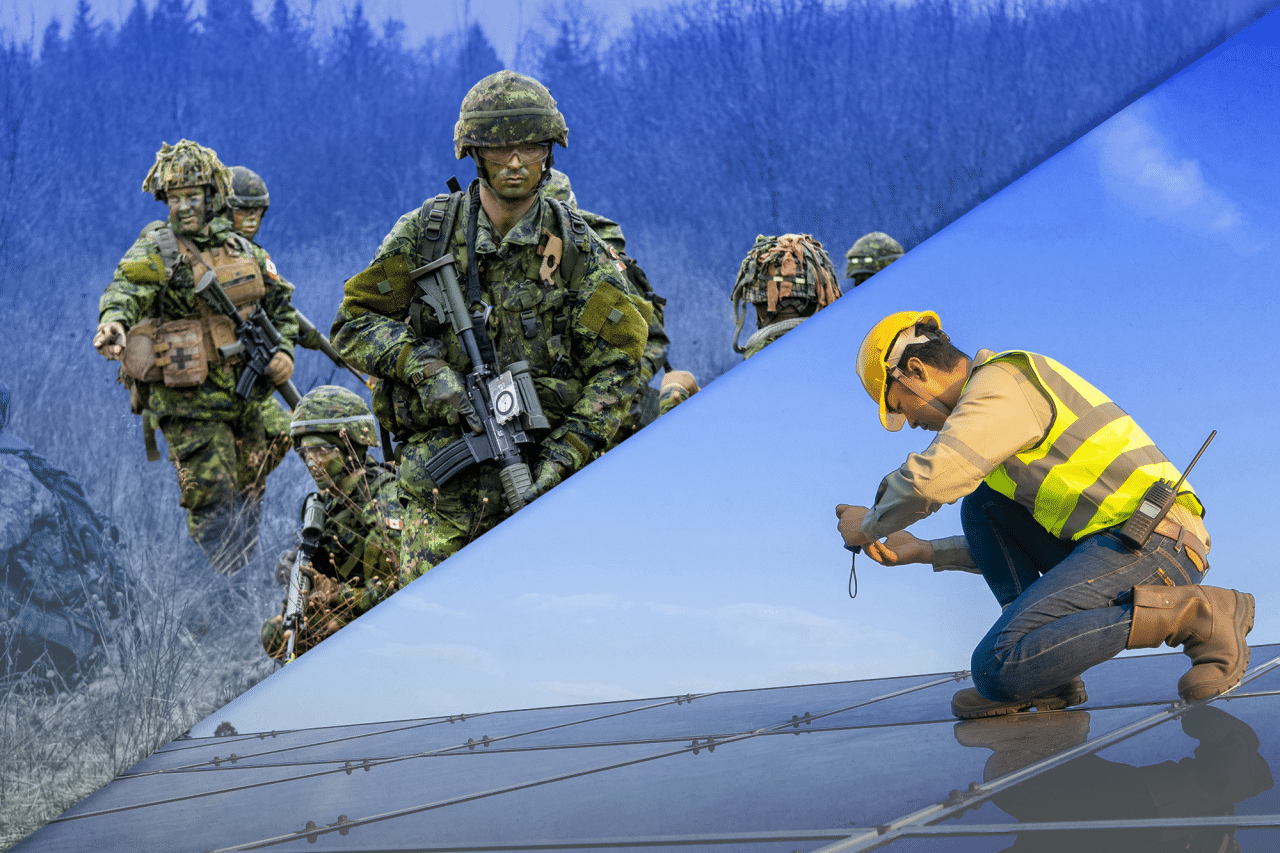
Many other young people might feel that way. For years, high youth unemployment rates have been dwarfing the pre-pandemic average. At the same time, the federal government has made massive investments in Canada’s military while draining resources away from the rest of the country’s public service. Meanwhile, Carney’s government appears to be abandoning a recent commitment to fund climate jobs for young people.
It all adds up to a Canada where, for young people, military jobs feel increasingly abundant, while meaningful ones feel like an ever-more distant dream.
Government making military jobs ‘more appealing’ than ever
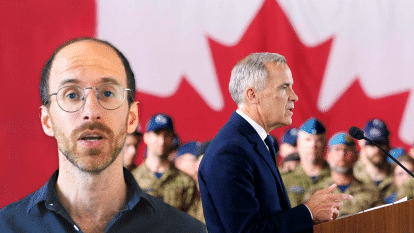
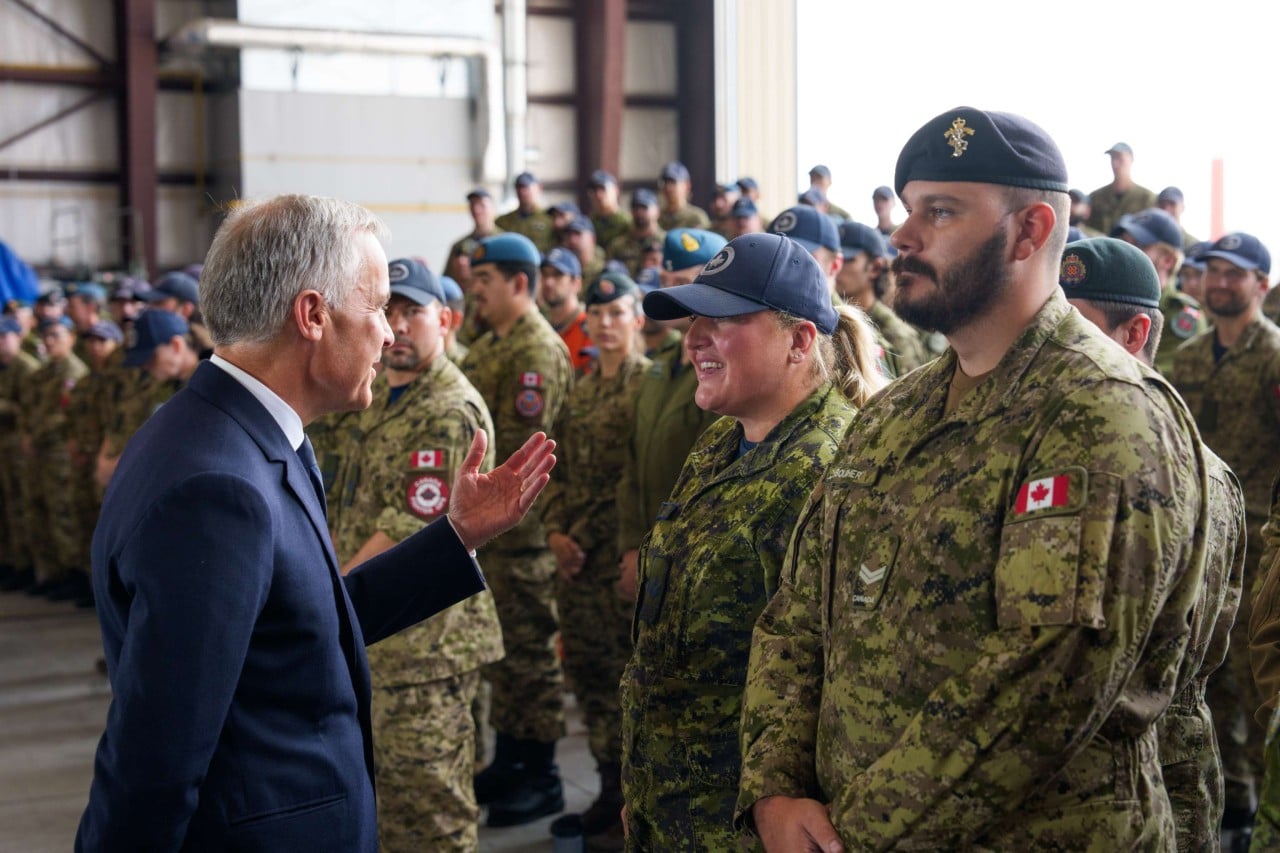
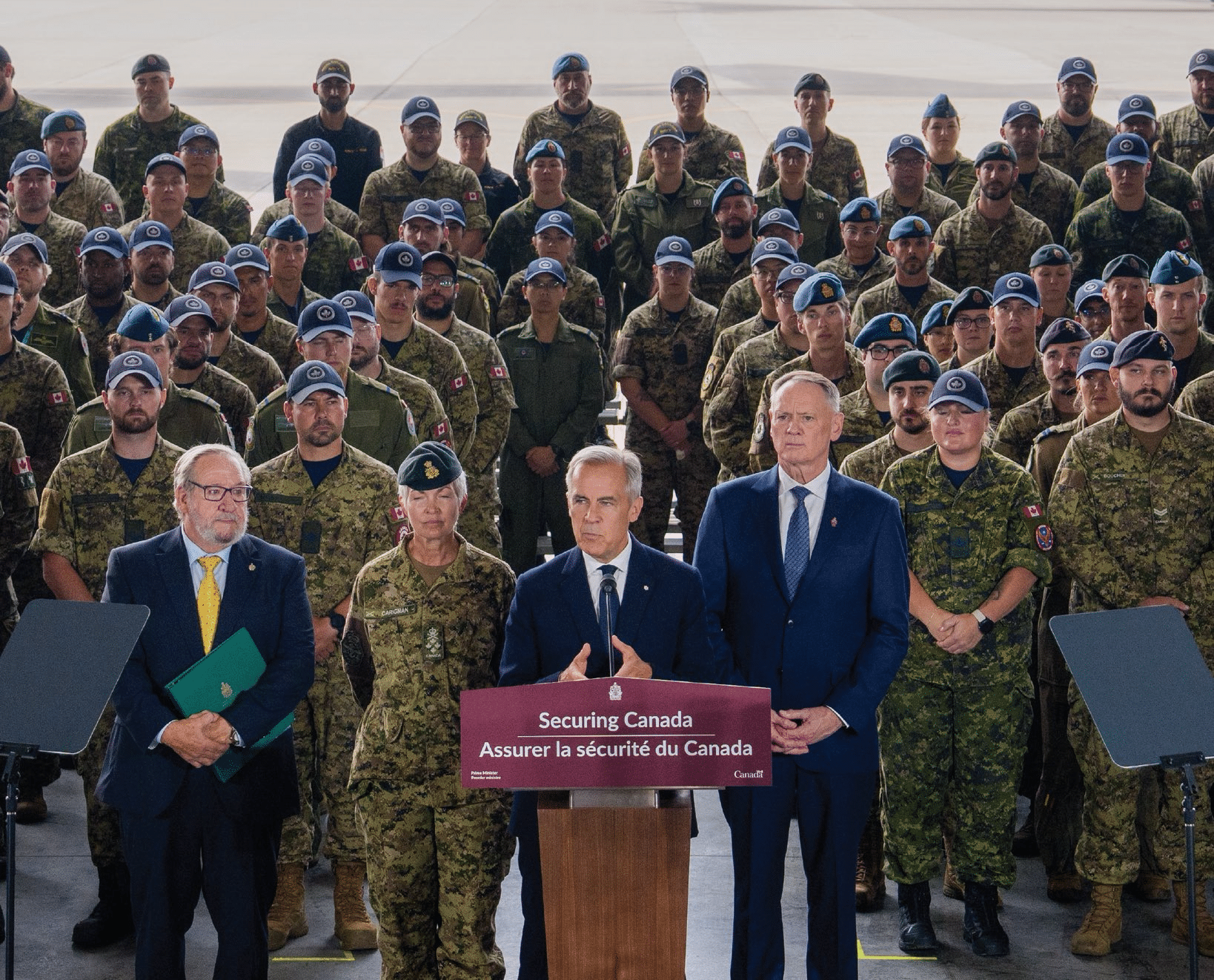
In March, Prime Minister Mark Carney announced that Canada hit 2 per cent of GDP in defence spending, and was aiming to meet the 5 per cent NATO target pushed for by Donald Trump—amounting to $150 billion annually by 2035.
“2 per cent of GDP is a lot of money, and it has to be spent on something,” David MacDonald, senior economist at the Canadian Centre for Policy Alternatives, told The Breach. Despite Carney’s posture of national defiance that he used to justify the military spending bonanza, much of the money will likely continue to go toward buying U.S. weapons systems.
Another large portion will be spent on military personnel.
Carney has attracted new recruits by spending $2 billion to bump up military pay and benefits. Last year, CAF members got raises between eight and 20 per cent, with entry-level positions getting the biggest boost.
As a result, CAF saw the highest recruitment it had in decades during 2025. More than 7,300 people joined the Regular Force, which is responsible for domestic and international operations.
The number of civilian staff in the Department of National Defence—those not in active duty and mainly performing desk jobs like policy analysis, technical services and research and development—also grew by more than 2,700 in the last year. It was the highest growth of any government department or agency in that time.
At the same time, the federal budget plans to cut 40,000 federal public service positions by 2028-2029. And all the while, Canada’s economy is contracting, losing 42,000 jobs in August alone.
While Macdonald says the allure of the Canadian military will grow, he doesn’t expect a large portion of Canada’s job-seekers will be funneled there. “It will be more appealing now than it would have been a year ago, just because the pay packages are bigger, and there’s more push for recruitment,” he said. “But those, in the broad scheme of Canadian unemployment, are going to be relatively small numbers.”
But he is concerned about siphoning the budget of the federal public service to pad military spending. He said as more public servants get laid off, wait times for ordinary government services like getting a passport renewed or receiving a tax benefit are increasing.
“If we lost 1,000 jobs in the auto sector, it would be a national emergency,” he said. “But at the same time, we’re cutting 40,000 federal public sector jobs, and no one bats an eye—as if this is normal and desirable.”
The ‘largest and most successful public jobs program’
For Bushra Asghar, the executive director of the national campaign for a Youth Climate Corps, Carney’s military hiring spree seems to come at the expense of jobs that could help fight climate change.
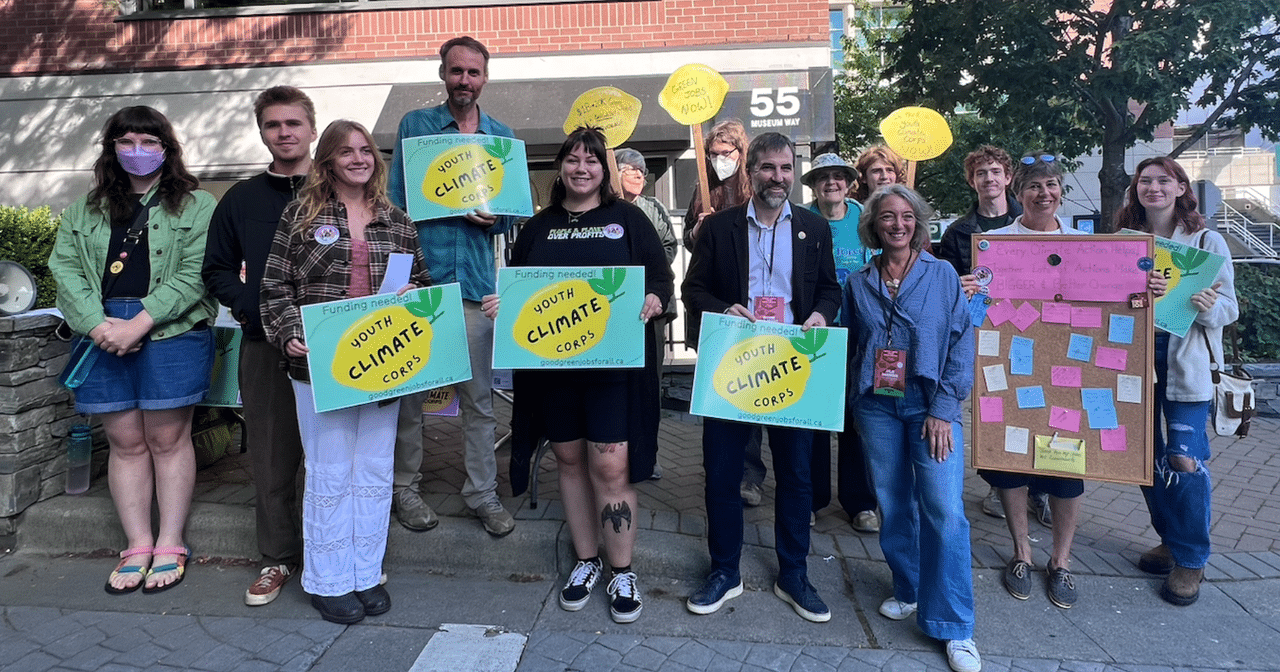
Asghar has been organizing for a public jobs program that will provide work for young people building Canada’s green economy. Last November, her campaign clocked a monumental win: the Liberal government committed to funding a youth climate corps to the tune of $40 million over two years.
But, as of the writing of this article, her organization is still waiting for the money to flow.
Asghar says it sends a clear signal of where the Carney government’s priorities lie. “When you have billions of dollars invested into defense spending versus a $40 million pilot for the Youth Climate Corps that’s still being delayed and that hasn’t been launched, it’s really discouraging,” she said.
“We are seeing the federal government move fast and at a large scale when it comes to investing into the military. So we know that can happen when they decide something is a priority. It shows us that really dealing with youth unemployment and the climate emergency is not something that they’re prioritizing.”
But she knows that a public jobs program for youth is viable—because the military itself is proof.
She called the military Canada’s largest and most successful public jobs program.
“No matter what education you have, you can join and get paid training to do a job. It connects you to a long-term career pathway. You have a pension and support with child care or housing,” Asghar said.
“It’s a case study in large-scale public planning,” she added. “If only we had more areas of our economy where we had an employment support system like this.”
Asghar pointed to a study conducted by the Harvard Graduate School of Education this year that showed that 79 per cent of Gen Z want a job that is mainly focused on helping others or having a positive impact on people’s lives.
“Young people generally are looking for meaningful jobs,” she said. “And it’s a pretty sad reality, because currently less of that exists.”
When war becomes a job
Canada’s defence build-up means new jobs not only in the military itself but also in the wider war industry—including the production of weapons. The Spring 2026 Canada Defence Industry report showed that the defence industry’s contribution to the economy increased by close to $500 million in GDP and 3,500 jobs between 2022 and 2024.
MacDonald said Canada will need to export the weapons they create, and it could implicate the country in human rights violations abroad.
He pointed to the example of Saudi Arabia. Canadian governments have been exporting Canadian-made light armoured vehicles to the Middle Eastern kingdom going back to the 1980s under Prime Minister Pierre Trudeau. Those combat trucks have been used to suppress dissent in Bahrain during the Arab Spring, harass Shia civilians, and most recently to fuel crimes against humanity in Yemen.
“You’re often going to have to export to places where you know Canadian-made defence systems are used in human rights violations, are used in unjust wars,” he said. “This is the American vision of foreign policy, which is military first, and somebody else picks up the pieces.”
Asghar, who is continuing to advocate for a youth climate corps, said good jobs that build a peaceful and prosperous society—from climate mitigation to care work—can exist, but must be fought for.
“A bunch of young people across the country with no real previous government relations experience won a pilot jobs program,” she said of herself and her co-organizers. “We just need more people going for it. Instead of being disillusioned and apathetic, use this moment to fuel action.”

‘The first video I ever made with The Breach was on why we need to support the movement for Land Back. Today, it’s being used in educational settings everywhere—in universities and colleges and children’s classrooms too. When I give talks, people will say, ‘I saw your video and it helped me understand the issue.’
That’s what we do at The Breach—reach people where they are at, with bold ideas, principled analysis, and critical investigations.” – Pam Palmater, scholar and author
Become a sustaining member of our work today.