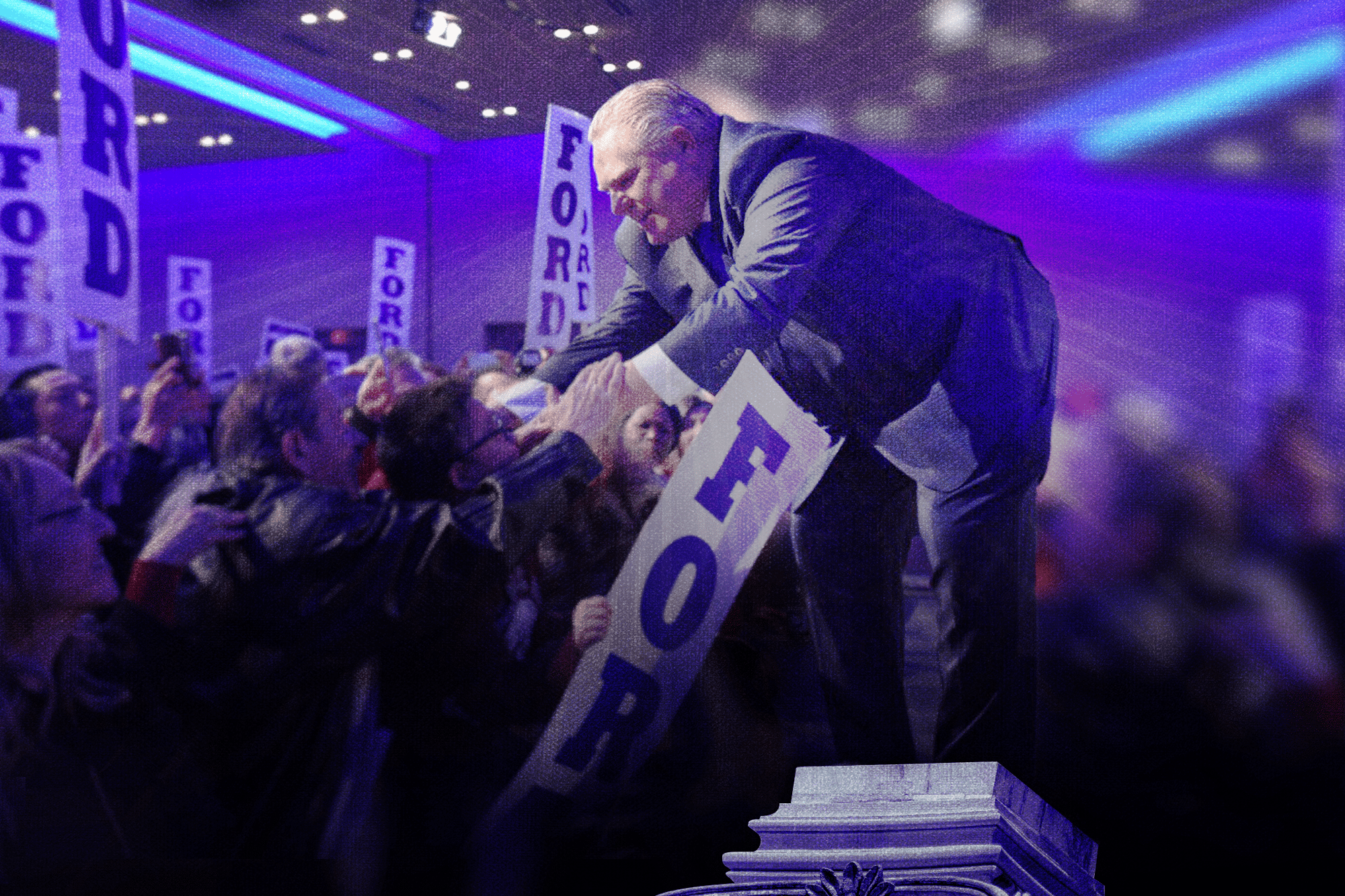
“Dougie! Dougie! Dougie!”
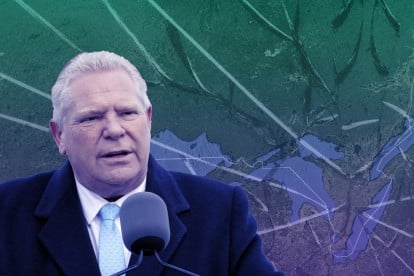
A tanned and beaming Doug Ford strode onto the main stage of a convention hall at a Disney resort in Orlando, Florida as delegates chanted his name.
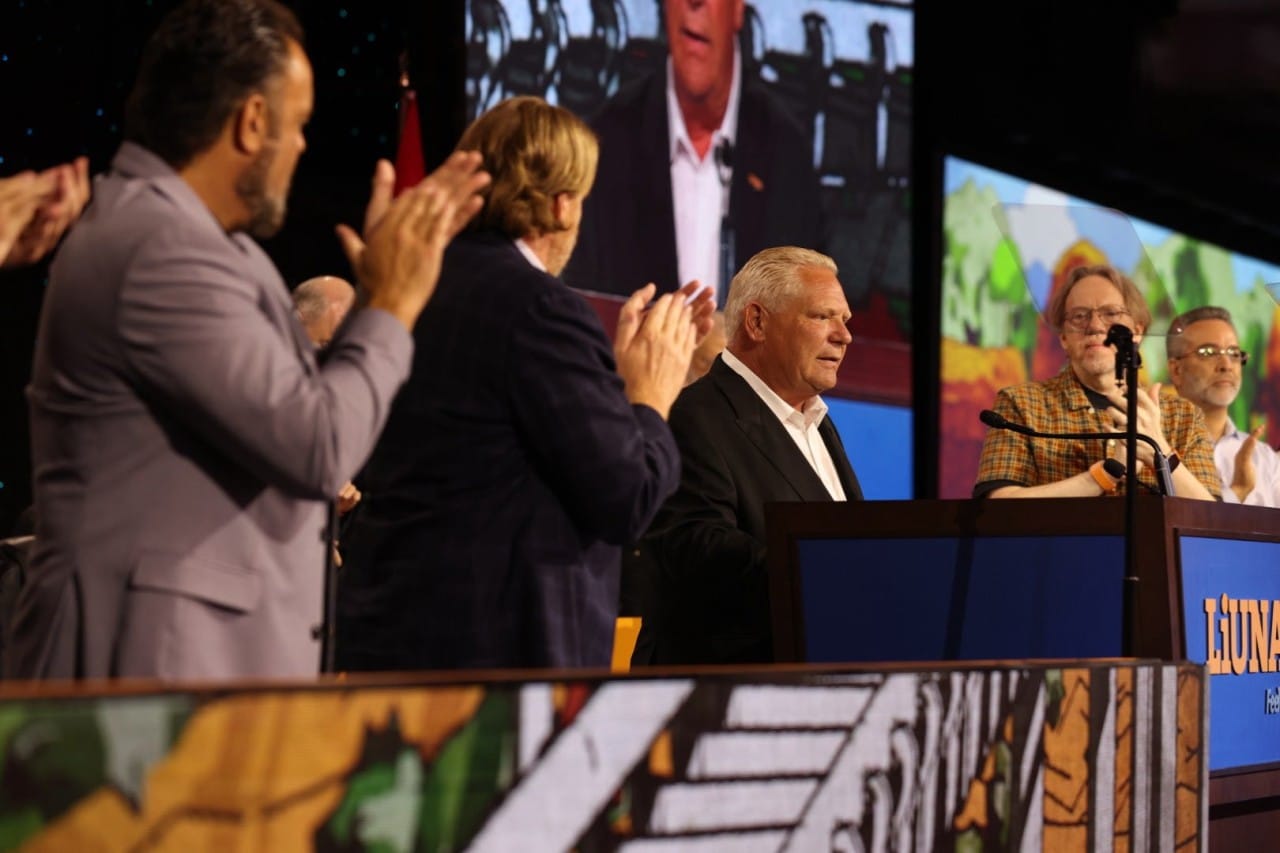
Ford had been flown in as the keynote speaker for an International Leadership Conference put on by LiUNA, a powerful trade union in Ontario’s building industry, but also a long-time backer of the Ontario premier and his Progressive Conservative (PC) government. Yet his trip to Florida in July 2025—where he was accompanied by his labour minister and other staff—cost Ontario taxpayers $11,709 to cover flights and hotels.
Ford’s taxpayer-subsidized Florida sojourn came to light last month in the midst of a growing scandal over the fact that many of his ministers and MPPs were billing extravagances to Ontario’s citizens. Indeed, 20 Tory MPPs and cabinet ministers had expensed taxpayers more than $121,000 to sleep in downtown Toronto luxury hotels despite their own homes being within commuting distance of Queen’s Park.
As bad as the expense brouhaha has been for Ford, it was just one of a litany of scandals he’s been juggling of late. Last week it was discovered that the Ontario PC party had run a covert surveillance operation against former Ontario Liberal leader Bonnie Crombie while she was vacationing in Jamaica back in 2023. There’s also been the ongoing controversy around a $2.5-billion skill training fund which political staff were caught doling out to unqualified applicants who’d often hired Tory-connected lobbyists. This was on top of the government buying a $28.9-million executive private jet for Ford to fly around in—which he sold in humiliation amid public outcry over the “gravy plane.” And there was a ferocious backlash from locals after Ford seized lands along Toronto’s lakeshore to expand Billy Bishop Airport so it can be used for jets—at the behest of a J.P. Morgan-controlled consortium that owns the airport’s terminal and had spearheaded an intensive lobbying effort around the proposed expansion.
Controversy has always dogged the blond-haired, bombastic 61-year-old Ford. Since becoming premier in 2018, he’s overseen one of the most scandal-plagued governments in Ontario’s history—if not all of Canada. But like U.S. President Donald Trump, nothing really seemed to stick to him. He won two more elections over the past four years, the most recent one last year, giving him the sheen of being the Teflon Premier.
Now it seems his non-stick veneer has finally evaporated. In June, an Angus Reid Institute poll showed Ford was the most unpopular premier in all of Canada by a wide margin—with only 21 per cent support, which was 10 points below the next most unpopular premier. (Ford lashed out at the poll, calling it “fake.”) His unpopularity has seeped into the mainstream media, with newspapers like the Toronto Star and The Globe and Mail running editorials and op-eds highlighting the litany of problems that have grown under his reign: Ontario’s overwhelmed and underfunded public services, severe housing crisis, and dire shortage of family doctors.
Ford once seemed invincible, sloughing off scandals. He used his impunity to create a system where corporations, the wealthy, and developers could donate to his party and pay his staffers-turned-lobbyists to get government contracts or laws that benefit them. But while Ontario’s rich made out like bandits, voters are perhaps realizing that Ford’s regime is immiserating their province while their lives are becoming precipitously unaffordable. Are years of corruption and authoritarianism finally catching up to Ford?
“When you’re governing for money, you’re eventually going to alienate your base,” Randy Hillier, a former Tory MPP whom Ford threw out of his caucus in 2019, told The Breach. “You’re going to alienate people because you’re not doing things in the public’s best interest.”
“Eventually that catches up with you.”
The Ford family rises to power
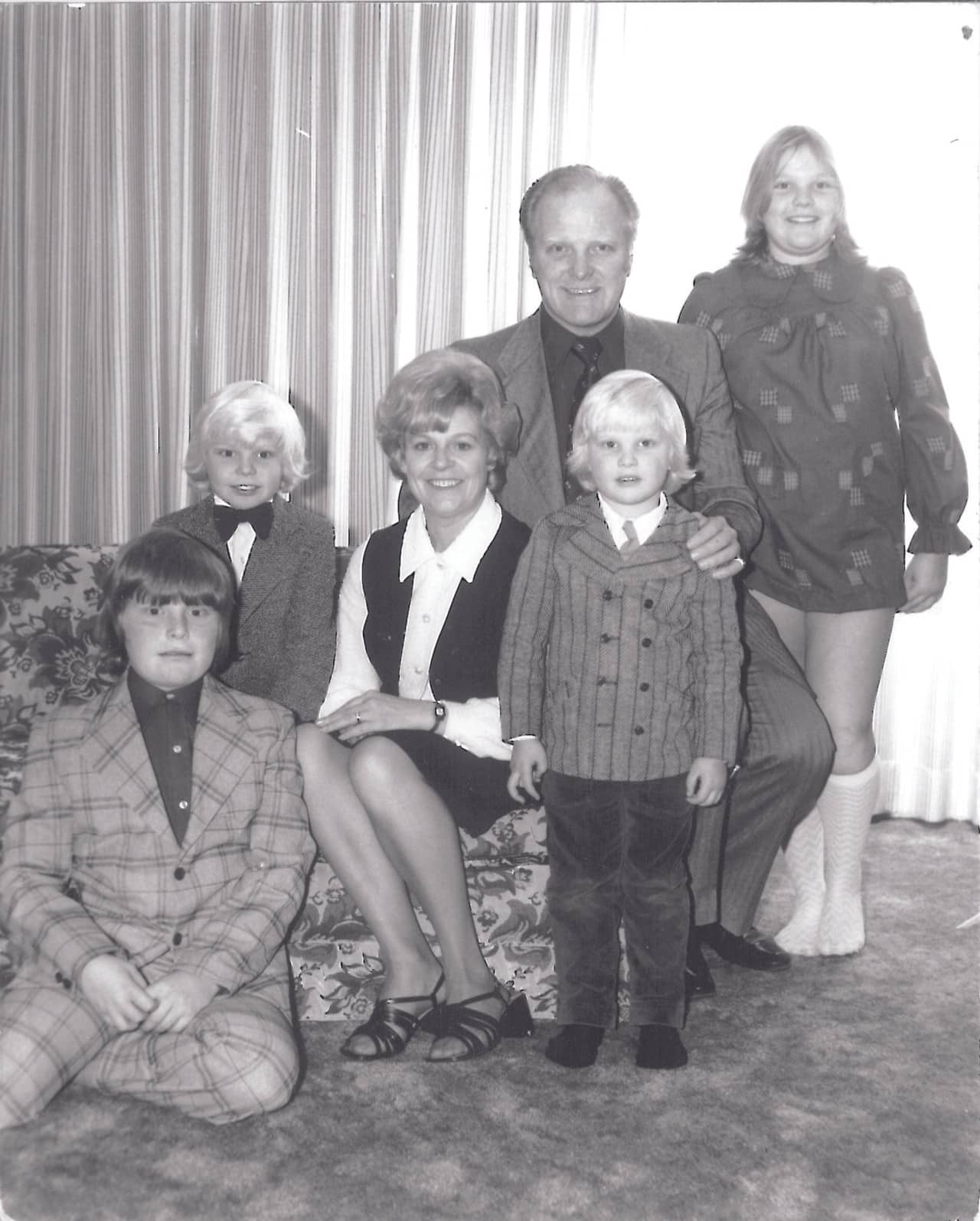
Doug Ford grew up in Etobicoke, a prosperous western suburb of Toronto, the third of Doug Ford Sr. and his wife Diane’s four children. The Ford patriarch was a successful businessman, having set up a company, Deco Labels, in the early 1960s.
By all accounts, it was a happy household. Nevertheless, all four of the Ford children ended up linked to narcotics—either as addicts or drug trafficking. The eldest, Kathy, became a heroin addict and had boyfriends who were dealers; Randy was a drug user and drug dealer; and the youngest, Rob, who became mayor of Toronto in 2010, infamously flamed out due to his alcohol and crack cocaine appetites.
“This was not unique among the rich kids in that area,” comments one reporter who’s written about the Fords, and spoke to The Breach on condition of anonymity. “For whatever reason there were a lot of hard drugs in that neighborhood.”
In the case of Doug Jr., he became a go-to hashish dealer, according to a 2013 investigation by The Globe and Mail, a business he flourished in for seven years until 1986. Then, at age 22, he was already working as a salesman at Deco, where he honed his people skills.
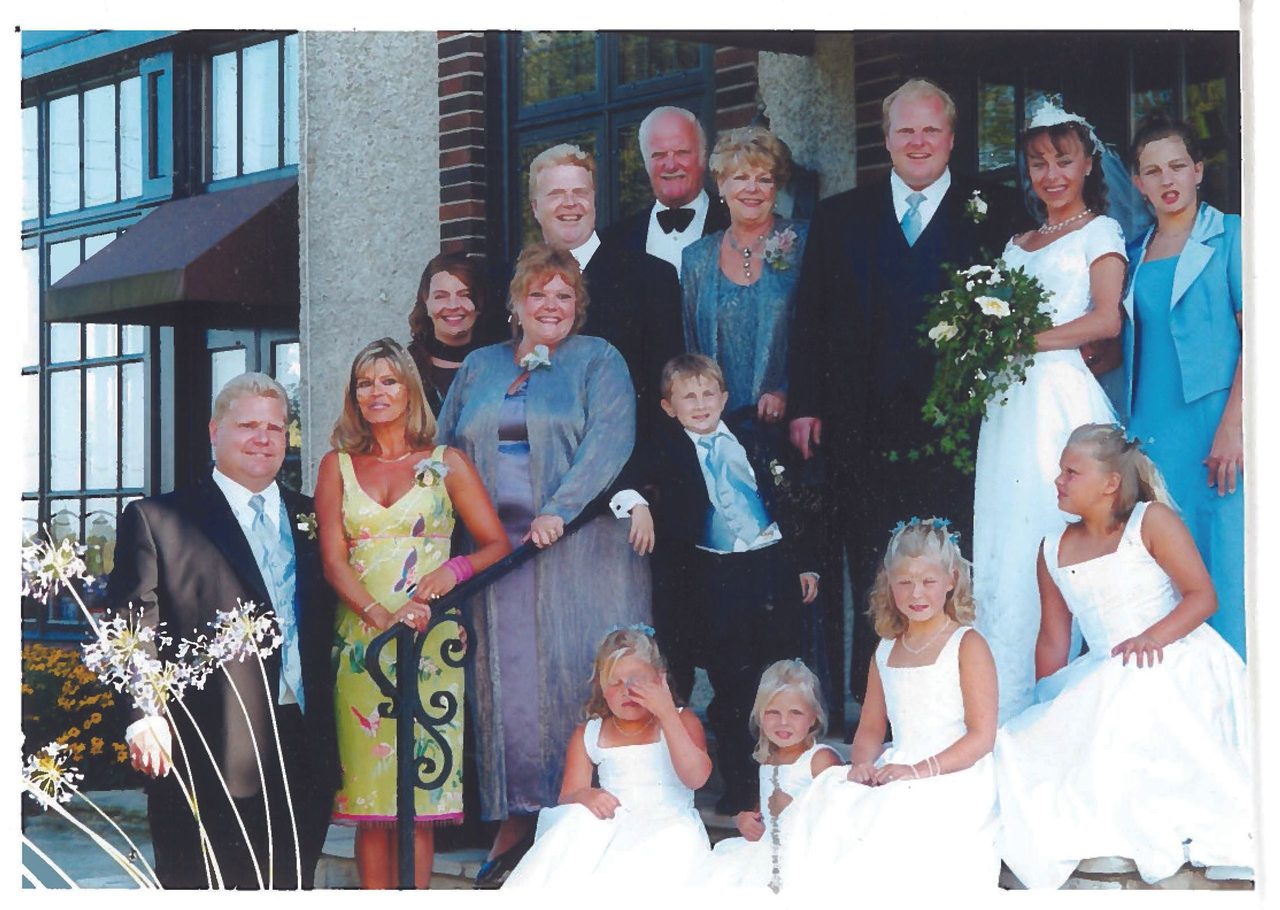
The Ford family’s first foray into politics began in 1995 when Doug Ford Sr. successfully ran as a Tory for a seat in the Ontario legislature. Rob, a socially-awkward and fanatical right-winger, decided to follow his father into politics, winning a seat on Toronto’s city council in 2000. “Rob was an odd guy to know,” recalls Gord Perks, a Toronto city councillor. “He was very wound tight around certain things. Didn’t seem like a terribly self-reflected or grounded person.”
Much to everyone’s surprise, Rob ran for mayor in 2010 under the slogan “Stop the Gravy Train”—a misleading claim that city council was wasting taxpayers’ money. Myer Siemiatycki, a professor emeritus of politics at Toronto Metropolitan University, says the Fords projected the idea that government was oppressive and bad for businesses while appealing to older suburban voters who disliked downtown Toronto’s liberal elites. “They were channeling a certain nostalgia and even a sense of pushback against the incredible multicultural transformation of Toronto from the 1960s through to the 1990s,” he remarks. Rob’s campaign manager was a controversial right-wing consultant and pollster, Nick Kouvalis, who was later key to Doug’s political success.
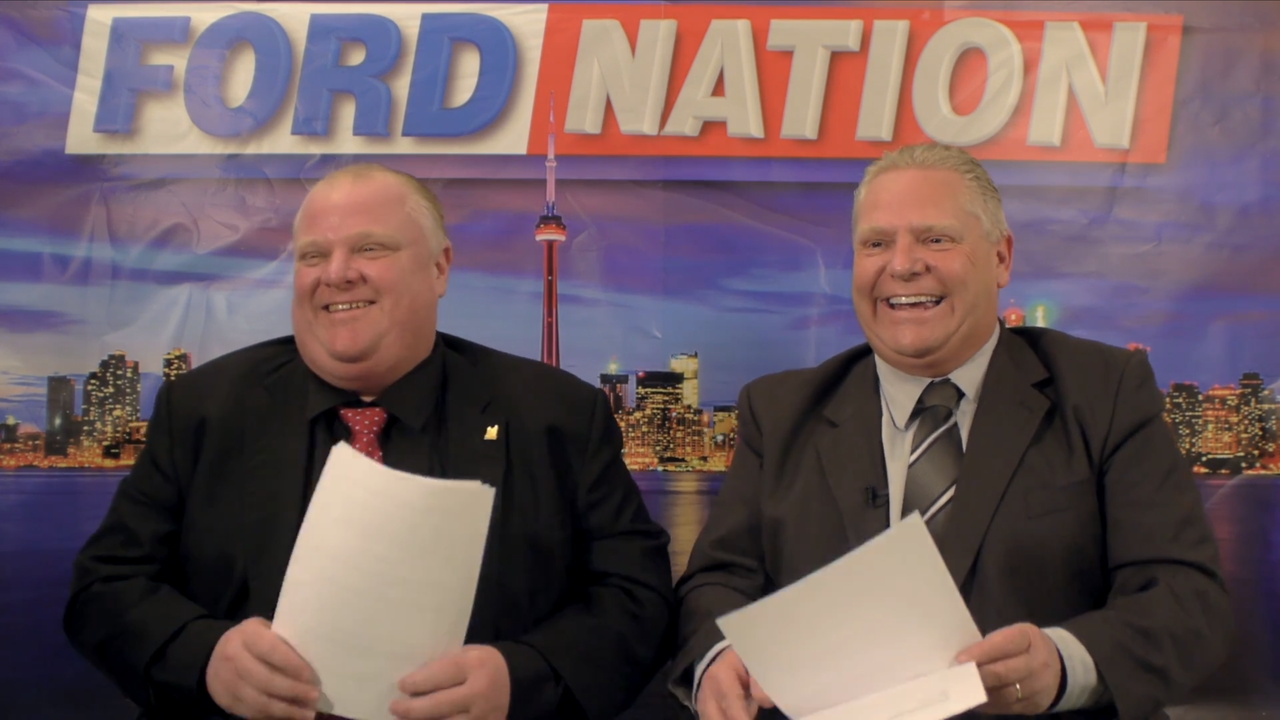
With Rob running for mayor, Doug stepped in to run in his brother’s now-vacant council seat. And shockingly, Rob and Doug both handily won the election.
The Ford brothers set out to run Toronto’s city with a bullying vengeance, pushing a harsh right-wing agenda—which was to gut city services and play hardball with public sector unions. To that end, they tried to cut cash for transit, libraries, and community and recreation centres; ripped out bike lanes; and privatized services such as garbage collection. One of Rob’s chiefs of staff would menace city councillors who opposed the mayor. Doug was caught threatening a young activist.
When Margaret Atwood protested proposed library cuts in 2011, Doug was quoted as saying he wouldn’t recognize the famous author in the street. “Neither of [the Fords] had much respect for institutions or experts,” maintains Perks. “Rob was kind of a bull in a china shop. And Doug, although he was charming and stuff, if he didn’t get his way, he could turn mean.”
But the stress of running North America’s fourth largest city soon drove Rob to booze and drugs. He was showing up at public events drunk, accosting women, and partying with escorts. In 2013, reports spread that there was a video of the mayor smoking crack. Rob’s out-of-control behavior quickly became an international media circus.
Yet as Rob spiraled, Doug seemed more interested in the Fords maintaining control. When city council voted to strip Rob of his powers in 2013, Doug was enraged, taunting members of the public who showed up at council to hear the debate, calling some of them a “disgrace.” The following year, after another video of Rob smoking crack emerged, the mayor finally went to rehab. Soon afterwards he was diagnosed with cancer and passed away two years later.
In 2018, Rob’s wife Renata sued Doug and his brother Randy for $16.5 million, accusing the brothers of not providing her and her two children with any money from Rob’s estate (Doug was the estate’s trustee). Renata was by then broke—forced to take a high-interest second mortgage on her house, with just $28,000 in savings while spending $40,000 a year more than she earned. The lawsuit never went to trial and it’s believed Doug eventually gave her some money. This July, Renata—who also struggled with substance abuse—passed away, with no cause of death given.
In 2014, Doug ran for Toronto mayor but lost. Noteworthy was how powerful developers donated to his campaign, including the Bratty, De Gasperis, and Mantella families.
Doug lucks into becoming premier
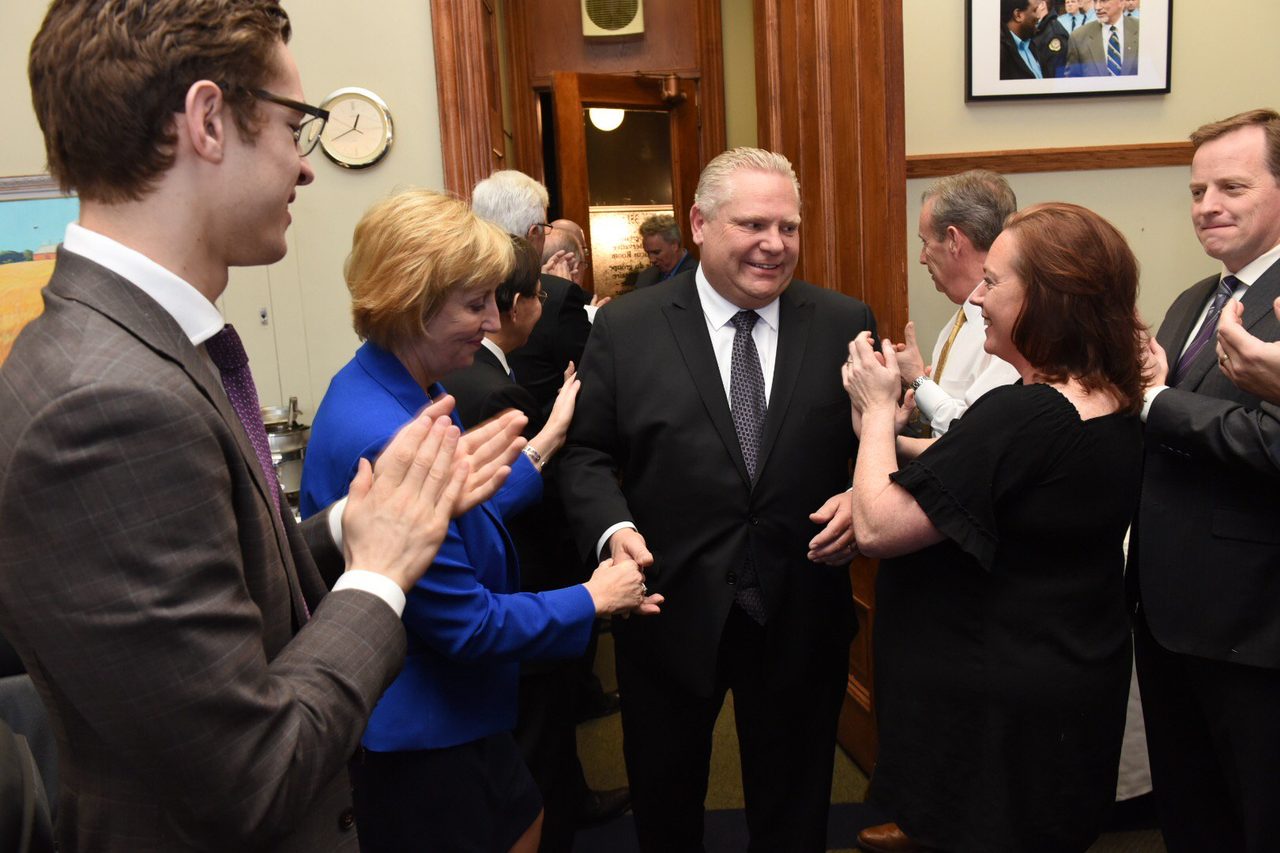
Doug was not in the wilderness for long. Four years later, he rose to become Ontario’s premier—through a stroke of dumb luck.
An election was scheduled for 2018 and the leader of the Ontario PC party was Patrick Brown, a former Tory MP. The presiding Liberal government was highly unpopular and everyone knew the Tories were poised to win. But in January of that year, CTV ran a story in which two anonymous women claimed Brown had propositioned them inappropriately. Brown was immediately pressured by the party to quit—despite his claims of innocence.
Doug threw his hat in the ring to succeed Brown. While campaigning for the PC party nomination, he was caught on videotape saying he would open up a “big chunk” of the Greenbelt for development. “I’ve already talked to some of the biggest developers in this country,” he said. “And again, I wish I could say it was my idea, but it was their idea as well.”
The Greenbelt is two million acres of protected farmland, forests, wetlands, rivers, and lakes in Ontario’s Greater Golden Horseshoe. It provides water and clean air, and curbs urban sprawl. But the Greenbelt’s land was coveted by developers who wanted to build on it.
An architect of the Greenbelt is one of Ontario’s former senior planners, Victor Doyle, who left government after Ford was elected premier. “My last hurrah with the government is that I wrote a paper talking about the multi-million-dollar sophisticated communication strategy of the development industry to undermine the Greenbelt,” he tells The Breach. “[That strategy] bore fruit because the Conservatives, the Ford guys, swallowed it hook, line, and sinker.”
The provincial election was that June. Ford sold himself as a friend of common working people: he would allow “Buck a Beer” be sold in corner stores and scrap the province’s carbon tax while chopping $6 billion in provincial spending. “He’s such a fucking great bullshitter with blue-collar people—making them think he’s on their side,” fumes John Cartwright, former leader of the Toronto and York Region Labour Council.
By then, an astroturf group called Ontario Proud had emerged to back the PC party. Of its budget, $460,000 came from corporate donors, mostly construction and land development companies. Ontario Proud ran attack ads against the Liberals and NDP. During the election campaign, Ford promised “we won’t touch the Greenbelt” and pledged to end “hallway medicine” in hospitals. The Tories won handily, taking 76 of 124 available seats. The Liberals, meanwhile, were reduced to seven.
Handouts for cronies
Yet Ford’s initial effort to govern was an unmitigated disaster. “He was naive and lacked any maturity in understanding the political system,” says Hillier.
Ford immediately chopped Ontario’s climate plan, threw shade on the federal carbon tax and in his first budget slashed funding for social services, healthcare, education, the environment, First Nations, legal aid, and grants to university students. In the middle of the 2018 Toronto municipal election, he passed a law that cut the number of seats on council by almost half. Says Perks: “He’s done more harm to Toronto than anyone in my lifetime.”
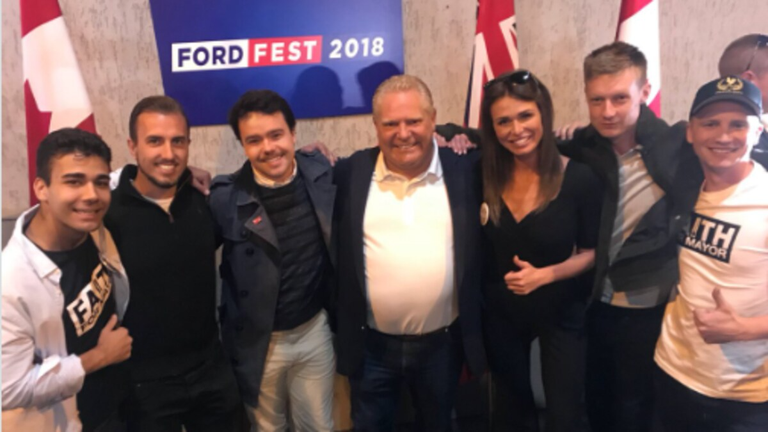
Ford also flirted with far-right racists: in 2018 he was photographed with his arm around Faith Goldy and her supporters while the white nationalist was running for mayor of Toronto that year.
More significantly, Ford established a system to enrich his cronies, backers, and the development industry in particular. “His team was there to make money,” insists Hillier. How it worked was simple: if companies or wealthy individuals wanted government money or beneficial laws, they donated to the PC party and then hired one of the lobbying firms that employed former or current Ford confidantes and staffers to advocate for them.
Take the case of Kory Teneycke and Chris Froggatt. Teneycke was manager of Ford’s 2018 election campaign, a role he reprised in 2022 and 2025. He had worked for Stephen Harper as a communications director and helped run Sun News Network, a right-wing television network. Froggatt was vice-chair of Ford’s 2018 campaign.
Weeks after helping Ford first get elected, both men set up lobbying firms—Rubicon Strategy in the case of Teneycke and Loyalist Public Affairs by Froggatt—while they continued to give Ford strategic advice. Their firms quickly signed up dozens of clients, many of which had an interest in government affairs, like construction, cannabis and alcohol sales. “And if you talk to people at other lobbying firms, they lost a bunch of clients to Teneycke and Froggatt because they knew they were the gatekeepers,” says Duff Conacher, coordinator for the citizen advocacy group Democracy Watch. “Pay them and you get what you want.”
Teneycke and Froggatt created a template soon copied by numerous other Tory insiders around Ford. In 2021, the Toronto Star did a data analysis and found that out of 12 Ontario lobbyists with the most registered clients at that time, “10 had clear conservative ties and an 11th had helped raise money for the PC party. Among lobbyists with 10 or more active registrations, almost two-thirds had worked on conservative campaigns, for conservative ministers or were open about their conservative links.”
During COVID, while most small retailers were shuttered, big-box retailers and discount stores, film studios, and construction companies didn’t have to close their doors. It was later discovered these firms had hired Tory-connected lobbyists to press the Ford government to allow them to stay open.
Ford and his staff were also eager to appoint unqualified friends and family to government posts. Ford appointed his close friend, Ron Taverner, a superintendent in the Toronto Police Service, as head of the Ontario Provincial Police despite Taverner not meeting the requirements for the job. (Taverner stepped down after the controversy blew up.) In 2019, Dean French, Ford’s first chief of staff, was forced to resign when it was revealed he had appointed two agents general to foreign posts, with salaries of $165,000 to $185,000 plus expenses—one a 26-year-old lacrosse player who was friends with French’s sons, and the other his wife’s second cousin. Meanwhile, one of Ford’s daughters, Kara, who has a two-year college diploma in broadcasting, works at a provincially-owned health care centre, where her salary shot up from $128,000 in 2022 to more than $211,000 last year.
Ford’s developer friends were also getting gifts. For example, in 2018, Ontario’s public utility sold a lucrative 40-acre parcel of land on Toronto’s waterfront for a mere $16 million, although no appraisal of the property had ever been released. (As the Toronto Star noted, “There are single-family mansions and even a swanky condominium currently priced at more than $16 million.”) The buyer was a company controlled by Mario Cortellucci, a powerful and controversial developer whose family has given enormous sums of money to the PC party for decades, including to Ford.
In the summer of 2019, Ford was booed at the Toronto Raptors’ victory celebration after the team won the NBA title. By the end of that year, he was polling at 31 per cent. His ineptitude, budget cuts, and taint of corruption were lining him up to be a one-term premier.
The comeback
The arrival of COVID in early 2020 changed his fortunes. “Clearly COVID saved his bacon,” remarks Dimitry Anastakis, a business historian at the University of Toronto. “And since that time, he’s been able to kind of get away with all kinds of shit that nobody’s looked into, and [which] he’s been able to cover up.”
Ignoring many right-wingers who opposed COVID restrictions, Ford listened to the doctors and closed down the province when the virus surged. He stopped lambasting the Trudeau government and began co-operating with them on a range of issues. He even condemned the convoy of right-wing anti-vaxxers who laid siege to Ottawa in 2022. When an NDPer, Olivia Chow, became mayor of Toronto, he worked with her too. And he distanced himself from the far right and began spending money on infrastructure projects, such as transit, and manufacturing electric vehicles.
Ford was also willing to backtrack on unpopular decisions. It’s believed much of the credit for his change in political approach was due to Nick Kouvalis, whom Ford used as a pollster. Kouvalis was taking the temperature of voters, and Ford listened. “Whatever somebody might think of Nick as an individual, he is one of the most skillful pollsters in the country,” says Hillier. “And there’s no question in my mind that Ford did exceptionally well during COVID due to Kouvalis’s focus groups and polling.”
Ford’s seeming move toward the political centre was underlined by a bitter feud which erupted between him and federal Tory leader Pierre Poilievre. During last year’s federal election, Poilievre and his election team did not consult with Ford about how to win seats in Ontario. After Poilievre lost the election, Kory Teneycke blasted Poilievre’s election team, quipping: “Blowing a 25-point lead and being like 10 points down is campaign malpractice at the highest level.”
But Ford’s apparent moderation was a ruse—after all, his quest to build an authoritarian regime and encourage corruption continued apace. The most blatant proof of this was the Greenbelt scandal.
Ford has promised to build 1.5 million new homes within a decade to ease the province’s housing shortage (a promise that will not be met). Although, as Ontario Green Party leader Mike Schreiner notes: “The premier himself had said no to the two most important recommendations from his own housing affordability task force—they said that we should legalize multiplexes and mid-rises along major transportation corridors across the province.”
In 2022, Ford made the surprise announcement the government was going to allow 15 areas of the Greenbelt to be opened up to build homes on, encompassing 7,400 acres. What soon emerged was the fact that nine of the developers who would build on this land had donated significant sums to the PC party, totalling more than $572,000 since 2014, and had hired Tory-connected lobbyists to persuade the Tories to access the Greenbelt.
Moreover, most of the developers had bought up land in the Greenbelt prior to Ford’s announcement—clearly anticipating his pending decision.
When Ontario’s auditor general and integrity commissioner conducted investigations, they found the process of land selection was largely controlled by housing minister Steve Clark’s chief of staff, Ryan Amato—not non-partisan bureaucrats—and that many of the sites were chosen after receiving specific suggestions from developers. Indeed, 92 per cent of the land slated for development was requested by developers that dined with Amato at a building industry soirée weeks before Ford made his announcement. Moreover, the land being made available was unnecessary for meeting the goal of building the 1.5 million homes. The owners of the 15 land sites could ultimately see a collective $8.3 billion increase to the value of their properties. “The process was biased in favour of certain developers and landowners who had timely access to the housing minister’s chief of staff,” said Bonnie Lysyk, the auditor general at the time, in a news conference.
The integrity commissioner found Clark violated sections of the Members’ Integrity Act concerning conflicts of interest. Clark and Amato eventually resigned.
Still, Ford only reconsidered his Greenbelt plan when his own MPPs began to revolt—they were facing angry voters in their ridings. In the fall of 2023, he cancelled it and apologized. “I made a promise to you that I wouldn’t touch the Greenbelt. I broke that promise. And for that I’m very, very sorry.” To this day the RCMP is investigating corruption allegations around the Greenbelt.
The scandals don’t stop
Despite the Greenbelt fiasco, Ford continued the practice of handing over precious forest, farmland, and wetlands to developers—and offering taxpayer money to companies that hired Tory-connected lobbying firms.
Two highways currently being built, Highway 413 and the Bradford Bypass, will cross land owned by developers friendly to the PC party. Their construction reads as a page from a familiar playbook.
A National Observer/Torstar investigation in 2021 showed that eight major Ontario developers own 3,300 acres of land along or near Highway 413—half of whom are connected to the Ford government. Moreover, three of those developers hired Peter Van Loan as a lobbyist. Van Loan was a former president of the PC party and campaign manager for Caroline Mulroney’s failed 2018 bid for the party’s nomination. He became a lobbyist the following year.
Then there is the Ontario Science Centre controversy: Ford closed the popular education centre in 2024 claiming that it needed to be torn down because the roof was unsafe. “The notion that there are a few roof panels wrong in the science center and therefore [it] had to be closed is such complete bullshit,” says Cartwright.
Soon it emerged that Ford’s long-time developer friends, the De Gasperis, had bought 60.5 acres of land adjacent to the centre in 2019. The De Gasperis and Ford have close ties: Michael De Gasperis once hosted Ford in a private luxury suite at a Florida Panthers hockey game in Miami in 2018. “Because the De Gasperis wanted an opportunity to get that land,” says Cartwright, “I would suggest that that was one of the principal reasons for the Ford regime declaring the science centre unsavable.”
But it’s not just developers who’ve been cashing in, as witnessed with the controversy surrounding the Skills Development Fund (SDF), which Ford set up in 2021 to provide companies and unions with money to upgrade workers’ skills. A total of $2.5-billion of taxpayers’ funds was shovelled into the fund with applicants supposed to be assessed and granted money based on the quality of their proposals.
That’s not what happened.
When Ontario’s auditor general investigated the program last year, she found that more than half of the projects the labour minister’s office gave money to were ranked as poor, low, or medium. Yet these applicants received a total of $742 million. Ford’s government doled out $126 million to 64 firms that used lobbyists to push poorly-rated applications. Basically, the labour ministry’s political staff would hand out money not to the best proposals, but to those who had hired Tory-connected lobbying firms. For example, Kory Teneycke, Ford’s campaign manager and adviser, managed to land $100 million for clients of his lobbying firm, Rubicon Strategy.
In one instance, the auditor general found an organization that was active for only three years received $4 million despite having limited experience with training, no governing board, and no track record of managing public monies, after presenting an inflated budget with no capital expenditures quotes.
Nevertheless, David Piccini, the labour minister at the centre of the SDF scandal, has kept his job despite calls for his resignation. In July, it was also discovered that Piccini had spent $40,000 from his riding association on “meetings” and thousands on luxury expenses like The Four Seasons Hotel and a limousine company.
Not surprisingly, Ontario NDP Leader Marit Stiles said the SDF scandal “looks like corruption” because the Tories “used this multibillion-dollar fund to exchange favours with insiders and hand out cash to the same folks that we see popping up over and over and over again.”
Authoritarian Ontario
Ford’s government has become one of the most authoritarian and undemocratic on record. He’s taken control of school boards and conservation authorities, undermined regulatory agencies and passed laws forbidding critics from running ads critical of his government or uncovering past or future scandals.
As Schreiner observes: “It’s extraordinary how much power this government has centralized into the hands of the premier and the cabinet.”
To ensure developers’ building projects sail through unimpeded, Ford has passed a raft of laws that bar or limit public input. “They’ve told a lot of these small municipalities and organizations, ‘You know what? If you guys criticize us or don’t play ball, we’re going to do something to you,’” explains Doyle. “‘We’re going to cut off your funding. We’re going to not send infrastructure your way.’”
Earlier this year, the Ford government passed a law that gives the minister of housing power to directly appoint and fire regional municipalities’ heads of council, who in turn can overturn local council decisions and bylaws that affect development.
Ford has passed bills that undermine the Endangered Species Act, Environmental Assessment Act and the Environmental Bill of Rights, and which create Special Economic Zones that suspend various provincial and municipal laws—including environmental and planning regulations. He’s neutered local conservation authorities. In 2022 his government passed the Strong Mayors, Building Homes Act that gives mayors almost dictatorial powers to override councils in order to ram development through.
“It’s almost like every time they hear the word ‘environment,’ they kind of think, ‘How do we wreck it?’” says Tim Gray, executive director of Environmental Defence, a Toronto-based environmental advocacy organization. “It’s really particularly regressive. … The attacks on conservation authorities and their ability to protect river valleys, forests, wildlife habitat adjacent to our communities just means that more and more sprawl will eat up all of those natural areas, make flooding worse, make people who buy houses in these areas have a lower quality of life.”
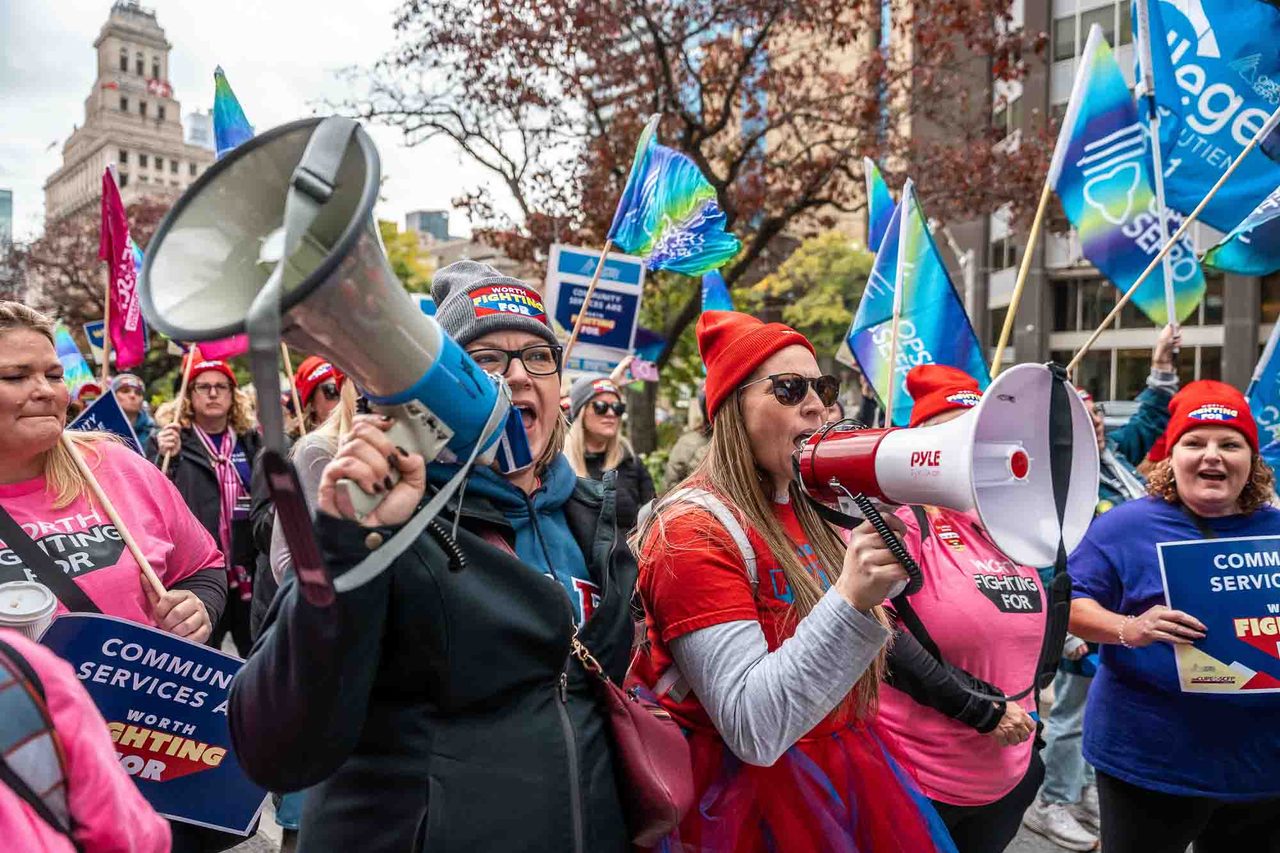
Ford has also systematically underfunded the public service and assaulted their unions. “When you’re talking about Doug Ford’s reign over the past eight years, I think it’s been characterized by how quickly he can move public assets into private hands and reward those folks who are loyal to him,” says JP Hornick, president of the Ontario Public Service Employees Union (OPSEU). “So his approach to labour relations has followed suit.”
Prior to 2018, Ontario’s public sector unions launched effective ad campaigns targeting the Tories before and during elections. To stop this, Ford passed Bill 307 that illegally restricted third-party political advertising. The unions challenged the law and got it finally struck down by the Supreme Court last year. But by then the damage was done: Ford had already called and won two elections while the law stood.
In 2019, his government passed Bill 124 that capped pay to the entire public sector to one per cent per annum for the next three years, estimated to save $9.7 billion. The unions took the law to court on the grounds it was unconstitutional—and finally had it overturned five years later.
But Ford wasn’t done: in 2022, the government passed Bill 28 to prevent a strike by 55,000 education workers and imposed a collective agreement on them which also banned their right to strike. The law used the notwithstanding clause to override the Charter of Rights and Freedoms. “[Bill 28] deemed striking illegal,” explains Laura Walton, president of the Ontario Federation of Labour (OFL). The education workers defied the law and walked off the job while the OFL rallied all unions—including from across the country—and threatened Ford with a general strike. Ford was forced to quickly repeal the law.
Leaving Ontario worse than he found it
While Ford focussed on giving handouts to developers and seizing control of Ontario’s democratic institutions, life in Ontario has grown noticeably unaffordable.
Overall, while the Ontario government is spending $244 billion today—up from $161 billion in 2018—this outlay has not kept up with inflation and population growth. As a result, Ontario has the lowest per capita spending in Canada. “We’re not maintaining service levels, and we’re definitely not improving service levels,” says Ricardo Tranjan, Ontario research director of the Canadian Centre for Policy Alternatives.
Ontario has a severe housing crisis, with 85,000 homeless people and nearly 2,000 homeless encampments. Seventy thousand children sit on waiting lists for autism services and more than 2.5 million residents have no family physician.
This underfunding of public services is most visible in Ontario’s post-secondary education system, which ranks last in per-student operating grants: $10,481 compared to the national average of $17,424. Universities and colleges are now running massive deficits and slashing programs. By 2021, Laurentian University in Sudbury was so broke it was forced to seek creditor protection.
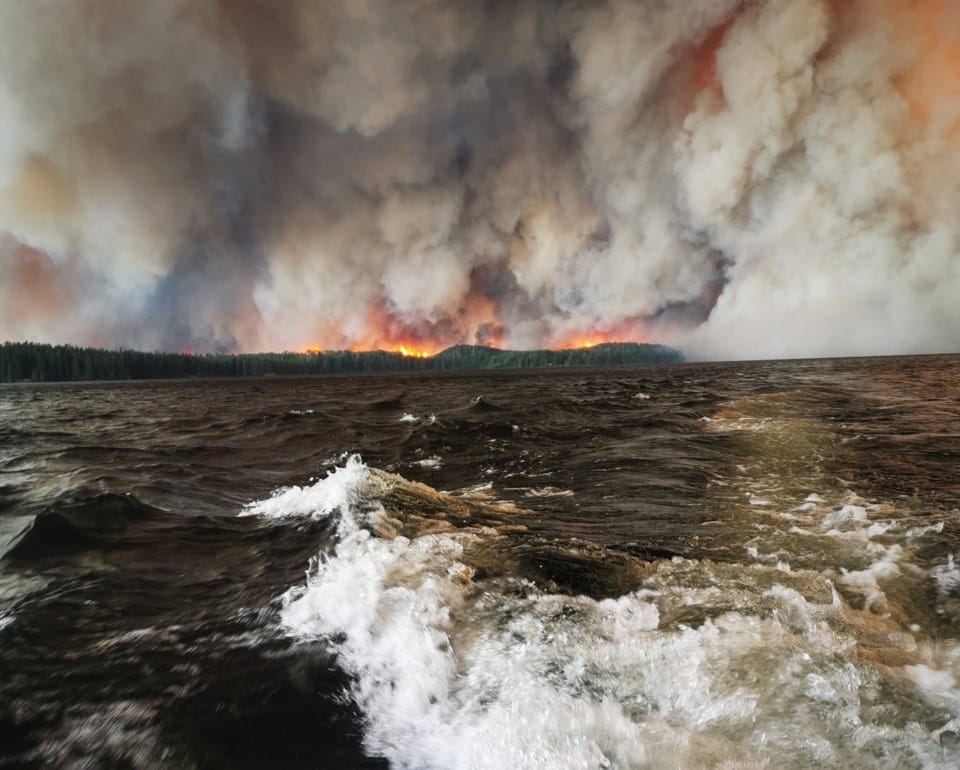
When nearly 200 wildfires started burning in northern Ontario last month, enveloping much of the province in smoke, what was mostly overlooked in this catastrophe was the fact that the fires likely rampaged out of control because the province had been cutting firefighter crews in northern Ontario for years. “In 2005 we had somewhere in the neighbourhood of 215 wildland firefighter crews when there were not nearly the size, severity, and number of fires,” says Hornick, whose union represents firefighters. “And now a quarter of the crews are short—we are between 35 and 50 crews short by the government’s own estimation.”
In health care, while Ford promised to get rid of “hallway medicine” in hospitals—whereby patients’ beds are parked in hospital halls—the situation has only gotten worse. Almost 2,000 patients across the province receive care in unconventional spaces on any given day. Most Ontarians admitted to hospital via ERs spend an average of 44 hours waiting for a bed. Ontario has among the fewest acute hospital beds per capita in Canada, while one in five beds is occupied with patients waiting for long-term care or rehab.
“And so what the Ford government has done, instead of opening capacity, he’s passed a law to say that hospitals can kick elderly people out,” says Natalie Mehra, executive director of the Ontario Health Coalition. “And they’re allowed to threaten them—that they will be charged $400 a day if they don’t go.” Mehra believes Ford’s design is to wreck the health care sector to justify creating a two-tier system. “Every service that’s cut from a hospital is privatized, and that’s part of what the drive is there,” she notes.
Ontario’s economy has also been treading water. “The headline numbers on the economy aren’t great,” remarks Ontario’s former chief economist, Brian Lewis, now a senior fellow with the Munk School of Global Affairs & Public Policy at the University of Toronto. “Real GDP per capita has hardly grown in eight years, investment’s been weak.”
It’s a toxic combination: Ford enriching his cronies, while services and affordability are whittled away for those who once voted for him.
“I think you judge people by their outcomes,” observes Hillier. “Do we have less homelessness in Ontario now than we did eight years ago? No, we have more. Do we have fewer drug addicts? Do we have greater employment? Have we risen the per capita standard of living and GDP?”
“On every metric that can be evaluated objectively, we are in a worse position.”
The fate of Ford?
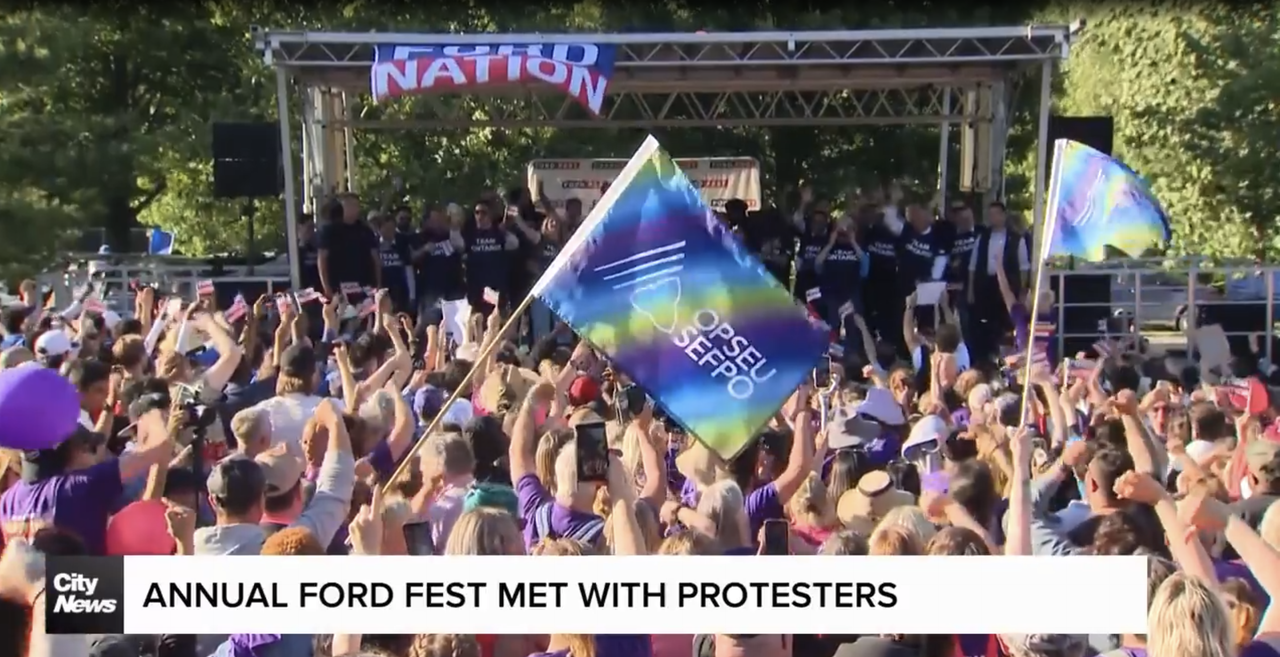
On a sunny day this past June, Ford held his annual public picnic called Ford Fest in a park in Scarborough. There, he was confronted by hundreds of members of OPSEU wearing purple shirts—mostly community and health service workers who’ve been on strike since May. They’ve been striking to recover wages they lost under Ford’s Bill 124, and to call out the province’s chronic underfunding of services.
Union members drowned out the premier’s speech with boos and jeers. “It was a really organic moment because they’re pretty frustrated,” says Hornick, who was at the event.
The Ford Fest confrontation underlines that Ford’s unpopularity is no longer a matter of debate. Yet what fate lies in wait for a premier that can no longer outrun his own scandals?
For now, it seems Ford is trying to staunch the bleeding by preventing further wrongdoing from coming to light. Earlier this year, the government passed a law that shields records of the premier, cabinet ministers, parliamentary assistants, and political staff from access to information requests. Ford also limited the legislature to sitting for only 53 days this year, while spending tens of millions on law-and-order and public-relations ad campaigns.
While the PC party still retains 29 per cent support in the polls, its popularity is sinking. The leaderless opposition Liberals are polling at 33 per cent by comparison, with the NDP at 21 per cent. Ford may have finally become a long-term liability for the PC party.
Still, the party won’t face the electorate for nearly four years. Will Ford be pushed out or resign sometime before the next election? “The party will move [against him] if they think there is a significant likelihood of losing power,” predicts Hillier. “The leader only remains as long as the caucus has confidence in the leader…We can see beneath that veneer a lot of [the caucus’s] confidence [in Ford] is lacking.”

“It’s about getting to the bottom of things. It’s about unveiling who has the power and what they’re doing with that power.”
Linda McQuaig, journalist and author
As a non-profit, free from powerful corporate interests, we invest in investigations and uncover the cover-ups. Sustain our journalism for transformation.
Doug Ford | Ontario’s plan to ban bike lanes is ripped from the business lobby’s wish list
Resource Extraction | To become an ‘energy superpower’, Canada wants to bulldoze Indigenous rights
Neoliberalism | Ontario for sale: how Doug Ford is dismantling the province
3 comments
Comments are closed.

Tl;dr
Austerity and cronyism
Election reform. Why do we have to watch this stuff powerless?