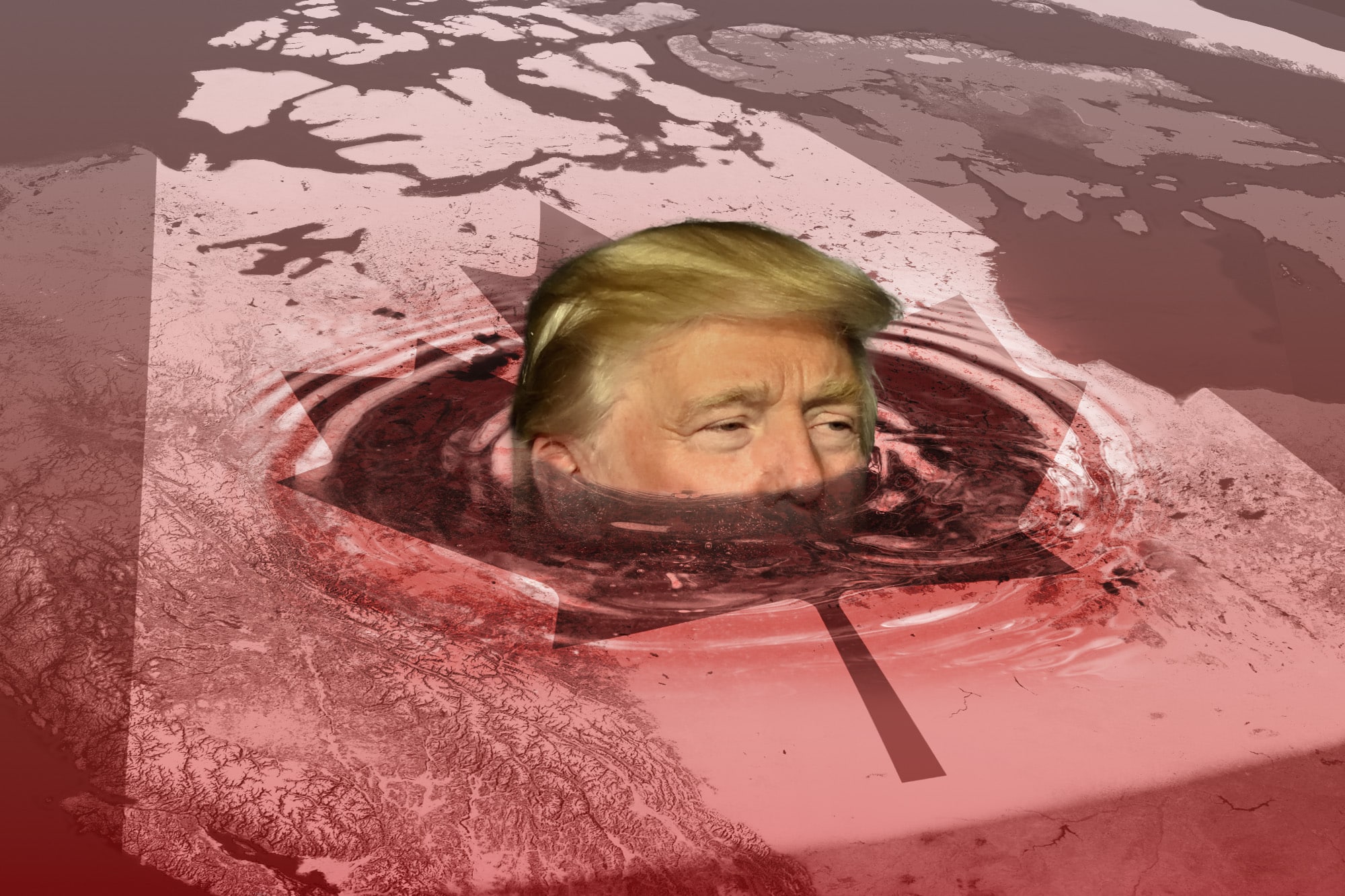
Make no mistake, Donald Trump’s election is a gift to every reactionary in Canada.
A new Trump administration will directly pressure the federal government on many key policy fronts. It will also set a new, low bar that the corporate elite and right-wing Canadian politicians will try to push the country to meet.
From lobbyists urging the government to mimic Trump’s tax cuts for the wealthiest, to weapons manufacturers hoping to profit from increased military spending, to politicians stoking waves of transphobia and anti-immigrant racism, it will be a political race to the bottom.
Many of these same forces tried to take advantage the last time Donald Trump was in power.
Here are five dangerous pressures Trump’s election will bring to bear on Canada, demanding the attention and vigilance of progressive movements.
1. The business lobby will demand Canada copy Trump’s corporate tax cuts
Tax cuts—especially benefitting the wealthiest—are central to Donald Trump’s agenda.
He has floated the idea of eliminating income tax entirely, musing about what a “smart country” the United States was in the 1890s when it had no such tax (and also provided zero social services).
More likely, he’ll slash taxes for the richest and reduce the corporate tax rate to 15 per cent for companies making their products in the U.S. (He already cut the rate to 21 per cent from 35 per cent during his last presidency).
Expect Canada’s corporate elite to seize onto these changes, clamouring about the need to keep our own economy “competitive” (code for tax cuts, please).
At least that’s what happened the last time Trump was in power.
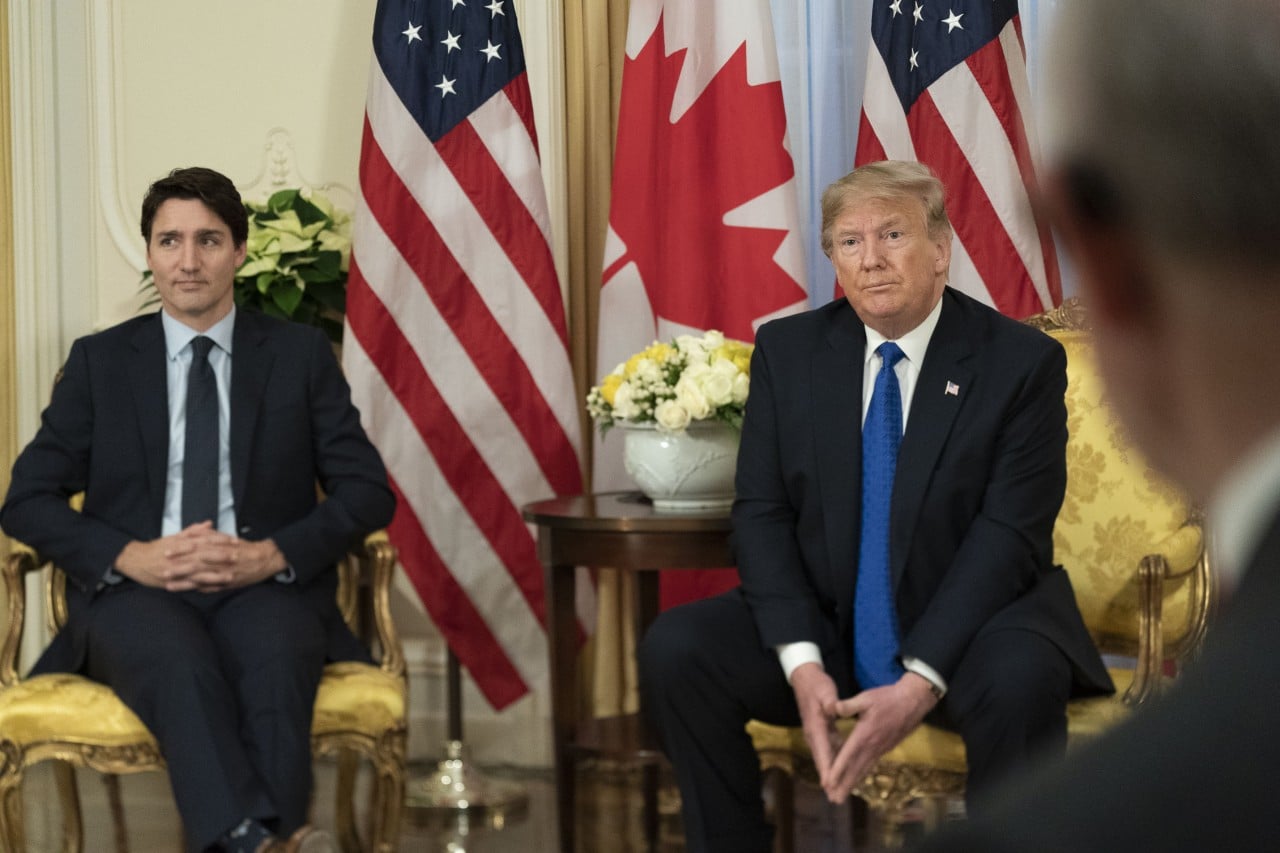
In 2017, his administration cut $1.5 trillion in taxes, which meant that U.S. billionaires paid a lower tax rate than the working class for the first time ever. Very quickly, Canada’s business lobby group lined up to extract similar concessions from the Liberal government.
The Business Council of Canada demanded “laser-like focus on competitiveness,” while the Canadian Chamber of Commerce called to “significantly cut the cost of doing business in Canada.”
The Globe and Mail echoed them, chiding the government that “to stay competitive in this tumultuous economic moment, Ottawa needs to demonstrate that it is open to all possibilities, including lower corporate tax rates and less regulation.”
The Trudeau government eventually gave in, granting the corporate elite $14 billion in tax breaks in 2018.
2. A push for Canada to waste more money on militarism
Donald Trump has long griped that other NATO countries are not “paying their bills,” failing to meet the alliance’s military spending goal of 2 per cent of their GDP.
During his first presidency and again on the campaign trail, he threatened that “if they’re not going to pay, we’re not going to protect.”
According to a recent estimate from the Parliamentary Budget Officer, it would require the Canadian government to spend an extra $41 billion a year—a doubling of the current defence budget to $82 billion.
Even before Trump was re-elected, the pressure had already been building on the Canadian government.
This summer, a large group of U.S. senators from both parties reprimanded Trudeau, who had privately told allies Canada would never meet the target.
Eldridge Colby, a senior defence strategist in the last Trump administration who is now tipped for an even more senior national security role, threatened “consequences” for Canada.
He suggested that Trump could use sticks such as imposing tariffs on Canada or sidelining the country from international meetings like the G7.
In the wake of the pressure, Trudeau begrudgingly pledged to meet the target by 2032.
This would be a huge boon to the U.S. and Canadian weapons industry, which regularly lobbies for increased spending.
Earlier this year industry group Canadian Association of Security and Defence Industries commissioned a poll to gauge public opinion.
Expect such tactics to expand into a full-court press from right-wing think tanks, former military generals, and the weapons lobby.
If this plan comes to pass, defence spending will eat even further into the federal budget. It will strain federal spending on desperately needed social programs, not to mention the devastating cost to our climate incurred by war and military operations.
3. Empowering fossil fuel interests in Canada
“Drill, baby, drill” will be the new bywords of Trump’s energy policy.
His administration will get to work dismantling the green agenda laid out by President Joe Biden, whose industrial policy and massive investments in renewables had set a potential standard for Canada to follow.
Trump’s targets for rollback include: restrictions on drilling in public lands and waters, moratoriums on new permits for exporting liquefied natural gas, and subsidies for electric vehicles (likely with exceptions for those manufactured by his pal Elon Musk).
He will get even cozier with Big Oil—which is saying a lot, considering
Trump previously picked a former CEO of ExxonMobil for his secretary of state and a former coal lobbyist to head up the Environmental Protection Agency.
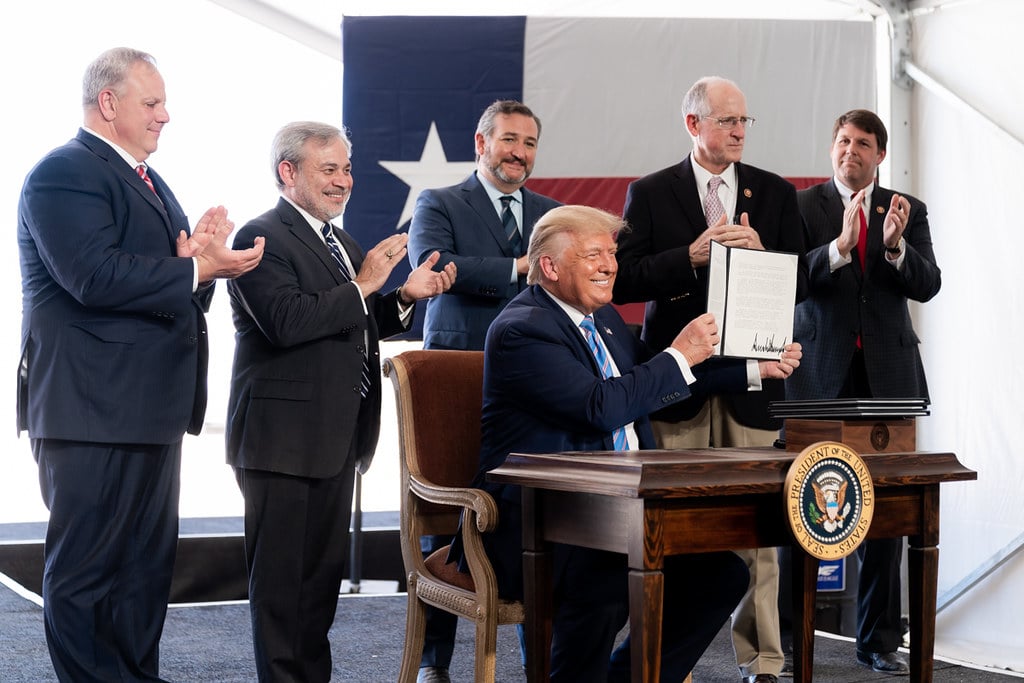
But this time around, the pandering was even more brazen: he asked oil CEOs for a $1 billion donation to his campaign in exchange for considering their detailed policy list.
Watch Canadian oil lobbyists and CEOs once again invoke “competitiveness” arguments as they pressure the Canadian government to diminish what weak climate policies exist here.
And it’s not just oil companies that may be cheering. While Justin Trudeau has made a big show of claiming to be a climate champion, the federal government quietly welcomed Trump’s reversal of Obama’s opposition to the Keystone XL pipeline.
“The swearing in of a new administration in the United States that recognizes the strategic importance of Canada’s role in North American energy security is, so far, positive news for the Canadian energy sector with regard to a potential increase in energy trade,” an internal government briefing document from 2017 stated.
4. Anti-immigrant hate will force more people to Canada’s doorstep
Ugly migrant-bashing was a signature focus of Trump’s campaign.
His re-election now raises the spectre of reinstated travel bans on Middle Eastern countries, an enlarged border wall, and the biggest deportation effort in U.S. history (though it’s worth noting that the Biden administration deported more migrants in 2023 than Trump did in any year).
No matter to what degree Trump enacts his promises, Canada can expect more people at our doorstep.
In the 24 hours after the election, there was a 5,000 per cent increase in Google searches for “How to move to Canada.”
During the last Trump presidency, there was a spike in Americans applying to become permanent residents or applying for asylum in Canada.
And for non-U.S. citizens, getting into Canada is complicated by the Safe Third Country Agreement, which designates the U.S. as a supposedly safe place for refugees and bars people from crossing through the country to Canada.
The agreement is what has forced thousands of people to make irregular border crossings through spots like Roxham Road in Quebec.
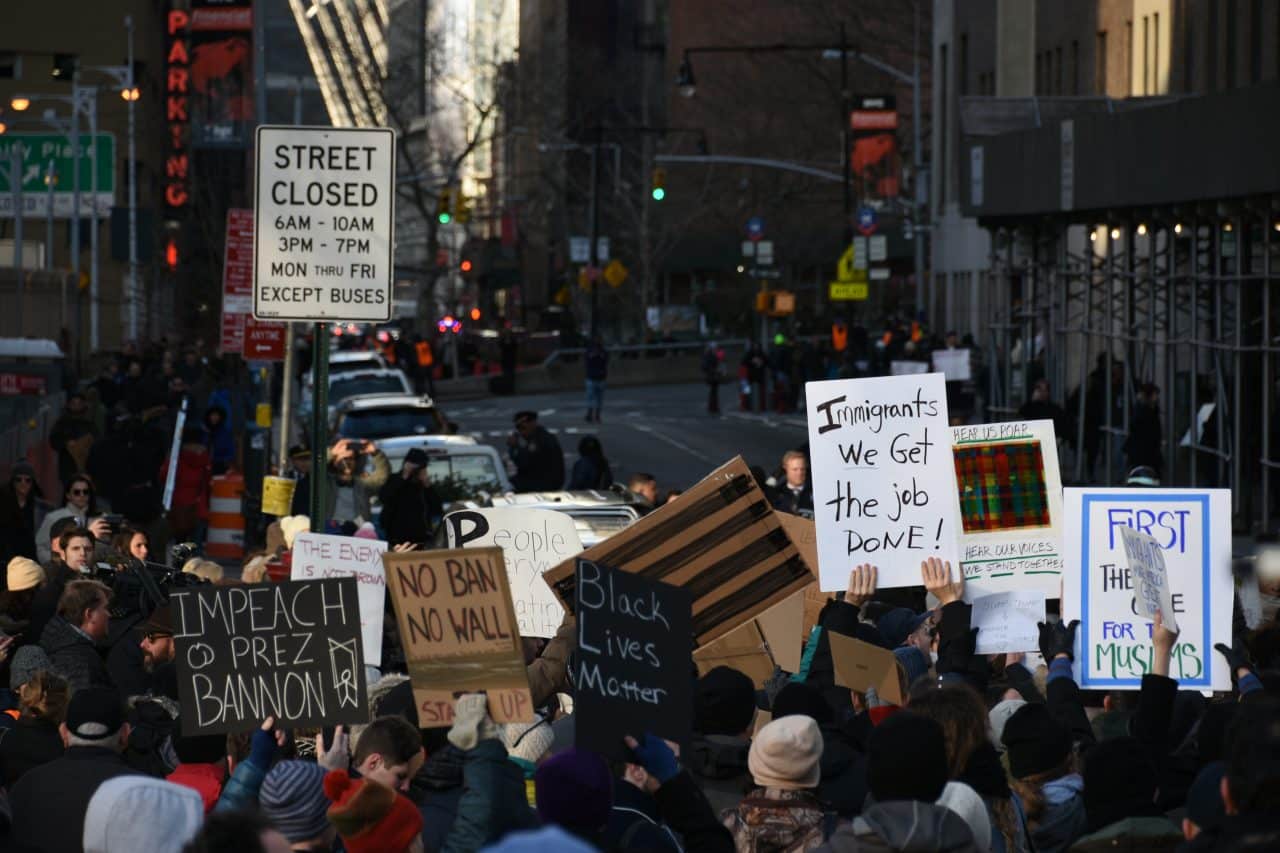
Since then, the Trudeau government has shifted right-ward on immigration, shutting down entry points like Roxham Road and reducing the number of immigrants who can come into Canada.
But the forces spurring migration haven’t gone away, and will now be worsened—meaning people will try to arrive by flights, or make far more dangerous attempts at crossing.
Meanwhile, Conservative leader Pierre Poilievre has been tapping more openly into anti-immigrant politics, and he’ll likely try to take advantage of Trump’s election to feed a right-wing backlash against immigration, support for which is now at its lowest in 25 years.
5. Anti-trans politics will get a boost
The Trump campaign’s attacks on trans rights seemed borderline obsessive.
He spent more on commercials demonizing trans people than on any other single issue, dropping more than $60 million on anti-trans ads since August.
But there was evident political calculation. Even while Trump admitted that nobody had ever complained to him about trans people in sports, he has opportunistically fuelled and exploited a cultural panic for his political gain.
During Trump’s first term, he passed legislation to limit the rights and freedoms of trans people in almost every single federal department, building on a growing backlash to trans rights among U.S. state legislators.
In Canada, while former Conservative leaders Andrew Scheer and Erin O’Toole were reluctant to weigh in on trans issues during Trump’s first administration, Pierre Poilievre seems to think otherwise.
He initially tried to focus on economic issues, but his first openly anti-trans statement came in February of this year. He announced that he supported banning trans women from women’s sports, bathrooms and changing rooms—a central position of Trump’s campaign, too.
This comes after a year of anti-trans laws being floated or passed at the provincial level across Canada, from restricting the gender self-identification of minors in New Brunswick to banning gender-affirming care for kids in Alberta.
Like Trump, Poilievre may attempt to increasingly feed a wave of transphobia, and then harness it for his bid for office.

I often hear that I’m lucky to have a full-time job in journalism.
Critical, bold journalism that isn’t beholden to media monopolies should be the norm—not the exception.
By supporting The Breach, you’re supporting a more robust, progressive media. Join us today.
– Katia Lo Innes, Associate Producer, The Breach
American Politics | Trump vs Harris, the view from Canada

Migrant Justice | How to fight back against Canada’s anti-immigrant backlash

War | Canada hasn’t reckoned with its bloody legacy in Afghanistan

4 comments
Comments are closed.




An excellent article. The Breach is one of the organizations doing real journalism in Canada today.
There is no doubt that Canada will move even further to the right ideologically, which ever party wins the election. It’s what happens when there are no left wing voices in the conversation and a country spends three decades voting for the lesser of the evils.
The grassroots supported and potentially game-changing Charter Challenge for Fair Voting is submitting that the current electoral system contravenes the Charter of Rights. Join the 1400 of us who support it… so that we don’t always have to “vote for the lesser of the evils.”
Wanting to limit immigration to levels that do not, for example, allow for a lunatic refusal by Trudeau et. al. to acknowledge that the law of supply and demand might just possibly suggest that immigration at this year’s 1.2 million level is helping to fuel the gouging rents being charged Canadian renters is NOT hating. Nor is saying that there are far larger problems facing far more Canadians than are being experienced by the .033% of our population who are trans. I have personally supported trans rights (and a few decades ago, gay & lesbian rights) and immigrant rights for over 50 years. But limiting immigration to help our most vulnerable current citizens is not hating immigrants. Nor is suggesting that low income housing, supported by government, is possibly just a tad more important than trans issues, which, bad as they may be in some respects (not all!!!), cannot come near the importance of housing/rent reform for alleviating damage being done to the most vulnerable; that is, THE POOR. Get off the virtue-signalling bandwagon unless you want the left to die out totally.