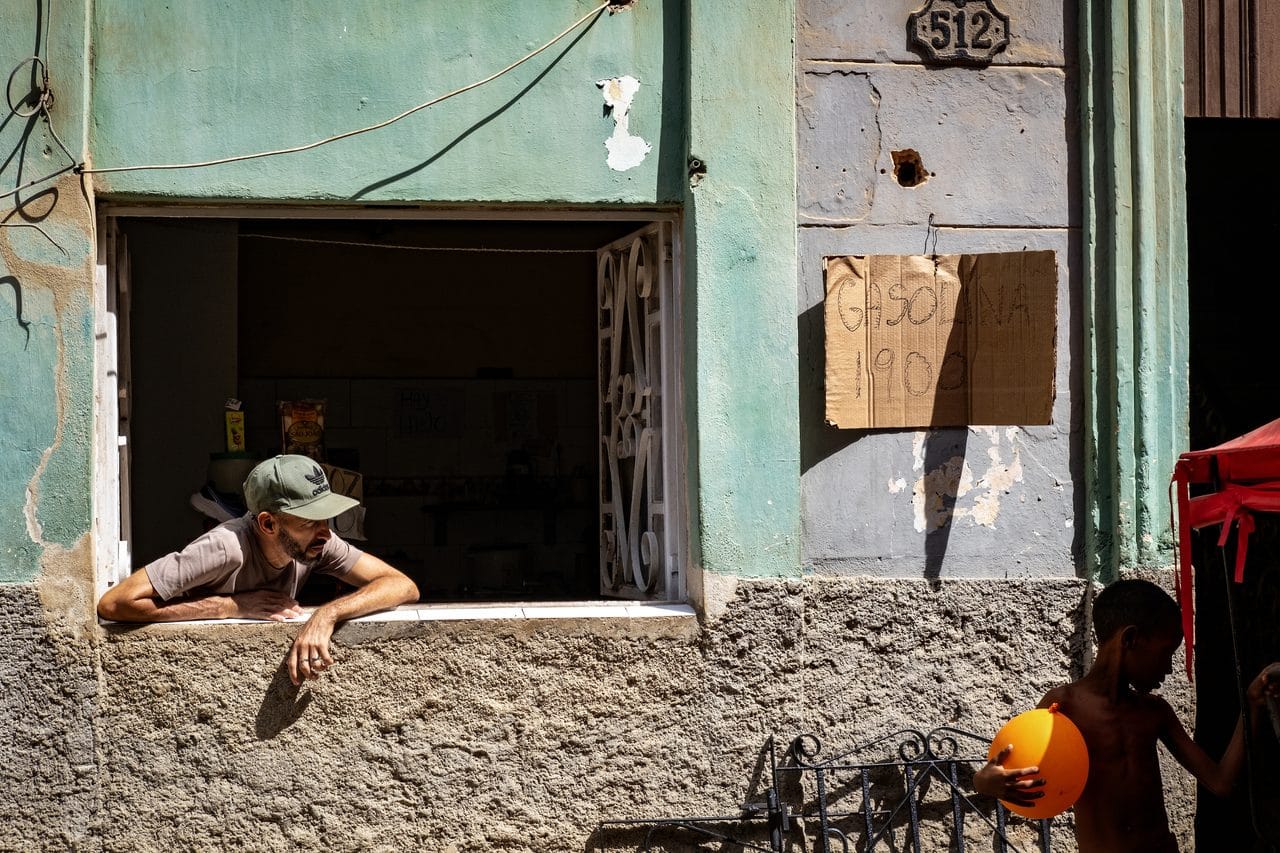
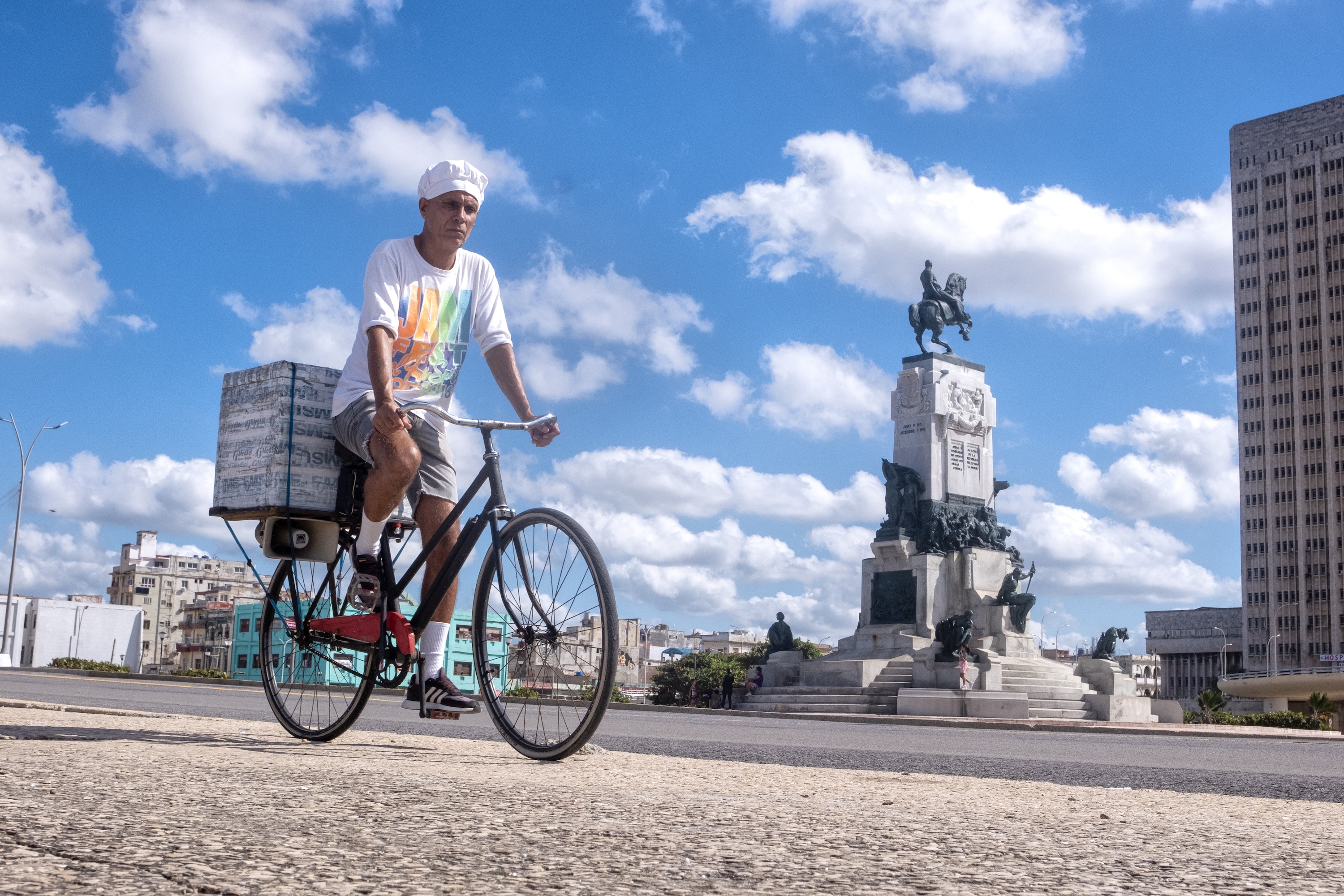
A small black chalkboard, turned grey from erasing and re-writing, is propped up at the entrance to a corner shop in La Havana, Cuba. On it, handwritten white letters spell out what’s on offer: processed chicken and pork, flour, rice, liver, hamburger, sugar, and butter.
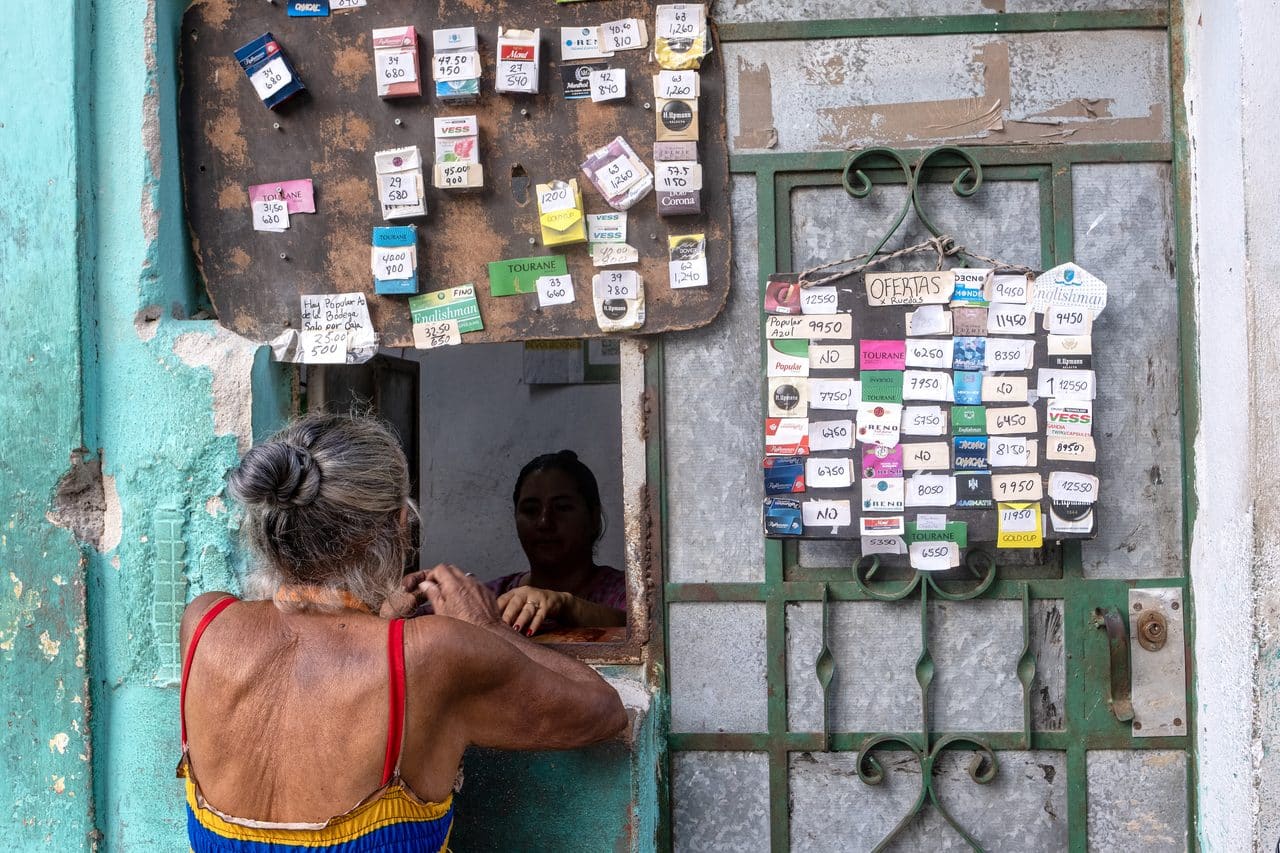
Here, a 400-gram tube of chicken costs $1.45. In a more upscale shop near the city center, eggs, which come in cardboard flats of 30, cost around $5.45.
This at a time when wages for government workers hover around $11.30 a month. The ration books that previously supplemented every Cuban household with key staples now only cover a fraction of the population. Cuba’s capacity to generate food fell by nearly 80 per cent by the end of 2025 and the Cubans I spoke to on a recent trip agreed that this year has been the most difficult in recent memory.
The crisis in Cuba tests the very limits of reason, economics, and mathematics. The Pentagon’s bombing of Caracas and the capture of Venezuelan President Nicolás Maduro and his wife in January cut Cuba off from a key supply of oil. That was followed by new rounds of U.S. sanctions and fuel restrictions, which have pulverized Cuba’s already battered economy.
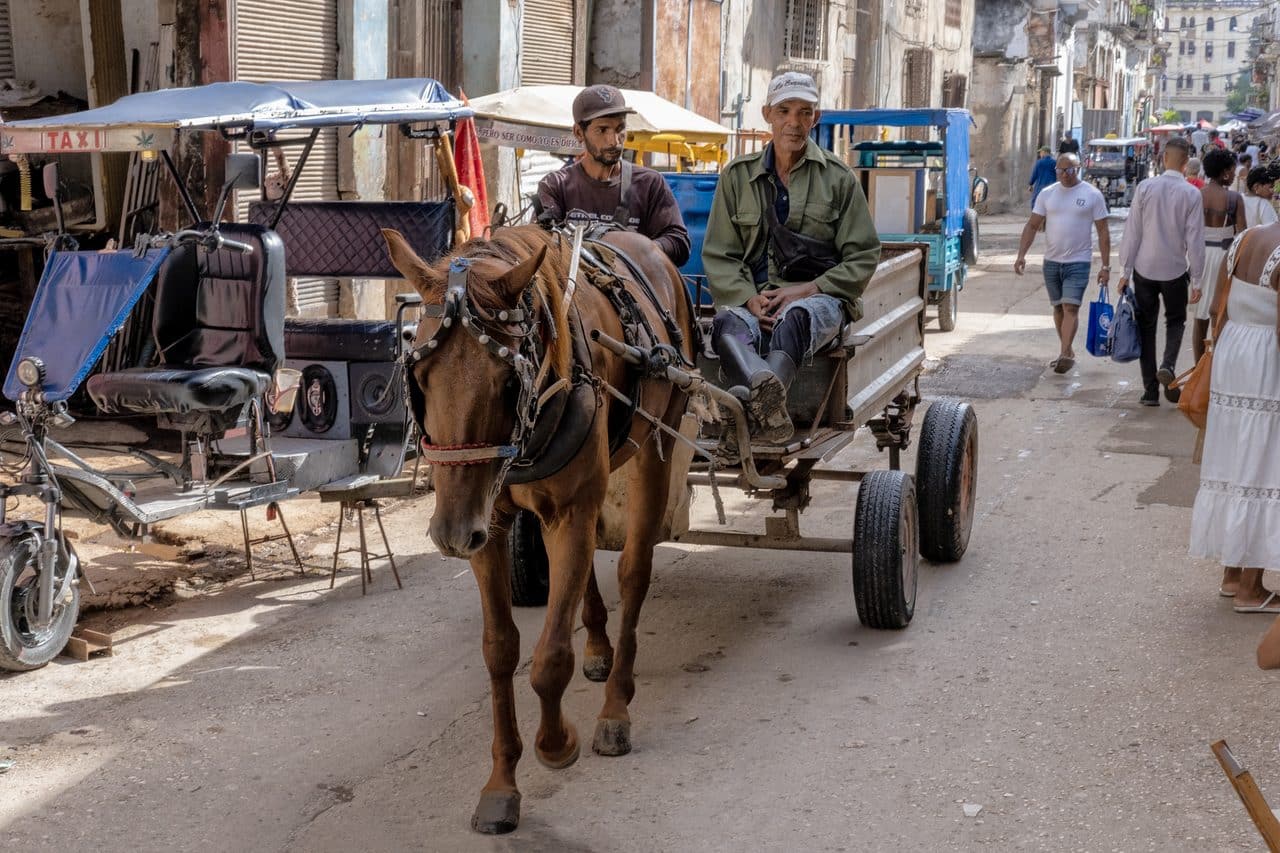
Transportation has been severely restricted, and power outages of over 20 hours a day have become commonplace. Desperate Cubans approach foreigners in the street to beg for money, medicine, food, and even soap.
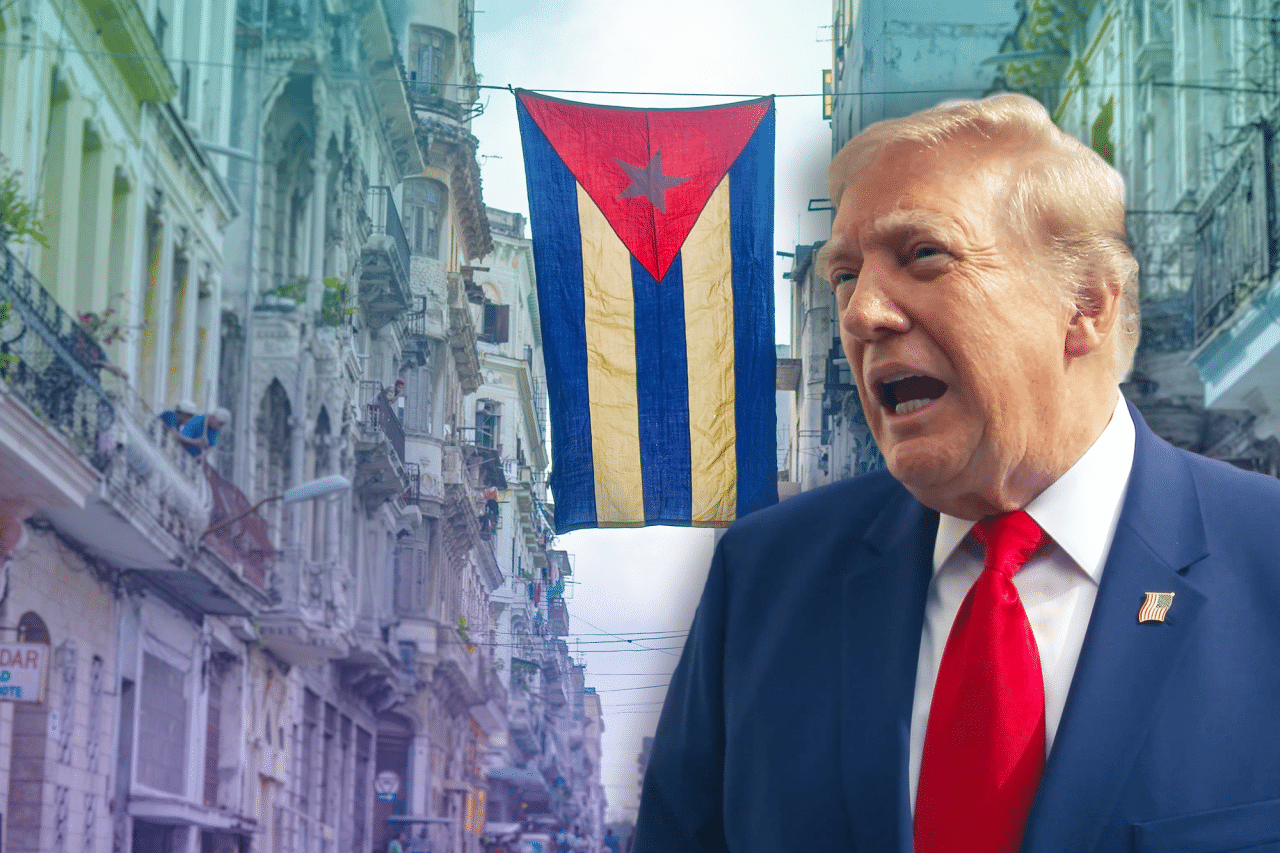
It is in this context that Donald Trump and Marco Rubio would have us believe that Cuba presents an “unusual and extraordinary threat … to the national security and foreign policy of the United States.” Somehow, the same people who are struggling to feed their families and keep their phones charged are also plotting regime change against the U.S.
To date, Canada has said little about the intensification of the U.S. blockade of Cuba and its devastating impacts on Cubans. But the fallout is widening: now, 280 workers in Alberta have been laid off, collateral damage of Trump’s sanctions against companies doing business in Cuba.
The Canadian government’s realpolitik—throwing Cuba as a bone for the U.S. to devour—contradicts its carefully cultivated image as a friendly middle power. And it’s hurting Cubans and Canadians alike.
U.S. sanctions vs. Canadian workers
The impact of the new U.S. sanctions hit Fort Saskatchewan, Alberta with full force on Tuesday, November 10.
That morning, without any warning, Dillon Lancaster’s phone started blowing up.
“I think I took 73 phone calls starting in the morning. [Company officials] started putting groups of people into meeting rooms and nobody knew what was going on,” said Lancaster. He’s the president of Unifor 530A, the union local that represents workers at Sherritt International’s nickel and cobalt refinery in Fort Saskatchewan, Alberta.
“The next thing you know they’re all getting told to grab their things, that they’re to get letters shortly, and that they’ll be temporarily laid off,” he said.
Trump’s sanctions came down hard on Sherritt, a Canadian-headquartered company, because its supply chain stretches into Cuba.
In the early 1990s, Sherritt Gordon Mines, a Canadian company that had exhausted its supply of ore in Manitoba, made a massive investment in Cuba as part of a joint venture with the Castro government. Sherritt Gordon became Sherritt International, and nickel and cobalt ore in Cuba’s northeast was shipped to the Maritimes and sent by train to a refinery in Fort Saskatchewan.
This model held until Sherritt suspended mining operations in Cuba last May, a week after Trump announced new secondary sanctions through executive order. These sanctions make it even more difficult for any foreign company to operate legally in Cuba. In late June, Sherritt International suspended refining in Fort Saskatchewan, though it continues to generate electricity inside Cuba.
Since May, Sherritt has worked with U.S.-based Gillon Capital to apply for exemptions to the new sanctions via the U.S. Treasury’s Office of Foreign Assets control, which has granted them only one exemption to date. Gillon is owned by Ray Washburne, a close ally of President Trump. The company is in talks to take over control of Sherritt International, which produces nickel, cobalt, and agricultural fertilizer.
In total, Sherritt laid off 134 members of Unifor Local 530A for 90 days, as well as over 100 non-union staff. Together, about half of Sherritt’s Fort Saskatchewan workforce was told to stop coming to work.
“The sanctions and what happened with Cuba put us to a dead stop, and that’s the number one issue,” said Lancaster, who has worked at the company for 14 and a half years. “But we didn’t set ourselves up very well for this to begin with,” he said, alluding to what he called “questionable financial decisions” by the company.
For now, Local 530A is focussed on returning its members to work. Lancaster’s appeal to the Canadian government is to protect the Fort Saskatchewan plant, which he called a “one-of-one” facility in North America.
The path to do so already exists through the Foreign Extraterritorial Measures Act. But it would require Ottawa to take a real stand against the Trump administration.
Decades of imminent collapse
“Latin America was not necessarily the top issue for Canada in foreign policy, really, ever,” said Asa McKercher, who is an associate professor in Public Policy and Governance at St. Francis Xavier University in Nova Scotia. “But that’s not to say Canada’s role in Latin America isn’t important; Canada’s played an important economic role through banks, through insurance companies, through mining companies and, from the 1970s onward, in tourism.”
Even so, Canada has a long history of standing up to the U.S. embargo on Cuba, which began in earnest in 1962.
Through the Cold War, Cuba maintained privileged relationships with the USSR, which became a key supplier for the island nation. The end of the Soviet Union spelled economic disaster for Cuba and ushered in the “special period” during which fuel was tight and malnutrition worsened.
“People have asked me a lot over the past five years if [the current crisis] is as bad as the special period, and until this year I was saying ‘Absolutely not,’” said Emily Morris, an economist and research fellow at University College London’s Institute of the Americas, who has worked in Cuba since the 1990s.
Through the ’90s, Washington tightened the screws with further sanctions and restrictions, including the passage of the Helms Burton Act in 1996. Crucially, Title III of the Helms Burton Act allowed U.S. citizens to sue companies deemed to be “trafficking” in property nationalized or confiscated after the Cuban Revolution in 1959.
In the context of ramped-up U.S. meddling in international trade, then-Prime Minister Jean Chrétien passed what is known as a blocking measure under the Foreign Extraterritorial Measures Act in 1992, asserting Canada’s right to trade with Cuba. After the passage of Helms Burton, Canada, the U.K., and others balked at U.S. attempts to control who they did business with.
But Canada’s reaction to U.S. sanctions on Cuba “was smoke and mirrors,” said John Kirk, a professor at Dalhousie University in Halifax whose most recent book is called Canada-Cuba Ties. He attributes the Chrétien government’s position on Cuba to the fact that millions of Canadians have holidayed there, and to a desire to appear independent of Washington. Kirk noted that Canada has never actually used the blocking measure in defense of a Canadian firm.
And, at the time, they didn’t have to. Before long, Washington moved to suspend Title III. U.S. administrations—both Democrat and Republican—continuously renewed the suspension twice a year for 23 years until Trump allowed it to lapse in 2019.
With Title III back in force, a U.S. citizen or company could sue Sherritt International because they operate a mine that was owned by an Arizonan company before it was nationalized following the Cuban Revolution. That, combined with new sanctions passed this year, is what led to the shuttering of Sherritt’s mine and the layoff of the Alberta workers.
Emergency in emergency
The same day the Fort Saskatchewan workers were laid off, I toured a Havana hospital and learned how sanctions are adding unthinkable burdens to the work of providing healthcare.
At the Juan Manuel Márquez Pediatric hospital, each load of laundry and each use of the autoclave to sterilize medical instruments are timed to ensure there is enough electricity available. Our visit took place as part of a documentary about Latin American journalism spearheaded by the independent media outlet Belly of the Beast.
Doctor María Elena Mesa has worked at the pediatric hospital since it opened in 1989. She strode through a labyrinth of granite-floored hallways lit mostly, during our mid-afternoon tour, by sunlight. Even though she could have retired by now, she comes in every day to continue to serve her patients and their families.
Dr. Mesa is a pediatric respiratory specialist who is matter-of-fact about the challenges she and her colleagues face. Catheters, valves, nebulizers and flowmeters are in short supply.
The downfall of Cuba’s crown jewel—its universal healthcare system—has been sharp and steep. In August, President Miguel Díaz-Canel said only a third of all medicine considered essential was available in Cuba. Hospital staff have developed a system to track what is in use and what is needed in each wing, and supplies are moved from hospital to hospital to cover the most urgent needs.
“We used to have what we needed, so if 10 flowmeters were damaged, you could get 10 more,” said Mesa, leading us down the stairs she has dutifully climbed for the last 37 years. “Now, when 10 flowmeters are damaged, there’s no way to replace them, because supplies are not arriving.”
People’s immune systems are increasingly compromised by a lack of proper nutrition and sleep, and blackouts mean more falls in the dark and burns from cooking over fires. These shortfalls are “slowly killing the Cuban people,” said Araiz Consuegra, the head of the pediatric hospital.
What were already complicated medical procedures are now even more difficult, as constant adaptations must be made based on what supplies are available. Donations of equipment and medicines are now crucial to keeping the system afloat. Just last week, the Canadian Network on Cuba announced the successful shipment of eight pallets of medical equipment to the island.
World Health Organization head Tedros Adhanom Ghebreyesus visited three Havana hospitals earlier this week. He called for an end to the blockade and pointed out life expectancy on the island has fallen by four years since 2020, the first decline in over 70 years.
The staff at the pediatric hospital made it clear that becoming a doctor or nurse in Cuba is something people do out of conviction and love, not because it promises a high salary.
Today, medical professionals make in the range of $22 a month, which doesn’t come close to covering their costs of getting to and from work. Remarkably, many continue to report to duty, doing their best to save lives amid the crisis.
The path forward
Were we to take Mark Carney’s push for “principled and pragmatic” foreign policy at face value, standing up to unilateral U.S. sanctions opposed by the majority of the world’s nations would seem like a natural next step.
Not only are U.S. sanctions killing Cubans, they have also caused hundreds of Albertans to lose their jobs, and compromised Canada’s ability to refine two critical minerals. The blocking statute—through which Canada asserts its legal right to disregard the U.S. embargo—is already on the books, it’s just a matter of flexing that muscle. Unifor, the largest private sector union in Canada, has urged the Carney government to upgrade blocking laws against Trump’s politically-motivated sanctions.
I asked Kirk, the expert on Canada-Cuba relations, why he thinks Carney’s government hasn’t moved to enforce the blocking statute that would allow Sherritt to continue operating in Cuba, and keep 280 people employed in Fort Saskatchewan.
“We have a very popular Prime Minister who’s done a remarkably successful job in defending Canada against the onslaught of an idiot. But we also have to remember that he’s an international banker,” Kirk said from his home in Halifax. “And he’s looking at the big picture, and Cuba at the moment is a small chunk of meat that he can throw to the Americans to show that he’s making concessions to the Trumpites.”
Other parties, however, have taken a stronger stance against Trump’s bullying. NDP MP Don Davies pushed for increased aid to Cuba, and the party’s leader Avi Lewis called U.S. fuel sanctions “a blatant violation of international law.”
Organizers with the Canada Network for Cuba have created petitions and letter writing campaigns against the blockade and the potential of a U.S.-led war there. Its members are also asking Global Affairs Canada to drop the travel advisory and reinstate direct flights from Canada. Jet fuel shortages caused by the embargo led Canadian airlines to cancel all direct flights to Cuba, depriving the island of its most important source of tourism.
An August 2026 survey found over three quarters of Canadians have an unfavourable opinion of Donald Trump, and nearly a third perceive the U.S. as an enemy country. But, since the crisis in Cuba worsened in February, Canada has pledged a paltry $13.5 million in humanitarian aid.
“I don’t think the Carney government cares about Cuba,” said McKercher, who is working on a book about Canada-Cuba relations. “It’s a shame because, again, whatever you think of the Cuban government, there’s the historic relationship between Canada and Cuba, and the fact that many average, everyday Canadians have a very fond view of Cuba.”
“We need media that enlarges the sense of what’s possible.”
Naomi Klein, journalist and author
Want to support hope-fuelled journalism? Become a sustaining member.
Mexico | As Mexico hits a grim milestone, Canada looks away
COVID-19 | Cuba’s successful COVID response started with robust health care institutions
Caving Carney has a tendency to throw the poor under the bus. Anyone who thinks that doesn’t include the Cuban people isn’t paying attention.