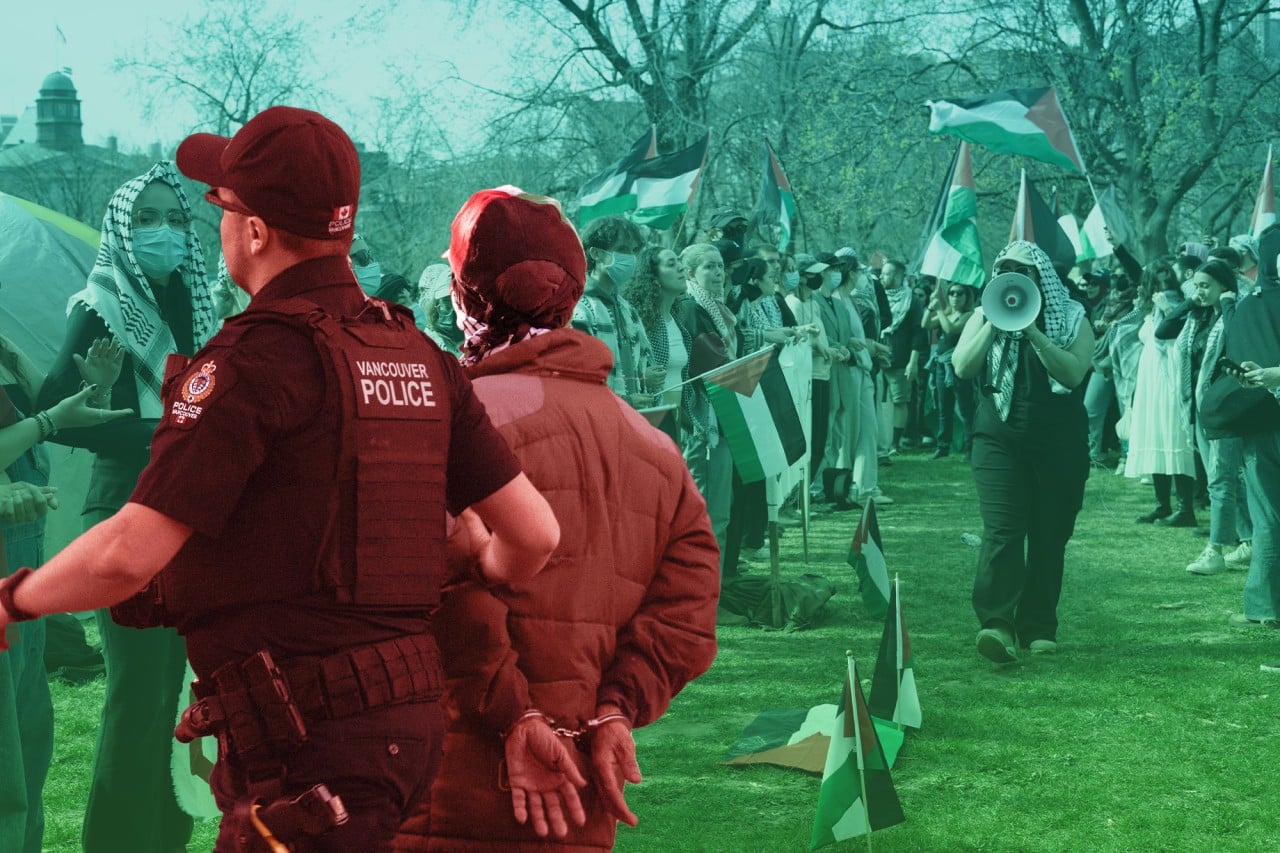
As Palestinian solidarity organizers face dramatic arrests and deportations in a sweeping crackdown on dissent in the United States, some Canadian lawyers are taking notes.
In the U.S., pro-Israel lawyers have worked hand-in-glove with the Trump administration to escalate attacks on academic and democratic institutions—weaponizing the courts to punish and silence criticism of Israel.
Now, some members of Canada’s legal community are pushing to import those same tactics north—and they’re doing so in the name of fighting what they call “the new antisemitism.”
This is lawfare in action: the strategic use of legal tools to suppress political opponents.
In this case, lawfare is being deployed to control the narrative about Israel’s genocide in Gaza—branding as “antisemitic” criticism of Israel, support for international law, or even reference to Palestinian rights, speech, and culture.
Not all pro-Israel activists may support American tactics like abductions and deportations. But the underlying logic of lawfare is gaining ground among some Canadian legal professionals.
Since October 7, pro-Israel lawyers have been at the forefront of a push to criminalize critics of Israel and to promote an anti-Palestinian agenda with the Canadian government. They have intervened in encampment injunction proceedings, sued universities on behalf of students, and lobbied municipal, provincial, and federal governments to ramp up penalties against Palestine solidarity protesters.
One clear articulation of this strategy came from criminal lawyer Mark Sandler in a recent webinar titled “Enough is Enough: How You Can Use the Law to Fight Antisemitism.” There, he laid out a national strategy for using lawfare to introduce harsher penalties and further criminalize Palestine solidarity.
Sandler is the founder of the Alliance of Canadians Combatting Antisemitism (ACCA), which includes Lawyers for Secure Immigration and Lawyers Combatting Antisemitism. He has been the visionary behind coalition building since October 7 and is transparent about his strategy to influence policy and legislative agendas.
This new push for lawfare comes at a time when Israel’s actions are increasingly seen as indefensible around the world—including within Israel—leaving North American governments out of step with the global consensus.
In this context, aggressive censorship becomes a strategic necessity for the pro-Israel lobby.
We break down the Canadian lawfare playbook below.
Censorship through lawsuits
In the U.S., pro-Israel legal advocates have pursued aggressive strategies to pressure universities into adopting policies that suppress criticism of Israel.
Sandler wants to see that same legal muscle flexed in Canada.
He points to recent actions against Harvard as a positive model for what should happen here to force universities to capitulate.

Two federal lawsuits had accused Harvard of fostering an antisemitic environment. As part of the settlement, reached earlier this year, the university agreed to adopt the widely criticized IHRA (International Holocaust Remembrance Alliance) definition of antisemitism—a definition that explicitly includes criticism of Israel.
The IHRA definition has become a lightning rod for controversy because it stifles free speech and academic freedom, promotes anti-Palestinian racism, and narrowly defines Jewish identity as inherently Zionist.
For Sandler, the lawsuits—brought by the Louis D. Brandeis Center for Human Rights Under Law and Jewish Americans for Fairness in Education—exemplify the kind of litigation needed in Canada to target universities, unions, faculty associations, and news organizations.
So far, most targeted lawsuits against universities in Canada have been driven by a single private law firm: Diamond and Diamond, known for its unethical litigation practices.
The firm’s lawyers have targeted Toronto Metropolitan University (TMU) and the Toronto Metropolitan Students’ Union; Queen’s University; the University of British Columbia, York University and the York Federation of Students; McMaster University and the McMaster Students Union; and Concordia University and the Concordia Student Union. None of these lawsuits have been heard in court yet.
Sandler has praised the TMU student lawsuit, arguing that “[s]uch litigation should be vigorously pursued elsewhere.”
Distorting the meaning of hate speech
The core challenge for the pro-Israel lobby in Canada in trying to suppress what they call “the new antisemitism” is that much of the speech they target is protected under section 2(b) of the Charter of Rights and Freedoms as “political debate.”
Criticism of a state or political ideology does not on its own meet the legal threshold for hate speech under the Criminal Code.
In his lawfare webinar, the ACCA’s Sandler outlined a new strategy to overcome these legal hurdles.
He announced the formation of the Canadian Jewish Law Association, which will join forces with the Centre for Israel and Jewish Affairs (CIJA) and a cadre of “top flight” criminal lawyers to “triage” criminal issues. In other words, they will coordinate and pool resources to take on these cases.
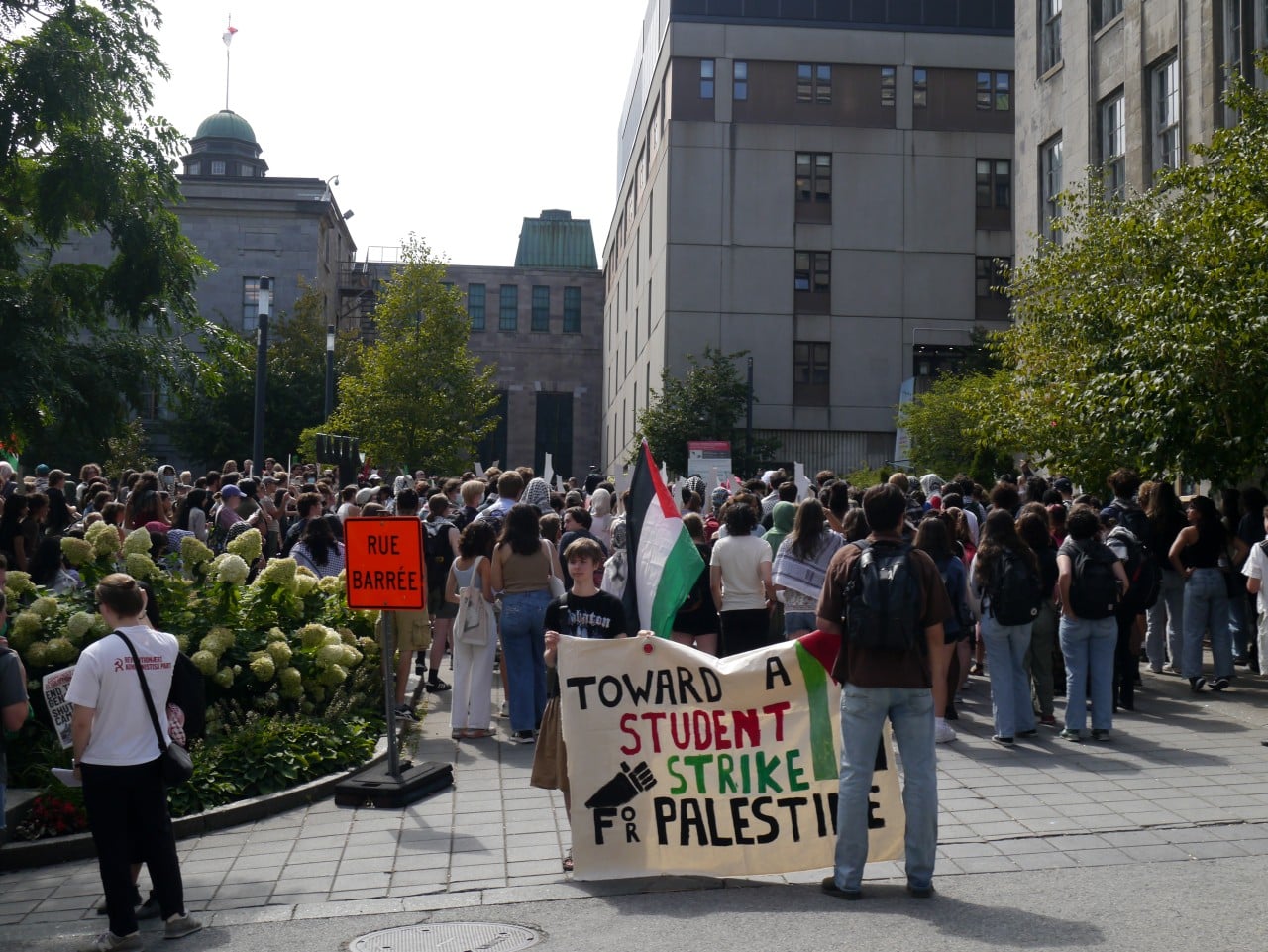
Their plan is to couple ongoing litigation with an extensive outreach campaign to police and prosecutors across the country to persuade law enforcement to investigate Palestine solidarity activism as if it were hate speech.
Responding to a request for comment from The Breach, Sandler said “the allegation that I seek to suppress merely pro-Palestinian speech is false.”
He said that while “speech that sharply criticizes Israel” should not trigger criminal law remedies, what is not protected speech is “the vilification and demonization of all Zionists,” which he considers antisemitic.
But the courts have so far disagreed with Sandler and the pro-Israel lobby’s characterization of protected speech. They’ve decided the speech under question is simply pro-Palestinian and not antisemitic or hateful.
When CIJA and others made submissions to former Nova Scotia Supreme Court Justice J. Michael MacDonald during his investigation of a student petition at Toronto Metropolitan University, he declined to apply the IHRA definition of antisemitism. He wrote:
I am of the view that the letter should not have been characterized as antisemitic. There is no universally accepted definition of antisemitism, but (as discussed), this External Review has understood antisemitism as “the manifestation and expression of discrimination against Jewish people.”
The distinction is key: antisemitism must involve discrimination against Jewish people as Jewish people. Zionism, as an ideology, is therefore open to critique.
Similarly, CIJA, B’nai Brith, and Friends of Simon Weisenthal Centre all intervened in legal efforts to shut down the Palestinian solidarity encampment at the University of Toronto. Yet, presiding Justice Markus Koehnen ultimately decided that it was not the antisemitic “hatefest” they alleged.
He concluded that allegations of antisemitism were being used in troubling ways, noting that “the respondents’ fears about the risk of a new form of McCarthyism are not without foundation.”
In his webinar, Sandler argued that a lot more work is needed to push for the adoption of the IHRA definition of antisemitism.
The new lawfare coalition is likely hoping to push lawsuits that would render the IHRA definition legally binding so that it could then be used to interpret hate speech offences.
A probable moving target for these suits is faculty and student organizations. There have already been attempts to smear university campaigns that are part of the international Boycott, Divestment, Sanctions (BDS) movement against Israel as antisemitic.
In Canada alone, 18 faculty and 28 student associations have passed motions committing to BDS on their campuses. A formal complaint against the University of Windsor’s historic agreement with encampment protesters, which included an agreement to boycott Israeli universities, was filed under the Ontario Discriminatory Business Practices Act, but was also recently dismissed.
Weaponizing criminal law
Because the threshold for proving hate speech offences is so high, Sandler proposes a workaround: using other Criminal Code offences to suppress Palestine solidarity and criticism of Israel.
Instead of relying solely on hate speech provisions, Sandler recommends charges like intimidation for when a “hateful mob” takes over an intersection; mischief for interference on private and public property, to address “hate activities” on streets and campuses; and unlawful assembly to disperse hateful protests.
But what exactly counts as “hateful?” Protests in solidarity with Palestinians—amid an ongoing genocidal campaign—are routinely framed as hateful towards Jewish people, even when Jewish people are visibly present or even leading the demonstrations.
Sandler also casually shifts between describing Palestine solidarity demonstrations as “protests” and “Hamas protests.” While he claims lawfare efforts target “extremists,” distorted framings like his manufacture extremists to target.
Ironically, it is criticisms of these protests—rather than the protests themselves—that are motivated by racism. Labeling anti-war protests as “hatefests” that support “terrorism,” and branding attendees as terrorists, exemplifies anti-Palestinian racism.
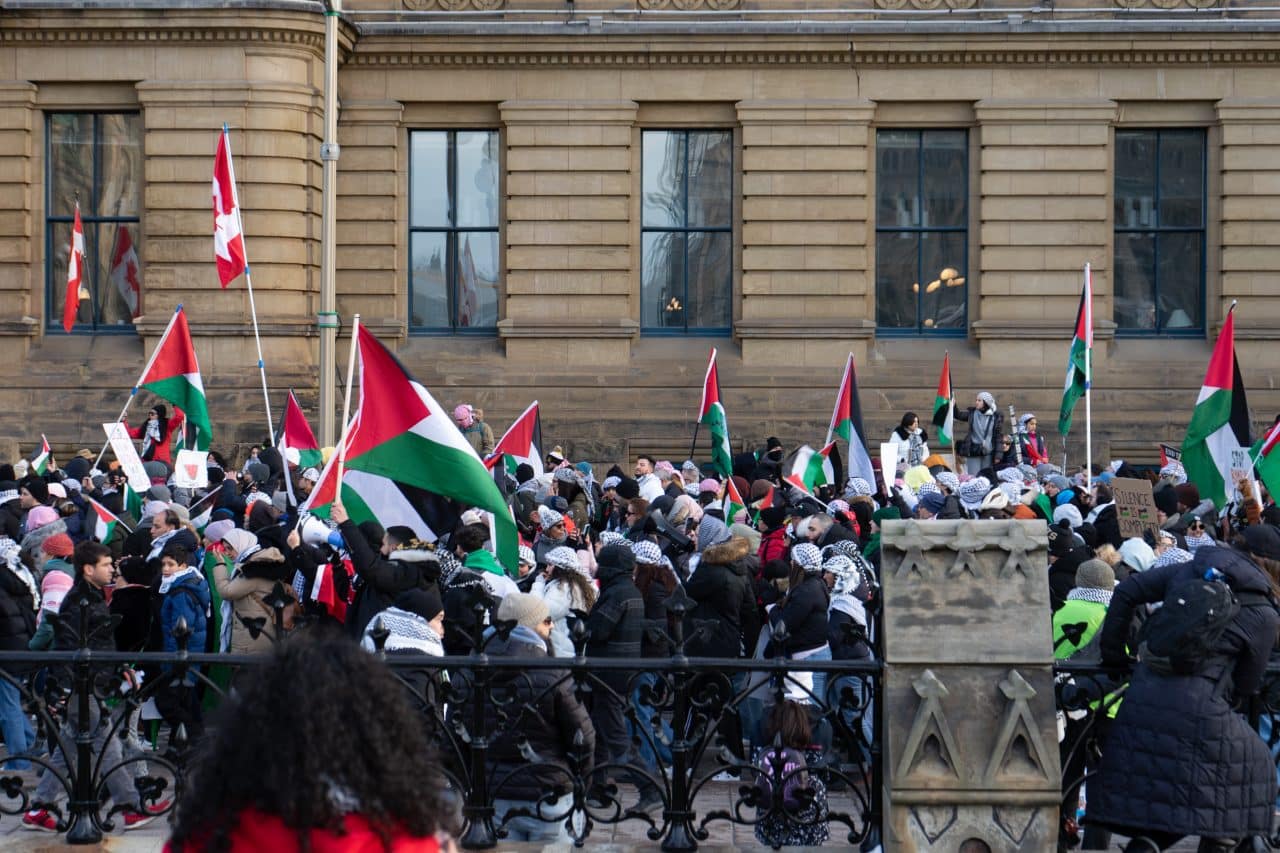
Sandler goes further, labeling chants like “From the river to the sea, Palestine will be free” as “unequivocally” antisemitic. But this claim is deeply contested by experts in antisemitism, Middle Eastern politics, and criminal and constitutional law.
In contrast, pro-Israel rallies in Canada and the U.S.—which have been vocally pro-war during what the International Court of Justice, Amnesty International, and Human Rights Watch have called either a “plausible” or proven genocide—face no such backlash.
Another key legal tool Sandler promotes is “bubble legislation.” Initially introduced in Canada to protect health care workers and people accessing abortion clinics from anti-abortion violence, bubble laws are now being pushed in relation to Jewish institutions.
A number of municipalities have already enacted or are considering enacting this legislation around synagogues and Jewish community centres in response to Palestine solidarity activism.
But context is essential here. This push to “protect” Jewish institutions was triggered by protests led by Jewish groups outside synagogues, targeting events for real estate pitches in the illegally occupied West Bank of Palestine.
Civil liberties groups have expressed deep concern about the constitutional violations posed by such bubble laws, particularly regarding freedom of expression and assembly. Even Ontario Solicitor General Michael Kerzner, from the Progressive Conservative Party, has conceded these laws are likely unconstitutional and should not be adopted—despite Premier Doug Ford’s support.
Erasing Palestine
With these renewed efforts to “educate” law enforcement and prosecutors on the IHRA definition, there is every reason to fear that anti-Palestinian racism will become even more entrenched.
Responding to The Breach, Sandler said, “I believe in Palestinian self-determination and a two state solution and have said so many times.”
The trouble with the strategy of lawfare, however, is in its definition of Palestinian self-determination. Sandler and others who seek to turn the “demonization” of Zionism into a hate crime do not recognize Israel as a settler colonial project that overrides Palestinian sovereignty. Sandler and his ilk see their political opponents challenging Israel’s right to exist as an ethnostate and frame this challenge as a genocidal demand rather than a just one.
This conception of antisemitism casts as hateful and antisemitic the entire Jewish Labour Bund, Jewish luminaries like Hannah Arendt and Albert Einstein, Palestinian scholars such as Edward Said, and Black intellectuals like James Baldwin.
At the same time, it leaves no room for Palestinian claims to rights and sovereignty. This is a key reason why Sandler insists that adopting a definition of anti-Palestinian racism is “incompatible” with the IHRA framework—in effect, that framework treats Palestinian political expression as inherently antisemitic.
Lawfare champions even frame the existence of Palestinian culture and history as evidence of antisemitism.
This attempted demonization of pro-Palestinian speech and action sets a dangerous precedent in a dangerous time.
Though these strategies have largely failed under legal scrutiny so far, they have created a chilling effect on free speech. And the recent lawfare successes in the U.S. point to a tightening control on all political positions that challenge colonial and imperial power.
In Canada, we mimicked the “war on terror” to our own peril. We risk repeating that mistake now, in a new imperial war on freedom of speech, expression, assembly, and, most importantly, Palestinian freedom.
In addition to Palestinian solidarity activists, those who will bear the brunt of this new wave of repression will be those already most impacted by increased police powers and surveillance, such as Black and Indigenous peoples—two groups that have long traditions of solidarity with the Palestinian struggle.
We must prepare for the inevitable onslaught of pro-Israel lawfare already being planned in the legal community.
We must prepare our own coalitions of resistance and meet this challenge on the streets, in the courts, in our classrooms, and in our workplaces.

When I went to journalism school 10 years ago, my parents thought that they would eventually read my articles in The Montreal Gazette. Today, that newspaper is a husk of its former self. But I get to explain that I’m working towards critical, independent, and sustainable journalism.
Want to be a part of the future of journalism? Support our work with a monthly contribution. Sign up here.
– Amanda Siino, Development Director, The Breach
Palestine | ‘Opposition and rage’: queer groups challenge Pride to divest from Israel
Palestine | CBC has whitewashed Israel’s crimes in Gaza. I saw it firsthand
After Selina Robinson met with UBC president, Gaza statement disappeared
7 comments
Comments are closed.


Canadian mainstream news uses double standard terminology:
Israeli defence forces vs Palestinian terrorists
Israeli hostages vs Palestinian prisoners
Agree, it is so very biased.
These attempts at lawfare here in Canada will have a chilling effect on those everyday adult/non-student pro Palestine activists who would want to participate in marches, making one second guess ones’ involvement and support, in essence preemptively self-censoring and self-silencing which perhaps ultimately is the goal.
It is unfortunate that the article about “pro-Israel lawfare” so significantly misstates my position. The authors state for example that I promote a discredited view that “from the River to the Sea – Palestine shall be Free” is unequivocally genocidal when I have repeatedly said the exact opposite, including in a presentation cited by the authors. Instead, I have said that the use of the phrase although deeply troubling is not so unequivocal as to justify criminal prosecution for hate speech unless (as has repeatedly occurred) it is accompanied by other actions or comments that make clear that it is used to promote a Jew-free country in place of Israel. Or accompanied by articulated support for terror groups declared unlawful by the Canadian government and for their genocidal agendas.
The authors misrepresent that the IHRA definition of antisemitism includes criticism of Israel without even acknowledging the specific provision exempting criticism of Israel from being labelled as antisemitic. They also misrepresent my position on this issue including my repeated commentary that criticism of Israel, its policies, conduct of the war, and government are largely protected speech.
They completely misstate my position on anti-Palestinian racism which challenges a definition of anti-Palestinian racism that labels everyone as racist who even disputes a Palestinian narrative that calls pre-1967 Israel’s boundaries occupied territory and denies Israel’s right to exist. I said that true anti-Palestinian discrimination is not addressed by vilifying all those who support Israel’s right to exist without distinction.
The authors express concern about the suppression of pro-Palestinian views while supporting university initiatives that undermine academic freedom and institutional neutrality by prohibiting association with Israeli academic institutions.
I found little in this article that accurately reflected what I have said. The authors were obviously intent on making certain points unencumbered by the facts.
I dialogue with those who hold opposing views all the time. I promote respectful dialogue and education as preferable in most cases to the use of the law — a position also well publicized but ignored.
However, I do not apologize for advocating the robust use of the law to combat extremism, not mere pro-Palestinian advocacy. It is not protected speech to support terror groups banned in Canada, and their terror activities. It is not protected speech to incite others to support such activities. It is not protected speech to intimidate or harass Canadian Jews (or indeed, any identifiable group) or to unlawfully block roads, and interfere with the lawful use and enjoyment of other infrastructure.
If you are concerned about terror groups, why do you support Israel? They are the most terrifying terror group in the Middle East!
Reading your headline coupled with the image of a of a Vancouver police officer detaining a person superimposed over an image of a pro-Palestinian rally alarmed me. Are pro-Palestinian protestors being arrested in Vancouver I wondered? I then looked at the image more closely – and recognized the McGill University campus. I am against the genocide of the Palestinian perpetrated by the Israeli government, and look to accurate reporting to keep informed. But misrepresenting possible “lawfare” strategies that may be deployed in Vancouver as actual events on the ground through image manipulation does not advance the cause of Palestinian rights and those who support them.
Can the legal remedies be used to protect Palestinian protesters?